
News
Pairwise shapes the food of the future with NGT
By Denis MESHAKA
Published on the 15/12/2025, modify the 09/03/2026


While the European Commission is attempting to deregulate new genome modification techniques (NGT), the US company Pairwise is multiplying its “partnerships” combining the Crispr/Cas tool and its Fulcrum platform. Concluded with both private and public players, these agreements anticipate the landscape following the potential deregulation of NGT. They will also influence the conditions for the dissemination of NGT and the arrival of “Pairwise-type” products on our plates.
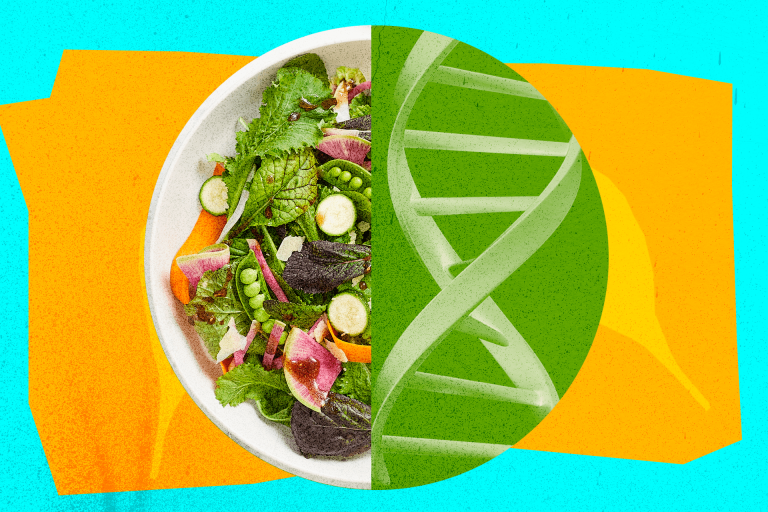
In November 2025, Pairwise signed a licensing agreement with the International Rice Research Institute (IRRI) to allow the institute to use its patented CRISPR/Cas tool. This agreement is one of many1 concerning the Crispr tool, for which Pairwise itself holds an exclusive licence from Massachusetts General Hospital (MGH) for the development of agricultural applications2. Through its Fulcrum platform, using its own Crispr SHARC enzyme, Pairwise claims to be “developing new traits quickly without creating GMOs“. These promises are misleading from a European legal standpoint (these are GMOs), reinforced by an aggressive marketing strategy and rhetoric promoting the desire to “build a better food system“.
Marketing focus, denatured products and partnerships galore
Pairwise was co-founded in March 2017 by Tom Adams, a former Monsanto executive, Feng Zengh of the Broad Institute, one of the first researchers to work on Crispr, and other scientists (from Harvard Medical School, MGH, etc.) with the aim of developing the use of Crispr in agriculture. But with hindsight, “product marketing” seems to have taken precedence over any desire to improve the food system.
Since its initial collaboration with Bayer in November 2019 to create new varieties, Pairwise has been developing genetically modified plants using new genomic techniques protected by its patents. The company’s goal is to market foods presented as “innovative“, such as Norfolk Plant Sciences’ purple tomato3. These foods have unnatural characteristics “for consumers seeking variety in produce“, says Pairwise. In April 2020, Pairwise established its first partnership with Plant Sciences to create various GMO berries, including black raspberries, “which naturally have five times more antioxidants than blueberries… and, when genetically modified, expand growing seasons and enable year-round production“.
In May 2023, the company launched its Fulcrum platform, which it describes as “using Pairwise developed genetic editing tools, artificial intelligence and a library of traits and expertise“. Through this platform, Pairwise licenses Crispr patent rights, which it owns or controls, to multinationals such as Corteva and Bayer. In August 2023, Pairwise established a collaboration with Bayer, which will result in a first product in May 2024: a blend of salad mustard varieties that will reduce the wasabi taste of raw leaves. “Pairwise created a new product for consumers who prefer a less-pungent taste but still want the nutrition of fresh mustard greens“, says the Durham, North Carolina-based company, confirming once again its strategic choices.
Pairwise is continuing this approach, announcing in June 2024 that it has developed the first seedless blackberry via its Fulcrum platform. While the natural antioxidant medicinal properties of blackberries are highlighted, Pairwise’s main selling point is their pleasant taste: “Blackberries are a snackable fruit with significant health benefits; however, data indicates that more than 30% of berry buyers do not like the seeds, and many more do not even buy the fruit because of the seeds.” In September 2025, Pairwise confirmed this by announcing a “strategic partnership with Sun World International to develop the Holy Grail of fruits and vegetables: the pitless cherry.” In mid-November 2025, it granted a new licence for its Fulcrum platform to the Dutch company Enza Zaden for the development of “novel crop varieties and sustainable farming practices”.
Resolutely strategic institutional links
Perhaps with a view to “building a better food system”, Pairwise has for some time been establishing agreements with other types of actors, notably public research centres that are members of CGIAR (Consultative Group on International Agricultural Research), an intergovernmental organisation for joint (public and private) research4. Another agreement concerning yams was concluded in Africa with the International Institute of Tropical Agriculture (IITA) in October 2024, with the assistance of the Gates Foundation5. In June 2025, the International Maize and Wheat Improvement Centre (CIMMYT), based in Mexico City6, obtained a licence for the Fulcrum platform “for the development of improved crop varieties for smallholder farmers” accross 20 countries where CIMMYT implements food security programmes. The crops concerned include maize, wheat, sorghum and important regional staple foods such as pearl millet, finger millet, cowpea and groundnut.
The most recent agreement was signed in November 2025. Pairwise signed it on rice with the IRRI, a core member of CGIAR. This consortium of 15 public research centres is one of the historical pillars of global agronomy. It was built on the principle of open access to biological resources and agronomic innovations. The introduction of Crispr and Pairwise’s Fulcrum platform – both patented – into its operations therefore marks a significant and worrying shift. However, the use of patented technologies runs counter to the spirit of openness and free access that has historically guided the CGIAR.
Through IITA, IRRI and CIMMYT, the entire CGIAR network is exposed to new patent-licensed genetic modification techniques. This could also indirectly affect another CGIAR member, CIRAD, a French public organisation focused on agriculture in the Global South. This development raises questions about the policy pursued by this network, which has historically been built around knowledge sharing, germplasm circulation7 and free innovation rather than industrial property rights.
Pairwise is looking ahead to the Europe of NGTs…
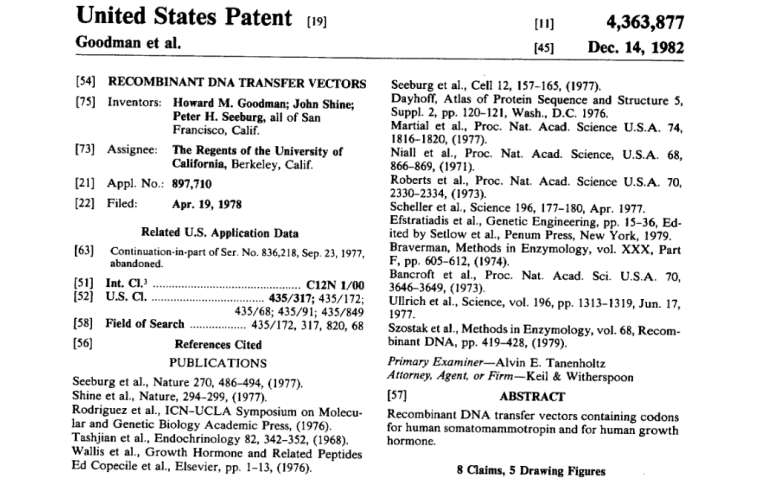
The subject of patents occupies a major place in the ongoing trilogue on the deregulation of GMOs/NGT between the European Commission, the Parliament and the Council of the EU: the patentability of GMO products obtained via NGT, the impact of patents on small and medium-sized seed producers and farmers, and the risk of concentration of patent rights among a few multinationals. Pairwise is at the crossroads of these issues. It holds a significant patent position on CRISPR, grants licences to private and public partners, and is thus positioning itself as a technology platform that may become difficult to circumvent.
The simultaneity of the acceleration of the above-mentioned agreements and the European debates gives particular meaning to Pairwise’s initiatives. Even without an explicit causal link, the US company is strengthening its presence, particularly in Europe (Corteva, Bayer), at a time when the rules of the game for GMOs/NGT are being revised. This dynamic corresponds to well-known mechanisms in regulatory economics. In periods of transition, actors establish alliances, build systems and create contractual relationships that subsequently become difficult to undo.
… and is positioning itself as a future leader in the sector
Today, questions remain. With regard to the agreements relating to the Fulcrum platform, particularly those binding CGIAR members, questions arise concerning the ownership of the results of research on different crops and their industrial exploitation. Pairwise could, through specific contractual clauses, strengthen its intellectual property rights over several plant traits.
Furthermore, if the Fulcrum platform were to become more widespread, would it eventually become the “standard” in the development of GMO products derived from NGT, thus positioning Pairwise as a major player in the sector? Finally, by developing fruits without seeds or pits, which are therefore unable to reproduce naturally, Pairwise is challenging the very concept of natural plant reproduction by using genetic modifications via technical protocols that are still far from being fully mastered.
- Pairwise, “Collaborations & Products“. ↩︎
- Pairwise, “Pairwise licenses CRISPR technologies from Massachusetts General Hospital (MGH) and Broad Institute”, AgNews, 22 March 2019. ↩︎
- Denis Meshaka, “Conflit autour d’une tomate violette”, Inf’OGM, 28 May 2024. ↩︎
- CGIAR ↩︎
- Pairwise, “IITA and Pairwise Secure £3.8M to Boost Yam Production Through Gene Editing,“ 8 October 2024. ↩︎
- CIMMYT, “Pairwise Licenses Gene Editing Tools to CIMMYT to Fast-Track Smallholder Farming Systems’ Transformation,“ 12 June 2025. ↩︎
- Germplasm is the term used to describe genetic resources or, more specifically, the DNA of an organism and collections of this genetic material.
Wikipedia contributors, “Germplasm”, Wikipedia, The Free Encyclopaedia, page accessed 9 December 2025. ↩︎