

News
Filter by year :

Innovation
In 2025, the European Union is expected to adopt a “biotech act” aimed, among other things, at modernising agriculture through new technologies. At the same time, public policies, in particular the Common Agricultural Policy (CAP), are guiding farmers towards ever more expensive and sophisticated mechanisation. As a result, a “high-tech” and soil-less agricultural model is taking shape in Europe, with the risk of increasing farmers’ indebtedness and marginalising small-scale farming.

Law
Digital sequence information (DSI)
“Artificial intelligence” (AI) is used to extract and restructure information from raw or unstructured data. Companies are using it to identify phenotypic traits associated with genetic sequences. Referring to a recent patent application by the company Inari, the German NGO Testbiotech points out the risks associated with the combination of new genomic modification techniques (NGT) and AI. It condemns the possible abuses of patentability and the need for robust GMO regulations. However, Inari has already filed other similar applications, which raises questions about the legal impact of such rights and their adaptation to AI-driven technologies.
Digital sequence information (DSI)
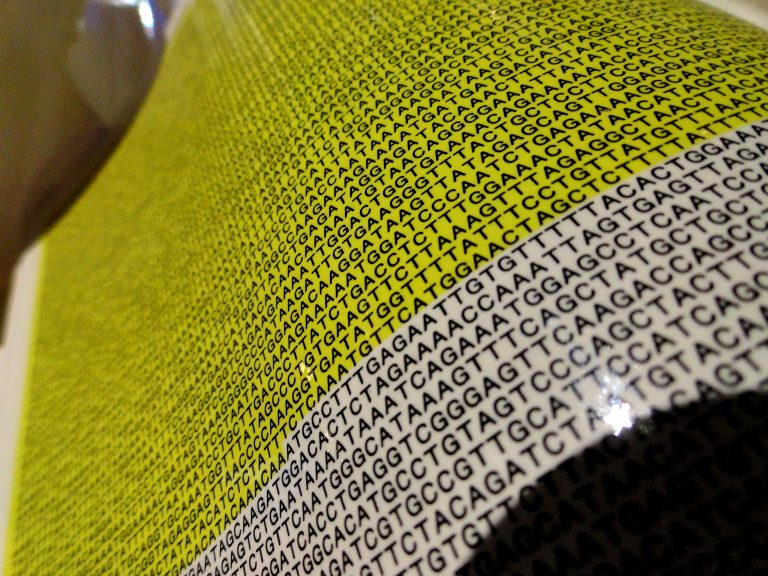
The digitization of living organisms is the subject of a growing number of projects. Computer data, generated and stored in ever-larger “data centers”, are used by “artificial intelligence” matrices. These data are of all kinds: genetic sequences, proteins, etc. In these fields, which require increasing natural resources, investments are multiplying.

Law
Generality
At the end of 2024, the Netherlands initiated a process of reflection on the meaning to be given to the legal definition of a GMO, discussing the definition word by word, expression by expression. A purely intellectual exercise? Far from it! The result of this work could change the way the definition of a GMO is read… without changing the definition itself. The expected outcome of these reflections is, of course, a lighter regulatory framework.

Law
Patents
At the European Patent Office (EPO), one of the key principles for patentability of inventions is that the invention must be described in sufficient detail for any “person skilled in the art” to be able to reproduce it. In biotechnology, where living systems are manipulated, this requirement poses a particular challenge. The notion of “reproducibility” of the invention thus becomes an essential criterion, which can take on different meanings depending on the context. This article explores the subject of the reproducibility of biotechnological inventions according to the practice of the EPO, in particular the case law of its Boards of Appeal.
Health
Cloning
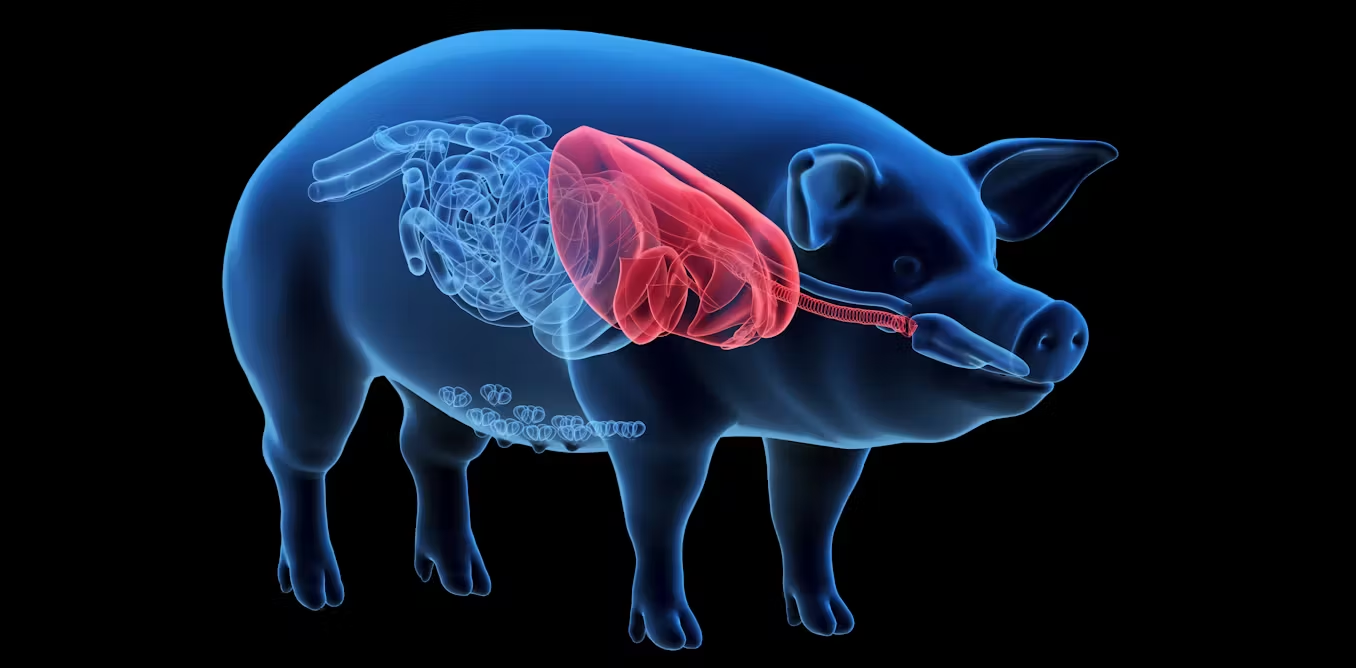
Xenotransplantation in humans is the subject of one announcement after another. This involves transplanting an organ or tissue from a genetically modified animal into a human, to alleviate the shortage of human organs. The “new genomic techniques” are used to genetically modify donor animals. Does the use of these techniques raise new questions of animal ethics?

New genomic techniques (GMO/NGT)
On 14 March 2025, the Member States of the European Union achieved a fragile qualified majority to launch a discussion with the European Commission and the European Parliament on the deregulation of GMOs. It took the member states almost two years to reach this majority, as there are still many disagreements. Negotiations between the three European decision-making bodies – known as a “trilogue” – could now get underway, subject to the vote of a final formal mandate by the European Parliament’s Environment Committee.

Law
Ethic
In September 2024, the European Patent Office (EPO) refused a patent for human-pig chimeras on the basis of the ethical rules governing patentability in biotechnology. By invoking the protection of “human dignity”, the EPO is drawing a sometimes fluctuating line between innovation and respect for fundamental values. This decision sets a – perhaps fragile – precedent for inventions affecting human identity, and highlights the complexity of an ethical framework in the era of unbridled biotechnology.
Law
New genomic techniques (GMO/NGT)
In July 2023, the European Commission’s proposal to deregulate GMOs was presented and understood as concerning only plants. Micro-organisms, animals and fungi would not be concerned. However, a careful reading will show that, contrary to what the European Parliament seems to have understood, some micro-organisms are indeed concerned… because they are considered to be plants!