

News
Filter by year :

Health
Research governance
Covid19
After describing the main issues and key players (part 1)i, we will now trace the prehistory of Covid-19, followed by its history, which has received more media coverage.
Health
Research governance
Covid19
A Covid-19 epidemic (acronym for ‘coronavirus disease 2019’) was officially declared in January 2020 in the city of Wuhan, then quickly turned into a pandemic spreading throughout the world. The rapid spread of the SARS-CoV-2 virus (for ‘Severe Acute Respiratory Syndrome’), responsible for this pandemic, led to lockdowns being imposed on everyone, regardless of age group or susceptibility to the disease. It has disrupted the lives of billions of people. But where did the virus come from? This three-part article aims to describe what is known about the origin of this virus and why it should matter to us, here and now. All those involved in this pandemic story are undoubtedly hiding part of the truth.
In the first part, we explain the issue and why it may be of interest to us, even after the pandemic is over, and describe its main players. In the second part, we will review the history of this pandemic. In the third part, we will give the opinions of various institutions on its origin.

Lobby / conflict of interest
As the European Union attempts to move forward with its trilogue on the deregulation of plant GMOs derived from new techniques (NGT), the French Association for Plant Biotechnology (AFBV) and its German counterpart (WGG) are stepping up to the plate. In a joint statement, they highlight the disagreements between the European Parliament and the Council, while arguing, on the basis of what they claim to be “scientific” arguments, for the deregulation of these GMOs, to the benefit of the biotech sector.
Lobby / conflict of interest
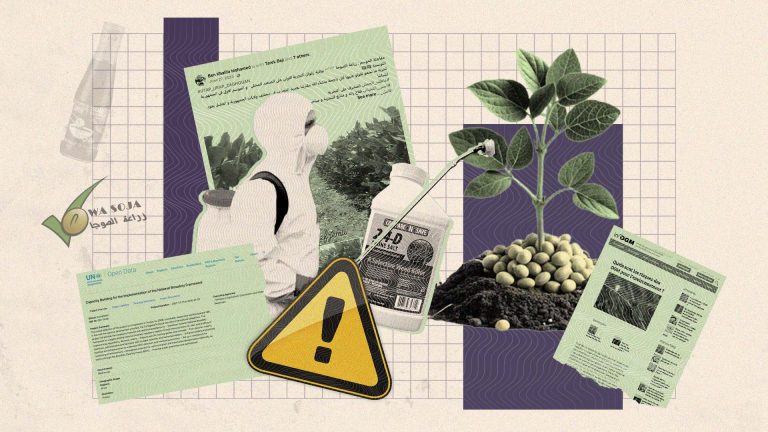
Presented as a response to the feed crisis, a new crop is quietly taking root in Tunisian fields. Behind the soybeans, genetically modified seeds are being introduced without regulation and amid total institutional silence.
Authorization
At first glance, this finding may seem surprising. Only three GMOs obtained through new techniques of genetic modification are currently being cultivated and their harvest commercialised. The many promises of their benefits for health, the environment, and “competitiveness”, as well as the argument that they are already deregulated in many countries around the world, would suggest that these “miracle” products would have been more widely adopted. Clearly, this is not the case.

Environment
Ethic
Under the guise of making the continent a world leader in “life sciences”, the European Commission has confirmed its clearly pro-industry vision in its strategy published in early July. With a resolutely competitiveness-focused approach, it minimises the potential consequences for other social actors.
Analysis / Detection
In 2024, the European Union once again recorded alerts of GMO contamination. Of the 24 alerts, the vast majority concerned unauthorised GM rice, but also papaya, soybean, flax and corn. Two cases of contamination by genetically modified microorganisms were also reported, one of which even forced the Belgian authorities to issue a public statement recalling a product. In three cases, the nature of the illegal GMO was not specified.
Analysis / Detection
The need to be able to detect and identify GMOs obtained through new genetic modification techniques is a request that is being made more and more frequently. Following in the footsteps of associations, farmers’ unions, organic and non-GMO producers and processors, as well as supermarkets, it is now the turn of some laboratories specializing in analyses to make such a demand. At a time when European legislators are discussing the possible complete deregulation of such GMOs, these positions could carry more and more weight.

Authorization
Animal proteins without animalsMilk proteins without cows, fish without fish, meat without animals and even egg proteins without eggs or chickens: welcome to the realm of “precision fermentation” for our future food. Three start-ups in the sector have obtained approval for their milk-free milk proteins from the US health authorities, enabling them to sell them to food manufacturers.The industry and certain institutions are presenting these innovations as a step forward in reducing the carbon impact of livestock farming and meeting the food needs of human populations. Above all, it is a promising market: these “advances” are already attracting investors.