

News
Filter by year :

Brevetabilité
For over a decade, European institutions have sought to prevent the patenting of plants and traits obtained exclusively through essentially biological processes. However, patents relating to “native traits” continue to indirectly cover these traits through claims relating to associated technical features. The recent deregulation of GMOs/NGTs raises concerns about the risk of these patents extending to plants derived from traditional breeding and propagation – which are not patentable – and which therefore naturally contain such “native traits”.

On Tuesday 16 June 2026, the Council of the European Union achieved a qualified majority to enter into negotiations with the European Parliament on a draft directive that would allow the release of genetically modified micro-organisms into the environment under less stringent regulatory conditions. France has declared its support for this draft directive. This decision endorses the European Commission’s proposal of 16 December 2025 as part of the “Biotech Acts”. These latter aim to simplify regulations for the benefit of businesses.

Pesticide
Presented as an alternative to chemical pesticides, biocontrol operates on a logic of substitution that allows the pesticide industry to “green” its operations. Worse still, biocontrol products could overshadow beneficial approaches such as peasant agroecology or biological pest control. To facilitate the marketing of biocontrol substances, the European Commission proposed a definition and simplified regulations in the draft Omnibus X regulation in December 2025.
Health
Crispr
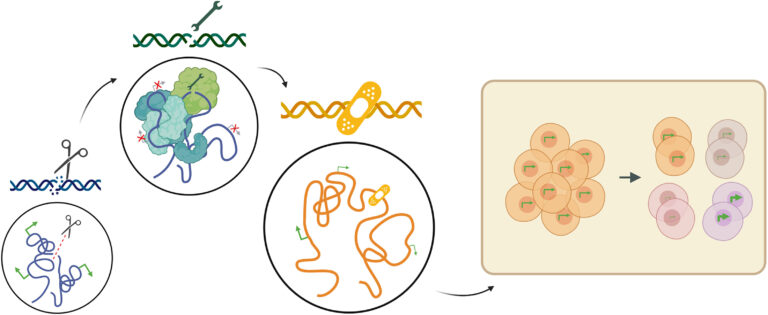
Touted as precise, simple and inexpensive, CRISPR/Cas is the flagship tool underpinning the promises made by GMOs derived from new genetic modification techniques (NGTs). Already at the centre of several controversies, CRISPR/Cas is once again making headlines. This time, it concerns the discovery of a new type of harmful effect.

New genomic techniques (GMO/NGT)
On Wednesday 17 June 2026, MEPs adopted the compromise text deregulating GMOs produced using new genetic modification techniques (GMO/NGT). This text, which is identical to that adopted by the Council of the EU on 21 April 2026, means that GMO/NGT will be able to be placed on the market in the EU without authorisation, without risk assessment, without labelling (except on seed lots) and without the publication of methods for detecting and identifying them. It will come into force in 2028.
In December 2025, the European Commission proposed a set of measures to amend the regulations governing food and animal consumption, compiled in a document entitled “Omnibus X”. This document notably proposed the creation of a new legal category: “biocontrol substances”, described as an alternative to chemical pesticides, whose development and marketing the European Commission aims to promote. However, on June 12, the Council of the EU noted the lack of a qualified majority for this text.

New genomic techniques (GMO/NGT)
In July 2023, alongside its proposal to deregulate new genetic modification techniques (NGTs), the European Commission promised an assessment of the impact of patents on plant breeding. The report, produced by Technopolis and published in December 2025, highlights several problems related to patents. These problems will not be resolved by the non-binding measures adopted by the Council of the European Union in April 2026. Do the European authorities really only listen to the voice of industry, even if it means ignoring the reports they commission?

Mowing & more
On 17 June, between 12.30 and 1.30 pm, MEPs, meeting in plenary session, will vote, without debate, on the proposal to deregulate GMOs derived from new genetic modification techniques (GMOs/NGTs). Inf’OGM summarises here some of the positions, campaigns and other calls for action by civil society organisations, elected representatives, businesses and trade unions regarding the risks that its adoption would entail.

Analysis / Detection
In April 2026, Jacquet, a subsidiary of Limagrain, withdrew wraps from the French market: they contained genetically modified flax not commercially authorized. While no genetically modified flax varieties are currently officially cultivated worldwide, Canada authorized the cultivation of one variety in 1996 before withdrawing the authorization in 2001. This country has also recently ended its mandatory flax export monitoring program.