

News
Filter by year :

Journal
New genomic techniques (GMO/NGT)
More meat, milk, wool, etc. have always been some of the objectives of animal selection. For meat, two genetic modification strategies have been implemented : influencing the level of growth hormone, or blocking the gene responsible for the production of myostatin, a hormone that inhibits muscle growth. Research that is far from improving animal welfare… […]
Journal
New genomic techniques (GMO/NGT)
A certain number of insects are considered as pests, because they carry diseases or are parasites on crops. There are many ways to combat them : chemical insecticides, pheromone traps, induced sterility, etc. Several techniques are being developed to induce sterility in an insect. These techniques – radiation mutagenesis, transgenesis, inoculation with the bacterium Wolbachia [1] […]
Climate change
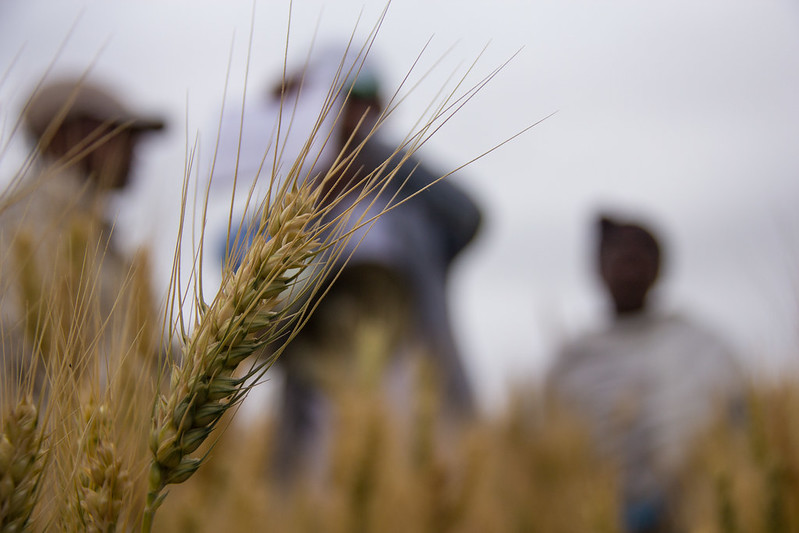
Jabal, a non-GMO drought-resistant wheat variety, will soon be grown commercially in Morocco. At a time when it is mentioned to adapt new plant varieties to climate change, particularly through genetic modification, we thought it would be interesting to show that other ways are possible, even if they are not farmers’ seeds and even if […]

Agrofuel
In February 2022, Inf’OGM discovered transgenic rapeseed growing illegally in the port area of Grand-Couronne (near Rouen, Seine-Maritime, France). In July 2022, despite measures taken by the Ministry of Agriculture, new GMO rapeseed plants were found in the same area. The association also discovered transgenic rapeseed in Sète (Hérault, France). In both cases, the Saipol […]

non transgenic GMO
In 2023, the governments of the European Union member states will have to vote on the European Commission’s legislative proposal on new GMOs, which will be published in late spring. In a voting system where the weight of a state depends on the percentage of the population it represents, the position of the German government […]

non transgenic GMO
At the end of October 2022, European experts from the European Food Safety Authority (EFSA) published an opinion on the criteria to be followed to assess the risks associated with “plants produced by targeted mutagenesis, cisgenesis and intragenesis”. While they confirm the absence of a history of safe use of these GMOs, they nevertheless recommend […]

Analysis / Detection
The possible absence of a traceability obligation for “new GMOs” by the European Commission would give patents an unjustified and deleterious scope for farmers and small seed companies, but also for biodiversity and food. In November 2019, the European Council invites the European Commission (EC) to “submit a study in the light of the judgment […]

Labelling
On Saturday, November 19, Greenpeace activists decided to raise awareness among consumers on the issue of “new GMOs” and invited supermarket chains to demand that the French and European authorities label all GMOs, whether they are derived from transgenesis or another genetic modification technique. This action complements those carried out by the Faucheurs volontaires d’OGM […]

Agronomy
Patents
The vast majority of genetically modified plants (GM plants) grown in the world have been modified to be herbicide tolerant. The use of these plants poses many problems, including environmental ones, and the emergence of many weeds that are also tolerant. A South Korean study of the agrochemical industry’s patent applications suggests that the industry […]