
News
EU Council approves deregulation of GMOs/NGTs
By Eric MEUNIER
Published on the 21/04/2026, modify the 16/06/2026


On 21 April 2026, EU Member States voted in favour of deregulating GMOs/NGTs at the EU Foreign Affairs Council. The text is coming back now in the European Parliament’s court, with its Environment Committee due to meet on 5 May, ahead of a plenary session for discussions and votes by MEPs on 19 May 2026.
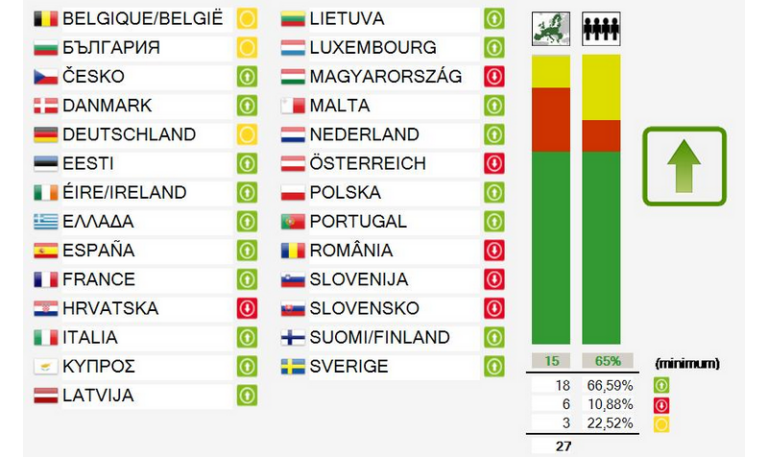
Since July 2023, the Council of the European Union (EU) had still not adopted a formal position on the European Commission’s proposal to deregulate numerous GMOs obtained through new genetic modification techniques (GMOs/NGTs). However, on Tuesday 21 April, the Council reached a qualified majority and formally adopted a favourable position at first reading. Much debated, this text had until now failed to secure agreement among Member States due to significant disagreements.
A text that deregulates numerous GMOs
The text adopted by the Council of the EU, without any discussion during the meeting, was rejected by Croatia, Hungary, Austria, Romania, Slovenia and Slovakia. With Germany, Belgium and Bulgaria abstaining, this was not enough to block a qualified majority, as 18 out of 27 Member States, representing 66.59% of the European population, voted in favour ofi.
The adopted textii therefore provides that GMOs/NGTs are to be classified into two categories.
The first, known as “NTG 1“, based on non-scientific criteria, would allow for potential marketing in Europe without risk assessment, without formal authorisation, but following “verification” of a declaration by the company, without any obligation to provide a method for detecting and identifying the deregulated GMO, without labelling (with the exception of seed lots), without the possibility for Member States to take national measures restricting or prohibiting such marketing, and without post-marketing environmental monitoring. There are, however, two exceptions: plants genetically modified using new techniques to resist herbicides or produce their own insecticide (provided it is “known“) will not be eligible for this NTG1 status.
The “NTG 2” category would cover other GMOs/NGTs and would be subject to a regime similar to that currently governing GMOs.
One of the points of contention concerns the patents associated with these plants, which have been criticised by various stakeholders (NGOs, farmers’ unions, seed companies, etc.). For them, not being obliged to provide a method for detection and identification opens the door to an increase in patent applications on living organisms. This is precisely the issue that, since 2023, has been the subject of considerable disagreement among Member States and which remains unresolved by the text adopted by the Council on 21 April 2026.
A real difficulty for the Council of the EU in taking a position
Since 2023, the lack of an official position from the Council of the EU had not prevented the opening of negotiations in 2025 between the Commission, Parliament and Council as part of the trilogue, which brings representatives from each of these European institutions together around the same table. Launched in the spring, these negotiations were expected to be complex given the differences of opinion expressed.
On the one hand, as early as 2023, the European Commission proposed an almost complete deregulation of GMOs/NGTs, with no risk assessment (health, environmental, economic, social, etc.), no labelling (except for seed lots), no analytical traceability of these GMOs (no mandatory detection or identification methods to be provided), and no possibility for Member States to take national measures (principle of subsidiarity), whilst retaining the possibility of patenting plants derived from these NGTs…
In 2024, the European Parliament contested this last point in particular, demanding that the granting of patents on these GMOs/NGTs should not be possible. This demand echoed – and continues to echo – the observation made by several stakeholders at the time and since, that the deregulation of these GMOs would open the door to increased appropriation of living organisms by multinationalsiii. Within the Council, the issue of patents – and others, such as labelling requirements for certain Member States – had been a source of fierce opposition, which was the root cause of its inability to reach a consensus on the proposed text.
A compromise text offering false solutions
In early December 2025, these negotiations resulted in a so-called “compromise” textiv that raises concerns. Indeed, this text does not mark any major change from the European Commission’s initial proposal. In addition to maintaining the absence of risk assessment, labelling or any obligation on companies to provide a method for detecting and identifying their GMOs (analytical traceability), the text proposes nothing binding to resolve the issue of patents.
Only non-binding measures are set out, such as an assessment of the impacts that plant patenting, associated licences and transparency practices “have on innovation in plant breeding, on breeders’ access to plant biological material and techniques and on the availability of plant reproductive material to farmers, as well as on the overall competitiveness of the Union’s plant breeding industry, in particular small and medium-sized breeders, and the potential risks of market concentration”. All these impacts would magically disappear with the second proposed measure: the drafting of a “code of conduct” that multinationals would be expected to follow, but without any legal obligation. The same applies to “licensing platforms“, which are supposed to ensure, without knowing what the terms actually mean, access to licences for SMEs under “fair and reasonable” conditions… A final example: an expected assessment by the European Commission of “the patenting of NGT plants, traits and techniques, as well as related licensing and transparency practices, have in the Union on […] the risk of litigation involving farmers or breeders in situations where patented plant biological material may appear in their crops or products due to accidental presence or similarity, without intentional use of the patented plant biological material”v . In the event that problems are identified – provided they are classified as such by the Commission – the latter may “submit legislative proposals to set up mandatory conditions or safeguards”…
The Council of the EU approves the deregulation of GMOs/NGTs
Despite the non-binding nature of the proposed measures, the disagreements between Member States that characterised 2024 and 2025, and the opposition from numerous stakeholdersvi, it is nevertheless this compromise text that has just been approved by the Council of the EU on 21 April 2026. As it had indicated on 19 December 2025 during an informal discussionvii, France has shifted its long-standing position and declared itself in favour of its formal adoption by the Council. Although, in December, the government boasted of having secured a commitment from the Commission to ensure the compromise’s content was upheldviii, this commitment did not introduce any binding provisions into the compromise text, as was recently confirmed by a representative of the French Ministry of Agricultureix.
With this vote, the Council’s first-reading position on this text on the deregulation of GMOs/NGTs is therefore known for the first time since 2023. On the same day, the Council also adopted its position at first reading on a proposal made in 2023 by the European Commission regarding the production and marketing of forest reproductive materialx. This text specifically states that trees genetically modified using new techniques will indeed be subject to the text on the deregulation of GMOs, provided that the latter is ultimately adopted.
The text adopted on 21 April 2026 on GMOs/NGTs will now return to the European Parliament to continue its legislative process. The next step will be a meeting of the Parliament’s Environment Committee on 5 May, before MEPs discuss and vote on their position at second reading on 19 May 2026.
i A qualified majority is achieved if two conditions are met simultaneously:
- at least 55% of the Member States (i.e. 15 out of 27) have voted in favour
- these Member States represent at least 65% of the total EU population
ii The adopted text:
Council of the EU, « Position of the Council at first reading with a view to the adoption of a REGULATION OF THE EUROPEAN PARLIAMENT AND OF THE COUNCIL on plants obtained by certain new genomic techniques and their products, and amending Regulation (EU) 2017/625 », 8 April 2026.
iii Antoine Vépierre, « A wide range of stakeholders opposed to the deregulation of GMOs/NGTs », Inf’OGM, 20 April 2026.
iv Eric Meunier, « Qualified majority in the Council of the European Union to deregulate numerous GMOs », Inf’OGM, 24 December 2025.
v The adopted text:
Council of the EU, « Position of the Council at first reading with a view to the adoption of a REGULATION OF THE EUROPEAN PARLIAMENT AND OF THE COUNCIL on plants obtained by certain new genomic techniques and their products, and amending Regulation (EU) 2017/625 », 8 April 2026.
vi Antoine Vépierre, « A wide range of stakeholders opposed to the deregulation of GMOs/NGTs », Inf’OGM, 20 April 2026.
vii Eric Meunier, « Qualified majority in the Council of the European Union to deregulate numerous GMOs », Inf’OGM, 24 December 2025.
viii Eric Meunier, « French government in favour of deregulating many GMOs », Inf’OGM, 28 January 2026.
ix Denis Meshaka, « Le ministère de l’Agriculture admet un compromis sur les brevets dans le règlement OGM/NTG », Inf’OGM, 14 avril 2026.
x Council of the EU, « Position of the Council at first reading with a view to the adoption of a REGULATION OF THE EUROPEAN PARLIAMENT AND OF THE COUNCIL on the production and marketing of forest reproductive material, amending Regulations (EU) 2016/2031 and (EU) 2017/625 of the European Parliament and of the Council and repealing Council Directive 1999/105/EC (FRM Regulation) », 10 April 2026.
We need your help!
For over 25 years, Inf’OGM has been producing information, made freely available to everyone, on the artificialisation and appropriation of life (GMOs, NTGs, biotech, patents, etc.).
The monopolisation of a large share of public press subsidies by a few media groups reinforces the concentration of media ownership in the hands of a handful of businessmen. This concentration undermines the quality of information and democratic debate, which require a plurality of viewpoints.
In this context, alternative media outlets such as Inf’OGM, which receive no advertising revenue and provide information free of charge, need you – our readers – to continue to exist! Because, even when freely accessible, information comes at a cost.
Supporting Inf’OGM means working towards reliable, independent information on GMOs, biotechnology and seeds that is accessible to everyone.