
News
For the FSC label, trees derived from NGTs are GMOs that cannot be certified as “sustainable”
By Christophe NOISETTE
Published on the 01/09/2026, modify the 15/09/2026


The Forest Stewardship Council (FSC), which certifies “sustainably” managed forests, held a public consultation on the interpretation of its definition of “genetically modified organism” (GMO)i – a definition adopted in 2000 and copied verbatim from the European definition in force since 1990. Currently, GMO tree plantations cannot obtain FSC certification. The consultation revealed conflicting views among the stakeholders (both members and non-members) who participated. However, among FSC members specifically, a narrow majority of respondents favored classifying trees derived from New Genomic Techniques (NGTs) as GMOs. Consequently, the FSC secretariat decided to keep trees genetically modified using NGTs within the GMO category, thereby maintaining the ban on their use in certified plantations.
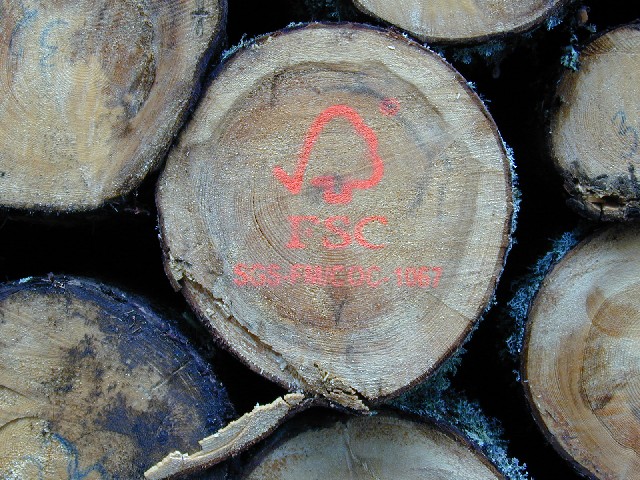
In 2000, the Forest Stewardship Council (FSC) adopted a policy prohibiting GMOs in FSC-certified forests. The FSC defines a GMO based notably on European Directive 90/220: “an organism whose genetic material has been modified in a way that does not occur naturally by mating and/or natural recombination“, subject to the same exemptions provided for by the European Union in 1990 and subsequently clarified by the CJEU. This prohibition and definition remain in effect.
2021–2025: Attempts to modify the definition of a GMO
In 2021, the FSC launched a consultation on its Policy for Associationii. The Global Forest Coalition – which is not an FSC member – noted that this 2021 consultation focused in particular on the definition of a GMO and that pressure was being exerted to “relax” that definition in order to exclude certain new genetic modification techniques. Ultimately, the final text retained the original definition of a GMO. Pressure mounted when the FSC subsequently launched a “learning process on GMOs“. As part of this initiative, the FSC attempted to distinguish between “genetic engineering” and “gene editing” (to use their terms): the former was presented as producing GMOs, while the latter was portrayed as a different process. Following an international campaign, the FSC office ultimately decided to close the process without making any changes to the existing definition.
During the same period, the issue of New Genomic Techniques (NGTs) was gaining momentum internationally. In Europe, the European Commission proposed deregulating plants derived from these NGTs in 2023. Forestry companies holding FSC certification sought a separate regulatory framework from the FSC for NGT trees. Consequently, in 2025, the FSC organized a second consultation – running from July 30 to September 28 – to gather input from its members and other stakeholders on the following question: do trees with genomes modified via New Genomic Techniques fall under the FSC’s definition of a GMO? The FSC extended the consultation beyond its membership to identify the practical impact of a given interpretation on specific economic actors and NGOs, and to gauge the social, political, and economic acceptability of any potential position.
A consultation dedicated to trees derived from NGTs
The consultation report was published on July 6, 2026. This consultation received 248 responses. 54% of the responses (148) disputed the view that new techniques would result in GMOs, compared to 37% (100 responses) that supported this position. 9% of respondents simply provided comments.
Let us break down these responses. Among all respondents, 82 identified themselves as FSC members (approximately 33%), while a majority (around 65%) indicated they were not members.
FSC members are divided into three chambers: economic (forestry companies, paper industries, certification bodiesiii), environmental (nature conservation associations and NGOs, environmental research institutesiv), and social (Indigenous peoples’ organizations, trade unions, and forestry worker organizationsv). The specific list of members is not public. However, it is known that FSC International has over 1,160 members across 90 countries.
The FSC report does not list by name the non-members who responded to the consultation. However, it specifies that they include academics, consultants, companies already certified by the FSC, NGOs (such as CBAN or the Global Justice Ecology Project), professional organizations (e.g., the New Zealand Forest Owners Association), and even private individuals.
Focusing solely on FSC members, the group is relatively divided, with a very slight majority of responses favoring the classification of new techniques as producing GMOs under the FSC definition (see Table 1). Above all, there is a clear, marked divide within the group between the Southern economic chamber – which is strongly opposed to equating NGTs with GMOs – and the Northern economic and environmental chambers, which are generally in favor.
It is therefore the non-members who tip the overall consultation result toward a majority “no” vote – meaning “no, new techniques do not yield GMOs under the FSC definition“. Within this group, the “yes” vote is in the minority (21%), while the “no” vote prevails at 39%. These non-members, who lack voting rights at the General Assembly, use the consultation as a channel to influence the FSC’s position on trees derived from NGTs. Some of the support for equating NGTs with GMOs came from NGO networks mobilized against GM trees, whereas part of the opposition stemmed from certificate holders and economic actors already involved in FSC certification in Latin Americavi. Examples include large FSC-certified industrial pine or eucalyptus plantation companies in Chile or Brazil, as well as Latin American forestry cooperatives that use the label to export to Europe and North America.
| NGTs produce GMOs | NGTs do not produce GMOs | No answer to the single multiple-choice question, but with comments | |
|---|---|---|---|
| Members : | 16 % | 15 % | |
| The Economic South Chamber | 2 % | 10 % | |
| The Economic North Chamber | 6 % | 3 % | |
| The Environmental South Chamber | 3 % | 2 % | |
| The Environmental North Chamber | 4 % | 0 | |
| The Social North Chamber | 1 % | | |
| Non members | 21 % | 39 % | |
| TOTAL | 37 % (100 answers) | 54 % (148 answers) | 9 % |
Another aspect of this consultation warrants analysis: the difference in responses based on the respondents’ geographical origin. “No” responses are far more prevalent in Latin American countries. Conversely, in Europe, “yes” responses predominate.
| NGTs produce GMOs | NGTs do not produce GMOs | No answer to the single multiple-choice question, but with comments | |
|---|---|---|---|
| Latine America | 7 % | 37 % | |
| North America | 5 % | 8 % | |
| Europe | 15 % | 3 % | |
| Rest of the world (Africa, Asia, Oceania, and international bodies) | 10 % | 6 % | |
| TOTAL | 37 % | 54 % | 9 % |
The arguments put forward
The FSC consultation then invites stakeholders to explain the arguments underlying their responses to the first question. Unsurprisingly, proponents of a distinct status for trees derived from NGTs employ arguments similar to those used by the European Commission and lobby groups to justify the EU legislation adopted on June 17, 2026, which deregulates plants produced via these new techniques. The FSC reports that those arguing against treating and regulating NGTs in the same way as transgenic GMOs claim that these techniques “produce precise, targeted modifications to the organism’s genome without inserting foreign genetic material“; that the resulting genetic changes are “indistinguishable” from those occurring naturally or through “conventional” breeding methods; and that the process constitutes mutagenesis – a category excluded from the definition of GMO-producing techniques under current FSC policyvii. It should be noted that, following a 2018 clarification by the CJEU, the exemption for mutagenesis within the European Union applies exclusively to methods that have been “traditionally used for various applications and have a long safety record“viii.
Finally, in their comments, these stakeholders put forward the same “economy of promise” argument: namely, that “maintaining an obsolete definition could restrict access to technologies that may prove essential for both research and commercial use, thereby limiting the development of more resilient, productive, and sustainable cultivars“. They therefore call for a case-by-case approach based on an analysis of the final product rather than the technical process. They add that several countries have already deregulated products derived from these techniques – a misleading statement, given that only a few countries have “deregulated” GMOs obtained via NGTs. Inf’OGM has demonstrated in numerous articles that these arguments are fallacious.
The consultation report highlights that “qualitative analysis of the responses revealed coordinated participation, with several contributions containing similar or even identical comments, indicating a collective effort to express shared viewpoints during the consultation process“. It notes, in particular, “a clear clustering of responses from a group of certificate holders in Latin America opposing the proposed interpretation. There were also collective responses from academics, primarily from North America“.
In contrast to the position seeking to exclude NGT products from the FSC’s GMO classification, environmental groups and a large number of European respondents advocate for a strict interpretation of the FSC’s definition of a GMO. For them, any genetic modification meeting this definition warrants excluding such trees from the scope of “sustainable” certification. They also fear that by creating an exception for certain NGTs, the FSC could ultimately open a loophole leading to the gradual acceptance of all genetically modified trees in FSC-certified plantations, thereby posing risks to ecosystems and the label’s credibility. Finally, several comments highlight that, given the deregulation of NGT-derived products in certain jurisdictions – including the EU – the FSC’s stance carries significant symbolic and practical weight: keeping these products in the GMO category sends a strong signal against the normalization of such GMOs within the wood and paper supply chain.
Choosing FSC: Beyond Consultation
Ultimately, the report upholds a firm stance: trees derived from NGTs fall under the definition of a GMO as it has been in effect within the FSC since 2000. In doing so, the FSC respects the position held by the majority of its members. The decision proposed by the FSC secretariat in this report takes the existing GMO definition as its starting point and proposes interpreting it to explicitly include organisms developed using new genetic modification techniques.
The FSC clarifies that the phrase “modified in a way that does not occur naturally” applies to both the final outcome and the process employed; this leads to the classification of any use of genetic modification techniques – whether transgenesis or NGTs – as falling within the GMO category. While the FSC, like the European Union, excludes certain techniques from the scope of GMOsix, trees with genomes modified using CRISPR or other new-technique tools remain subject to a ban on use, except within the relatively controlled context of research, as already provided for under the FSC’s current GMO policy.
This consultation helps the FSC understand who opposes classifying “NGT” products as GMOs, as well as the locations and arguments involved. It enables the FSC to identify internal divisions based on geography and the nature of the stakeholders.
However, the FSC’s position classifying “NGT” products as GMOs could be revisited if members wish to make it a subject of formal debate. In that event, the issue could be brought before a future FSC General Assembly, where the three chambers – economic, environmental, and social – each hold one-third of the votes, maintaining an internal balance between the North and the Southx.
i Forest Stewardship Council, « Public Consultation on the Interpretation of Genetically Modified Organism (GMO) Definition (INT‑FSC‑STD‑01‑001_19) », rapport de consultation, 6 July 2026.
Forest Stewardship Council, « New interpretation on the definition of GMOs published », 20 July 2026.
ii In 2022, Inf’OGM requested the official consultation document from the FSC, but to no avail.
Christophe Noisette, « FSC label: towards acceptance of GMO trees? », Inf’OGM, 27 September 2022.
iii Example : Ikea, Rougier Gabon, Resolute Forest Products, l’Oréal.
iv Example : WWF, FNE, Fundación FUNDECOR, Nature Conservancy of Canada.
v Example : SNUPFEN Solidaires, Max Havelaar, Fundación ALTROPICO.
vi Not all FSC certificate holders are members.
vii The FSC policy on GMOs was adopted in 2000. It is based on Directive 90/220, without replicating it exactly. Indeed, the FSC does not adopt the distinction between techniques that produce GMOs but are excluded from the scope of the Directive and techniques that do not produce GMOs. The FSC therefore specifies: “The following techniques are not considered to result in genetic modification, provided that they do not involve the use of recombinant DNA molecules or GMOs as recipient or parental organisms:
- in vitro fertilization,
- conjugation, transduction, transformation, or any other natural process,
- polyploidy induction,
- mutagenesis,
- cell fusion (including protoplast fusion) of plant cells, where the resulting organisms can also be obtained through traditional breeding methods”.
Forest Stewardship Council, « FSC POLICY – FSC INTERPRETATION ON GMOS (GENETICALLY MODIFIED ORGANISMS) – FSC-POL-30-602 (2000) EN », 1st May 2000.
viii EUCJ, « Case C‑528/16, point 51 », 25 July 2018.
ix Christophe Noisette, « FSC label: towards acceptance of GMO trees? », Inf’OGM, 27 September 2022.
x Each chamber holds 33.3% of the votes, and within each chamber, the votes are then weighted so that the “North” and the “South” each have 50% of the vote, thereby preventing members from the North from dominating decisions.
We need your help!
For over 25 years, Inf’OGM has been producing information, made freely available to everyone, on the artificialisation and appropriation of life (GMOs, NTGs, biotech, patents, etc.).
The monopolisation of a large share of public press subsidies by a few media groups reinforces the concentration of media ownership in the hands of a handful of businessmen. This concentration undermines the quality of information and democratic debate, which require a plurality of viewpoints.
In this context, alternative media outlets such as Inf’OGM, which receive no advertising revenue and provide information free of charge, need you – our readers – to continue to exist! Because, even when freely accessible, information comes at a cost.
Supporting Inf’OGM means working towards reliable, independent information on GMOs, biotechnology and seeds that is accessible to everyone.