
News
NGT Regulation: is Europe heading for a rise in seed prices?
By Denis Meshaka
Published on the 26/08/2026


In June, the European Parliament adopted a regulation on new genetic modification techniques (NGTs). Contrary to the demands of several civil society organisations – notably farmers’ groups, but also MEPs – the text does not ban patents on products derived from these NGTs. However, experience in the US shows that the strengthening of intellectual property rights over seeds has been accompanied by a general rise in their prices – particularly those of genetically modified seeds – and by increased concentration within the sector. This trend could also occur in Europe and, in the long term, have an impact on food prices.

Intellectual property rights, particularly patents, are generally presented as a driver of plant innovation. They also serve to increase the market power of companies, such as multinational seed firms, and can contribute to a rise in seed prices1, as the US example demonstrates. This issue takes on a new dimension with the new European regulation on NGTs.
Patents and the seed market
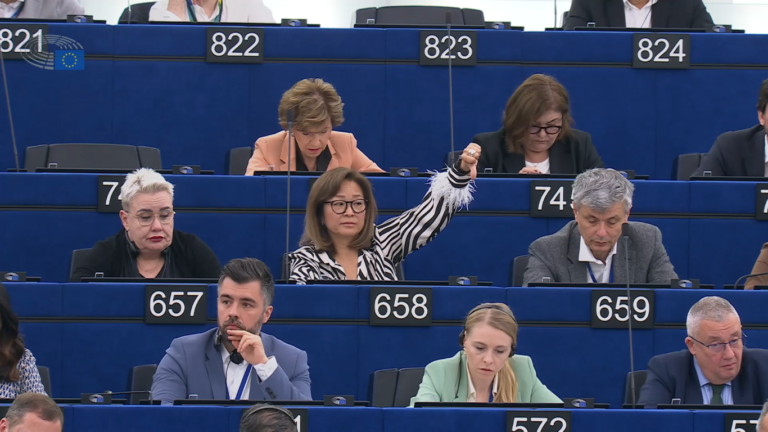
On 18 June, the European Union (EU) adopted a new regulation on NGTs (new genetic modification techniques). A lengthy debate on the subject of patents – with proposals from several civil society actors and MEPs to either ban them or limit their scope to products resulting from the use of the patented invention – ultimately failed to lead to their abolition or restriction. The regulation does include transparency provisions2 but their implementation remains, to say the least, complex and/or ineffective given their non-binding nature.
As a key participant in the debate, the European Coordination Via Campesina (ECVC) has advocated for such a restriction and has also called for a number of provisions to be introduced into the regulation to protect smallholder seed systems, as well as small and medium-sized seed producers. For example, the ECVC demanded that patent holders be obliged to provide methods for detecting and distinguishing patented Category 1 GMOs from any other plant obtained through essentially biological processes that are not patentable3. This provision was indeed the subject of an amendment proposed by Parliament, but it was not retained following the trilogue and the European Parliament’s final vote.
Furthermore, a patent confers on its holder the right to prohibit third parties from carrying out any acts constituting the exploitation of the invention, in particular to exclude competitors from the relevant market, and to impose one or more patent licences on them. It also makes it possible to threaten farmers with infringement proceedings, even where they have not used the patented invention but their own seeds contain a patented feature, either naturally or as a result of accidental and unavoidable contamination. Patents therefore strengthen the market control exercised by their holders; ultimately, this applies not only to GMOs/NGTs but also to all other seeds threatened by these abusive extensions of the scope of patents. However, dominating or controlling a market goes hand in hand with, at the very least, influencing or even setting market prices, within the limits permitted by law. The economic effects of such rights are already evident in countries where they are widely used, for example in the United States.
In the United States, patents are driving up the price of seeds
The United States has been a pioneer in the field of patents on living organisms, and biotechnology in particular4. GMOs are patentable there, including GMOs/NGTs. Plants and products derived from them are no exception to this, although a recent bill aims to limit the use of conventional utility patents on plants and plant genetic material5.
As shown in a 2023 study6 by the USDA (US Department of Agriculture), the US agricultural seed sector is feeling the effects of the expansion of intellectual property rights, particularly patents held by multinationals. This phenomenon has contributed to the concentration of the seed market in the hands of these multinationals. For example, according to this report, between 2018 and 2020, the two seed companies Bayer and Corteva accounted for 72 per cent of the area sown with maize and 66 per cent of the area sown with soya in the United States, whether GM or non-GM. As the vast majority of maize and soybean acreage in the US is cultivated using genetically modified varieties (around 90–95 per cent for many years now7), these acreage figures therefore relate primarily to GMO production.
The USDA report also shows that major US seed companies have, overall, increased their research and development expenditure and accelerated the development of new varieties. According to the US Department of Agriculture, this trend is driven by the prospect of being able to raise seed prices and generate higher revenues. According to the USDA, between 1990 and 2020, the prices paid by farmers for seeds in general rose by an average of 270 per cent, whilst the prices of seeds intended for crops with predominantly genetically modified traits soared by 463 per cent. By comparison, the prices received by farmers for their crop produce rose by 56 per cent. In other words, the cost of seeds has risen much faster than the value of the crops sold, which may be contributing to a squeeze on farmers’ margins.
According to the USDA, the rise in the price of non-GM seeds can be attributed to a combination of several factors:
i) the rising value of “improved” varieties and increased investment in research and development,
ii) the growing concentration of the seed market, which has strengthened the market power of large companies,
iii) the spillover of price dynamics from the GM segment to the seed market as a whole (“market effect“).
Indeed, large companies generally market ranges comprising both GM and non-GM varieties. The pricing strategies and margins developed for GM seeds can therefore influence the prices of other varieties offered in their catalogues.
Is a similar trajectory possible in the EU?
Several elements of the US system are also present in the European Union. The seed companies that dominate the market across the Atlantic are multinationals that are also present in Europe. The recent authorisation of GMOs/NGTs on the European market without traceability or labelling, following the adoption of the NGT Regulation, is another point of convergence with the US system – indeed, a more permissive regime8. Furthermore, as in the United States, European law permits, under certain conditions, the patenting of inventions relating to biological plant material, in particular plants or seeds exhibiting characteristics resulting from a technical intervention. The patentability of these companies’ GMOs/NGTs in Europe therefore contributes to an environment which, as in the United States, is conducive to an increase in the price of seeds.
It cannot, however, be said that the US scenario will necessarily be replicated, insofar as the two regulatory frameworks are not entirely comparable. Differences may also exist in competition law. It is impossible to rule out the possibility that the same economic mechanisms leading to an increase in seed prices might be repeated in Europe. Several reports, including the Technopolis report of December 20259 commissioned by the European Commission, as well as those from NGOs and farmers’ organisations such as ECVC, highlight the issue of seed market concentration in the hands of a few firms, as well as the role played by patents.
Consequences on several levels
The rise in the price of seeds in Europe is, first and foremost, a factor weighing on the overall costs borne by all farmers, despite the “farmers’ privilege“. Whilst European Union legislation allows farmers to reuse around thirty varieties of ‘farm-saved seed’ on their own farms, they are nevertheless required to pay “fair remuneration” to the seed company under the Plant Breeders’ Rights (PBR) scheme. Other seeds will have to be purchased by farmers, which will, in particular, increase their dependence on a few large seed companies and reduce their profit margins.
Furthermore, as seeds are the first link in the food chain, an increase in their price could contribute to higher agricultural production costs and, ultimately, to higher food prices in Europe10. The potential rise in the cost of seeds linked to the strengthening of patent rights would, however, constitute a further factor driving up the cost of agricultural production. The extent to which a potential rise in seed prices is passed on to consumers depends on numerous factors, including yields, global prices, agricultural policies and bargaining power within the supply chains. It cannot therefore be stated that a rise in seed prices, linked to intellectual property rights, will automatically lead to higher food prices.
Moreover, the USDA study does not measure this pass-through to the consumer. It does, however, clearly show that the extension of intellectual property rights, particularly patents, has strengthened the market power of seed companies and their ability to set higher prices. The USDA thus attributes the sharp rise in seed prices both to the value of new varieties and to the increased market power of companies. If this trend were to be replicated in Europe, a sustained rise in seed prices would constitute an additional factor driving up agricultural production costs, which, depending on the sector and market conditions, could be passed on in part to agricultural and food prices.
The risks of patents on NGTs
Given the adopted NGT regulation, patents on plants derived from NGTs remain a sword of Damocles hanging over small and medium-sized players in the agricultural sector, such as breeders and farmers… These stakeholders will, in fact, be unable to prove that their traditional seeds and plants containing a trait covered by a patent utilising NGTs – whether “naturally” or as a result of accidental contamination – do not derive from the invention claimed by that patent. This legal risk could, consequently, place them in a position of infringement.
Furthermore, the economic risk associated with rising production costs for conventional seeds may also stem from the need to navigate the “minefield” created by such patents and, for breeders, to eliminate any trait patented by others, including patents relating to native traits.
Whilst not claiming that future European seeds – particularly GMOs and NGTs – will necessarily, by virtue of their technical nature, command a particularly high price, the USDA report does, however, show that in the United States, an increase in intellectual property rights – particularly patents – does indeed strengthen the market power of seed companies, leading to greater concentration within the sector and control over seed prices.
Europe now possesses certain factors that could bring this scenario to fruition. Should the cost of seeds rise sustainably, the entire cost of European agricultural production – and potentially that of food – could be affected. In the event of a general rise in seed prices via the ‘market effect’, organic and non-GMO farmers could also suffer the consequences.
- United Nations – General Assembly, “Seeds, right to life and farmers’ rights” (para. 18), 30 December 2021. ↩︎
- Denis Meshaka, “The Council of the EU wants to maintain the patentability of GMOs/NGTs”, Inf’OGM, 21 January 2026. ↩︎
- Ibid. ↩︎
- Denis Meshaka, “Patents on life: a US “invention””, Inf’OGM, le journal, n°168, juillet/septembre 2022. ↩︎
- Last July, a bill entitled the “Fair Seeds for Farmers Act”, tabled in the House of Representatives by two Democratic MPs, aims to limit the concentration of economic power in the agricultural sector. Whilst it does not provide for a ban on all forms of intellectual property protection for plants, the FSFA nevertheless seeks to limit the use of traditional utility patents on plants and plant genetic material. Other specific systems for the protection of plant varieties would remain in place. ↩︎
- USDA, Amber Waves, “Expanded Intellectual Property Protections for Crop Seeds Increase Innovation and Market Power for Companies”, 28 August 2023. ↩︎
- USDA, Economic Research Service, “Adoption of Genetically Engineered Crops in the United States – Recent Trends in GE Adoption”, 12 December 2025. ↩︎
- In the United States, there is no general traceability system specifically for GMOs/NGTs comparable to that of the EU, and the detection of modified DNA plays a key role in the application of the “bioengineered” label. For NGTs, certain modifications may be exempt from USDA regulations and are therefore not subject to specific monitoring or labelling as products derived from NGTs. ↩︎
- Technopolis, “Supporting innovation in the EU bioeconomy through intellectual property protection”, 12 December 2025. ↩︎
- Denis Meshaka, “Brevet & OGM : le système alimentaire sous contrôle”, Inf’OGM, 10 janvier 2023. ↩︎
We need your help!
For over 25 years, Inf’OGM has been producing information, made freely available to everyone, on the artificialisation and appropriation of life (GMOs, NTGs, biotech, patents, etc.).
The monopolisation of a large share of public press subsidies by a few media groups reinforces the concentration of media ownership in the hands of a handful of businessmen. This concentration undermines the quality of information and democratic debate, which require a plurality of viewpoints.
In this context, alternative media outlets such as Inf’OGM, which receive no advertising revenue and provide information free of charge, need you – our readers – to continue to exist! Because, even when freely accessible, information comes at a cost.
Supporting Inf’OGM means working towards reliable, independent information on GMOs, biotechnology and seeds that is accessible to everyone.