
The deregulation of the GMO/NGT adopted in Strasbourg
By Eric MEUNIER
Published on the 26/06/2026


On Wednesday 17 June 2026, MEPs adopted the compromise text deregulating GMOs produced using new genetic modification techniques (GMO/NGT). This text, which is identical to that adopted by the Council of the EU on 21 April 2026, means that GMO/NGT will be able to be placed on the market in the EU without authorisation, without risk assessment, without labelling (except on seed lots) and without the publication of methods for detecting and identifying them. It will come into force in 2028.
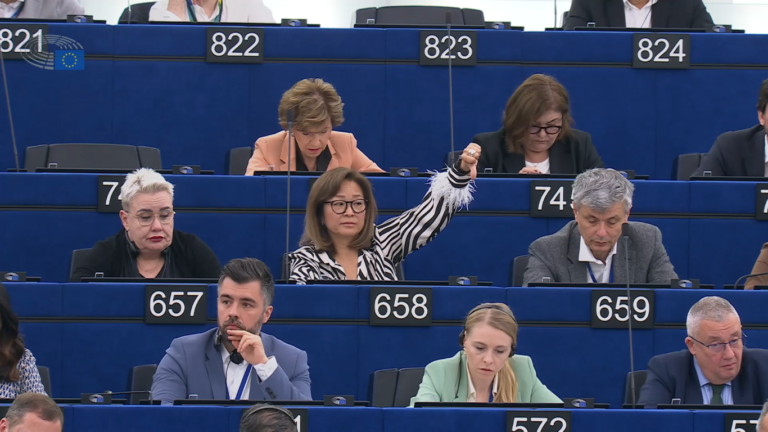
Meeting in plenary session in Strasbourg on Wednesday 17 June 2026, MEPs discussed the regulatory text that has been dominating the news on GMOs since December 2025. This text was the outcome of negotiations between representatives of the European Parliament, the Council of the EU and the European Commission. These negotiations were formally concluded by the Council of the EU on 21 April 2026i. MEPs, in turn, approved this compromise text without changing a single comma, despite fierce opposition from a wide range of stakeholdersii.
A simplified regulatory framework or one that has been rendered meaningless?
The adopted text will come into force in 2028, two years after its publication in the Official Journal of the European Union, which is expected shortly. Its general principle – the details of which Inf’OGM will examine in a forthcoming article – is, in practical terms, the deregulation of the vast majority of the announced “new GMOs“, including plants and micro-algae.
Although they still fall within the definition of GMOs – which has not been amended – these GMO/NGT will, under this Special Act adopted by Parliament, be eligible for “new genomic techniques 1” (NGT1) or “new genomic techniques 2” (NGT2) status. This is a somewhat puzzling designation, given that these GMOs are organisms rather than techniques. Nevertheless, this status will be granted simply upon declaration by the company wishing to market its GMO/NGT plant. NGT1 plants may have undergone multiple genetic modifications, the maximum number of which may vary from one species to another (40 in the case of soya, 80 in the case of maize, rapeseed and potatoes, 120 for wheat, etc.). The only condition is that no transgenes may be present in the final product. The NGT2 category will include plants modified by “directed mutagenesis” or “cisgenesis“, but not classified as NGT1.
Compared with current GMO regulations, the differences are significant. Thus, “NGT1” plants will be subject neither to a pre-authorisation risk assessment nor to formal marketing authorisation. Companies will not be required to provide a detection and identification method to track this GMO/NGT in imports, or following its release within the European Union. No post-market health and environmental monitoring will therefore be possible, and Member States will not be able to ban their cultivation on their territory.
It should be noted that plants whose characteristics include tolerance to herbicides or the production of “known insecticidal substances” will not be eligible for NGT1 deregulated status and will therefore remain subject to current regulations.
Patents? Measures that are neither mandatory nor binding
The vast majority of these GMO/NTG plants that are granted deregulated status will remain subject to patents held by a handful of multinationals (Corteva, Bayer, BASF, Syngenta and Limagrain). In light of the documented risks to food sovereignty, corporate concentration, rising seed prices… and the political difficulties this issue has raised, non-binding measures have been included in the text adopted on Wednesday by Parliament. These measures apply only to seed companies, but pay no attention whatsoever to small-scale farmers, who may have their crops seized on the pretext of infringement in the event of contamination or the presence of native genes similar to those covered by patents relating to GMOs.
According to the text, the European Commission will, for example, “oversee the drawing-up of a code of conduct at Union level to enhance the transparency of information relating to patents on plant biological material, to facilitate breeders’ access to such material and to enhance legal certainty for breeders and farmer”. The only requirement on the Commission is that it “shall simply ‘aim’ to ensure that the code of conduct contains certain key commitments, which will nevertheless remain voluntary”, as Inf’OGM has already reportediii.
Another measure envisaged is the requirement for companies to declare, “to the best of their knowledge“, any patents present in a particular deregulated plant, accompanied by the option to declare that they are unaware of any such rights. Patent holders will also be required to express their willingness to grant the corresponding licences on “fair and reasonable” conditions, although these terms are not defined.
Finally, the European Commission will be assisted by an “expert group on the effect of the patenting of NGT plants” on plant variety innovation, breeders’ and farmers’ access to patented material (seeds and plants), the risks of litigation… with the possibility for the Commission to “submit legislative proposals” should it identify any problems – a power it already possesses, as the Commission is the sole body authorised to initiate legislative proposals within the European Union…
Rejected amendments
In Strasbourg, the plenary session opened with amendments tabled by MEPs from various groups (the Greens, the S&D and the Left)iv. Apart from the first, which proposed rejecting the legislative proposal in its entirety, the other amendments were aimed, in particular, at restoring the European Parliament’s initial position as expressed in 2024. At that time, the European Parliament had demanded that methods for detecting and identifying commercialised GMO/NGT be provided, that these GMO/NGT be subject to health and environmental risk assessments and labelling, and that patents on such deregulated plants be prohibited or, at the very least, not be allowed to cover “native” genes and traits.
But it did not take long for the 663 MEPs present in the chamber – who are no longer the same as those who amended this text in 2024 (the European elections having taken their toll) – to reject them. The vote was completed in barely 15 minutes, following brief statements from the leaders of the political groups. As no amendment received the absolute majority (a majority of the 720 MEPs in the Parliament) required for its adoption, the text was ultimately adopted without amendment. The bar was set high, but some amendments, for which the results were displayed live, were nevertheless rejected by a very narrow margin.
Statements from the political groups
For the European People’s Party, Jessica Polfjärd – a staunch advocate of deregulating these GMO/NGT and the Parliament’s negotiator during the trilogue – was the first to speak. Denouncing the amendments tabled as aimed solely at “blocking innovation“, she unsurprisingly called for a vote choosing “science and innovation” and thus for the rejection of all the amendments put forward, so that “farmers [have] the tools to meet the challenges of the future” rather than “the tools of yesterday“.
Speaking on behalf of the Group of Socialists and Democrats, Christophe Clergeau called for “defending European farmers and seed producers, and free access to plant diversity” rather than “handing control of plants and agriculture over to a handful of agrochemical multinationals”. Recalling “that Parliament voted overwhelmingly against patents on NGTs […] across all groups” in 2024, he called for a vote to allow a few more months of discussions to improve the text presented to MEPs.
The Patriots group, speaking through Silvia Sardone, explained that today’s vote did not concern GMOs, stating that they “remain opposed” to them. Through her, the MEPs from this group explained that today’s issue concerns NGTs, which are “entirely different”. According to them, “we must put an end to the campaign of manipulation being waged by the environmental Taliban”… read between the lines: vote against all the amendments.
For the European Conservatives and Reformists Group, Pietro Fiocchi believes that “it is crucial to move forward with NGTs” to tackle the challenges of climate change. Believing that GMOs and NGTs are entirely different from GMOs, he presents these techniques as “a solution […] by reducing pesticide use […] and tackling water scarcity”.
The Renew Group spoke through Pascal Canfin. He justified the call to vote against the amendments on the grounds that they represent “new tools for farmers”. The Renew Group “does not pit ecological solutions against technological solutions”. The group believes that the proposed text “will benefit farmers, their incomes, our crop yields and our food sovereignty”.
On behalf of the Greens, Martin Haüsling called for a vote in favour of the amendments in order to allow time to discuss the issues at hand. He explained that the compromise text “runs completely counter to what Parliament wanted”. Explaining that it “puts European seed producers at risk”, he believes that this text “throws the door wide open to US and Chinese companies“. Recalling the European Parliament’s 2024 call for “transparency, freedom of choice for consumers and labelling” – none of which are included in the text – he emphasised that it “throws the precautionary principle out of the window“.
The Left Group, through Anja Hazekamp, also defended the amendments. She explained that this text “deliberately undermines the very foundations of the European food system”. She also criticised the proposed text as being “the direct result of aggressive lobbying by major agri-biotech companies that are already making huge profits”, but which want to “expand their power over the food system”.
The adoption by MEPs on Wednesday 17 June 2026 of the text, which had already been approved by the Council of the EU on 21 April 2026, brings to an end a legislative process that began in July 2023, following the confirmation by the Court of Justice of the European Union (CJEU), in February of the same year, of its previous 2018 ruling subjecting these “new GMOs” to the 2001/18 regulations. With this vote, the compromise text therefore becomes a European regulation. All that remains is the purely administrative formality of publication in the Official Journal of the European Union, a publication which will trigger the 20-day period at the end of which this regulatory text will enter into force, and the two-year period at the end of which it will be fully implemented, unless challenges are brought before the CJEU, which remains a possibility.
i Council of the European Union, « Position of the Council at first reading with a view to the adoption of a
REGULATION OF THE EUROPEAN PARLIAMENT AND OF THE COUNCIL on plants obtained by certain new genomic techniques and their products, and amending Regulation (EU) 2017/625 – Adopted by the Council on 21 April 2026 », 21 April 2026.
ii Antoine Vépierre, « The deregulation of GMOs is drawing criticism from all corners of Europe », Inf’OGM, 15 June 2026.
iii Denis Meshaka, « The Council of the EU wants to maintain the patentability of GMOs/NGTs », Inf’OGM, 21 January 2026.
iv European Parliament, « Recommendation for a second reading on the Council position at first reading with a view to the adoption of a regulation of the European Parliament and of the Council on plants obtained by certain new genomic techniques and their products, and amending Regulation (EU) 2017/625 », 17 June 2026.
We need your help!
For over 25 years, Inf’OGM has been producing information, made freely available to everyone, on the artificialisation and appropriation of life (GMOs, NTGs, biotech, patents, etc.).
The monopolisation of a large share of public press subsidies by a few media groups reinforces the concentration of media ownership in the hands of a handful of businessmen. This concentration undermines the quality of information and democratic debate, which require a plurality of viewpoints.
In this context, alternative media outlets such as Inf’OGM, which receive no advertising revenue and provide information free of charge, need you – our readers – to continue to exist! Because, even when freely accessible, information comes at a cost.
Supporting Inf’OGM means working towards reliable, independent information on GMOs, biotechnology and seeds that is accessible to everyone.