
In France, a campaign against the deregulation of genetically modified micro-organisms
By Eric MEUNIER
Published on the 09/09/2026


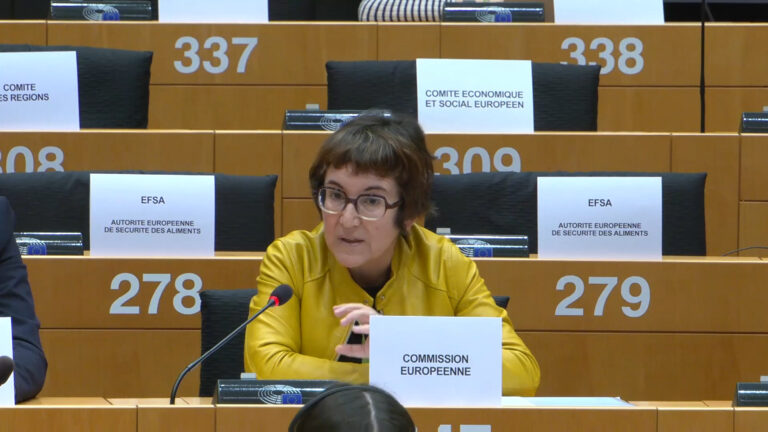
In an opinion piece published on 22 July 2026 on a French media’s website Mediapart, sixteen representatives of French organisations have expressed alarm at the potential deregulation of genetically modified micro-organisms. This deregulation, proposed by the European Commission in December 2025, has already received initial approval from the Council of the European Union, including that of the French government. In their opinion piece, the signatories specifically call on the French government “to make a genuine change in stance and to take a firm stand against this deregulation of GMOs”.
The issue of GMOs has often been equated solely with plants. Following the introduction of the well-known Mon810 maize, Bt cotton and other transgenic rapeseed, the last three years have focused on plants genetically modified using new techniques. These plants were deregulated on 17 June 2026. However, as Inf’OGM has been detailing for several years, GM micro-organisms are also in the sights of certain multinationals. Consequently, on 16 December 2025, the European Commission proposed legislation aimed at deregulating the marketing of GM micro-organisms (GMMs). According to French organisations, this proposal could have alarming consequencesi.
The position of French organisations
These sixteen organisations – “environmental and biodiversity protection groups, and organisations representing farmers and processors in the organic, small-scale and GMO-free sectors” – argue in their joint open letter that the European Commission’s legislative proposal, endorsed on 16 June 2026 by the Council of the European Unionii, which aims to facilitate the marketing of GMOs intended for use as fertilisers, pesticides, medicines or in food processing, is incompatible with the precautionary principle. They emphasise that the world of microorganisms remains largely unknown and that the release of GMOs would have “profound and lasting” effects. Referring to the existence of an “incalculable number of microorganisms on Earth – numbering in the billions of billions”, 99.99 per cent of which “are unknown”, they point out that they “play an essential role in ecosystems and in human and animal health” and that they are “the source of all life”.
For these organisations, the deliberate release of viruses, bacteria or other GMOs is not without consequences, particularly if it is not properly regulated. Pointing out that such organisms “replicate and interact with existing microbial communities“, they list examples of the effects their release could have, such as the disruption of “essential functions performed by microbiota – nutrient cycles, soil fertility, regulation of pathogens” or impacts on “the resilience of ecosystems and their ability to cope with stresses, particularly climate-related ones“. Above all, they emphasise that these GMOs, once released into the environment, “will be beyond any control and can no longer be removed from the environment”, in a biological context where microorganisms “multiply very rapidly, are constantly evolving, and exchange genetic material across species boundaries, whilst science currently lacks the means to track and understand all their developments and interactions, both amongst themselves and with other organisms”.
In response to the European Commission’s proposal, the sixteen organisations are calling on the “French government to reject this proposal”. Although, on 16 June 2026, the French government was among those EU governments that expressed support for the European Council’s text, future stages of the legislative process could, in fact, allow the French government to reconsider its position. The organisations that have signed the open letter are calling for such a change in light of “the still limited understanding of microbial ecology, the serious potential risks – ranging from significant imbalances in microbial communities and horizontal gene transfer to disruptions to nitrogen and phosphorus cycles in soils – as well as the possible impacts on conventional and organic food production“.
What does the text under discussion provide for?
The text, which received the EU Council’s approval on 16 June 2026, aims to facilitate the marketing and thus the release of GMOs, whether through transgenesis or any other genetic modification techniqueiii. Very similar to the European Commission’s proposal submitted to the Council of the EU and the European Parliament, this text could, if adopted, result in the deregulation of these GMOs.
This deregulation – whether in the form of the European Commission’s proposaliv or the text from the Council of the EU – would be achieved through several measures, all of which involve amending Directive 2001/18, which currently governs the release of any GMO, be it a plant, animal or micro-organism.
The first concerns the power granted to the European Commission to decide unilaterally on the content of the application dossiers to be submitted for the authorisation of GMOs and/or their products. Currently, this list is set out in an annex to Directive 2001/18, which could be amended by the Commission alone in the case of GMOs.
The second proposed change concerns the duration of authorisations granted, which would be extended from the current ten years to an indefinite period. The immediate consequence would be that no reassessment of potential risks would take place, as is currently the case.
The third lever, which was central to the proposal to deregulate plants and which is also found in the case of micro-organisms, is the possibility that a company would be allowed not to provide methods for the detection, identification and quantification of GMOs or their commercialised products, subject to the rather lenient condition that it justifies that it “is not possible to provide [such] methods“. The EU and other economic operators (from farmers to consumers) would therefore be left in the dark regarding any contamination or illegal marketing. As patents held by private actors on GMOs, but also on non-modified micro-organisms, constitute a definitive barrier for all users, “wild” micro-organisms would, for their part, become even more powerful tools for the appropriation of micro-organisms.
These three measures would apply to absolutely all GMOs. However, more comprehensive deregulation is being proposed for a sub-category that could potentially include several, if not many, of them.
Which micro-organisms would be affected by complete deregulation?
Unlike genetically modified plants, the micro-organisms affected by this potential almost complete deregulation would not be limited to those modified using new techniques. According to the European Commission’s proposal, this deregulation would apply to all GMOs, regardless of the technique used, that are classified as “low-risk“. For the Council of the EU, this would apply to all GMMs that have been granted “qualified presumption of safety” status and do not contain “genes of concern“; such GMMs could then undergo a so-called “accelerated” procedure.
In addition to the measures already mentioned, such GMOs would also undergo an “adapted” – in other words, streamlined – risk assessment procedure, as the European Food Safety Authority (EFSA) has considered that “fewer requirements may be necessary“. Finally, the post-market environmental monitoring required under Directive 2001/18 might not be carried out if the company considers that such monitoring “is not needed“. Without a method of analytical traceability, this monitoring would in any case be difficult to carry out…
The proposal to deregulate these GMMs must now be put before the European Parliament. The Parliament could place it on its agenda as early as this autumn. Following this stage, discussions with the Council of the EU and the Commission are then expected to begin. The French government will therefore have plenty of opportunities to change its position.
i Collective opinion, « Non à la dérégulation des Micro-organismes génétiquement modifiés », Médiapart, 22 July 2026.
ii Eric Meunier, « The Council of the EU wants to speed up the release of GMM into the environment », Inf’OGM, 6 July 2026.
iii Ibid.
iv Eric Meunier, « The deregulation of GMO microorganisms is underway », Inf’OGM, 27 January 2026.
We need your help!
For over 25 years, Inf’OGM has been producing information, made freely available to everyone, on the artificialisation and appropriation of life (GMOs, NTGs, biotech, patents, etc.).
The monopolisation of a large share of public press subsidies by a few media groups reinforces the concentration of media ownership in the hands of a handful of businessmen. This concentration undermines the quality of information and democratic debate, which require a plurality of viewpoints.
In this context, alternative media outlets such as Inf’OGM, which receive no advertising revenue and provide information free of charge, need you – our readers – to continue to exist! Because, even when freely accessible, information comes at a cost.
Supporting Inf’OGM means working towards reliable, independent information on GMOs, biotechnology and seeds that is accessible to everyone.