
News
GM microbes and the microbiome
By GeneWatch UK
Published on the 06/11/2026


“The […] new legislative changes, designed to fast-track approvals for open releases of GMMs into the environment, fail to protect human health and the environment. These proposals should therefore be abandoned and GMMs should remain in contained use, with no open releases into the environment“. This is the conclusion of the report, published by GeneWatch UK, which analyses the implications of the European Commission’s legislative proposal currently under discussion in Brussels. The proposal aims to establish a (very) fast-track authorisation procedure for the placing on the market of genetically modified micro-organisms.
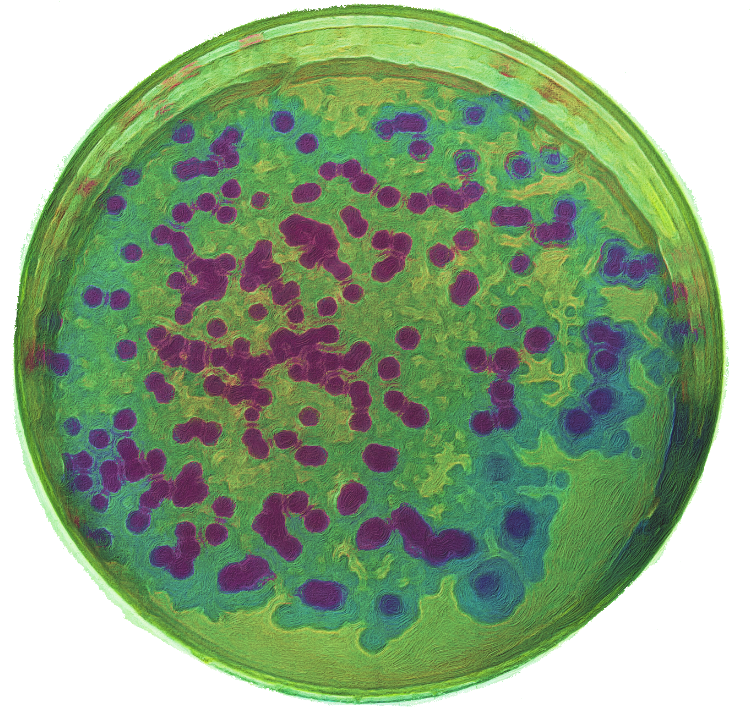
In December 2025, the European Commission proposed a piece of legislation – currently under discussion in Brussels – to speed up market access for genetically modified micro-organisms (GMMs)1. This proposal, put forward without an impact assessment, raises as many questions and criticisms as it does concerns. Whilst French2 and European3 organisations are taking action, and scientists are raising the alarm, via an opinion piece in Le Monde4, about the implications of releasing GMOs into the environment, the British GeneWatch UK5 published, in September 2026, a report6 on the impacts of the Commission’s proposal. Inf’OGM publishes below the summary of this report.
The human microbiome is a complex system in which many species of bacteria and other micro- rganisms interact with each other, their environment, and their human host. The microbiome plays an important role in human health in a wide variety of roles, including providing protection against pathogens (which cause infectious diseases) and long-term chronic illnesses.
GM micro-organisms (GMMs) pose risks because they are living organisms, which interact with other organisms and the wider environment once they are released, including with the human microbiome. These risks are not limited to whether the gene-edited organism itself (whether deliberately or unintentionally) produces a new harmful chemical that is toxic or causes allergies, or whether the organism is itself a disease-causing pathogen. New virulence traits, or other undesirable properties can arise in organisms that are not currently considered high risk, even as a result of introducing a single, small genetic change, including a deletion that prevents an existing gene from functioning.
Micro-organisms evolve rapidly, exchange genetic information (including through horizontal gene transfer, HGT) and form part of a complex, interacting ecosystem in the human microbiome and elsewhere in the environment (e.g., in animal and soil microbiomes). Microbes are shared within families and social groups and between mothers and their infants. The impacts of GMMs on the microbiome could lead to major adverse health effects, particularly in vulnerable people, including children, people with chronic illnesses, and the elderly. In a worst case scenario, inadvertently increasing the virulence of a pathogen, or switching the properties of a beneficial microbe to a harmful one, could lead to the emergence of a disease outbreak or even a pandemic. This could occur through indirect effects (for example, by increasing the formation of biofilms inside the human gut, with the intention of helping a beneficial microbe to persist), which are impossible to predict with existing knowledge.
The EU’s proposed new “expedited” (fast-track) procedure, intended to speed up the approval of some GMMs for open release into the environment, is completely inadequate to protect human health and the microbiome because:
- GM versions of micro-organisms that commonly occur in the human diet, such as those used in cheese-making, sourdough bread, brewers’ yeasts, yoghurt, and the existing (non-GM) probiotics market, will be prioritised for release, increasing the threat to human health should anything go wrong.
- The requirement to avoid “genes of concern” is deeply flawed and cannot identify the potential threats to human health. For example, it ignores the importance of small DNA sequences that are not categorised as genes; neglects the potential for small deletions in virulence suppressor genes to make a microbe pathogenic; and relies on databases that are incomplete. Identifying “genes of concern” based on published databases cannot predict the complex effects that occur when microbes are released into the environment, including in the human microbiome.
- A limited risk assessment (based on the incorrect assumption that all genes of concern can be identified and that other sequences, including deletions, are not relevant), cannot identify the risks posed to human health and the environment. For example, if persistence of the GMM, and its impact on the persistence of other microbes (including pathogens) is not assessed, including its ability to colonise the human microbiome, it could have serious adverse effects on human health.
In contrast, the current regulation for the open release of GM organisms, Directive 2001/18/EC, does not contain these gaps in the risk assessment process. For example, Annex II A (which applies to GMMs) specifically requires information on the capacity for colonisation of the GM micro- organism to be included in the notification for open release, as well as information regarding whether the organism is pathogenic to humans who are immunocompromised7. Thus, the proposed “expedited procedure” restricts the required provision of critical information needed for risk assessment and risk management. This undermines the ability of EU member states to fulfil their legal obligations to protect human health and the environment.
Proposals to give extensive powers to the European Commission to change the rules further without full legislative scrutiny increase the risks and transfer powers in a manner which is democratically unaccountable.
These failures are compounded by proposals to exclude some GMMs for medicinal and veterinary use from an environmental risk assessment altogether.
In addition, abandoning the requirement to detect and monitor some GMMs implies that unexpected adverse effects cannot occur – this assumption is not compatible with the scientific evidence reviewed in this report and further undermines the ability of EU member states to protect human health and the environment.
The proposals also undermine the “polluter pays” principle by potentially making liability provisions unenforceable, and are not compatible with the requirements of the Cartagena Protocol on Biosafety.
The current global market for GMMs for open release is negligible, whereas non-GM microbes are widely used in a variety of (expanding) applications, as are GMMs for “contained use” (including for the production of food ingredients). These markets could be harmed by open releases of GMMs due to:
- (i) consumer rejection of GMMs or uncertainty regarding the presence of GMMs; and/or
- (ii) contamination with GMMs. The European Commission has made no assessment of these potential harms.
In order to protect human health and the environment, the proposed “fast track” procedure should be abandoned and GMMs should remain in contained use, with no open releases into the environment.
- Eric Meunier, « The deregulation of GMO microorganisms is underway », Inf’OGM, 27 January 2026. ↩︎
- Eric Meunier, « In France, a campaign against the deregulation of genetically modified micro-organisms », Inf’OGM, 9 September 2026. ↩︎
- Testbiotech, « Do not lower safety standards for releases of genetically engineered microbes into the environment! », 23 September 2026. ↩︎
- Collectif, « Nous demandons à la Commission européenne de surseoir au projet de directive sur le marché de micro-organismes génétiquement modifiés », Le Monde, 13 October 2026.
A list of signatories is available here. ↩︎ - GeneWatch UK website. ↩︎
- GeneWatch UK, « GM microbes and the microbiome », September 2026. ↩︎
- European Union, « Directive 2001/18/EC of the European Parliament and of the Council of 12 March 2001 on the deliberate release into the environment of genetically modified organisms and repealing Council Directive 90/220/EEC – Commission Declaration, Official Journal, n° L 106, 17/04/2001, pp.1–39. ↩︎
We need your help!
For over 25 years, Inf’OGM has been producing information, made freely available to everyone, on the artificialisation and appropriation of life (GMOs, NTGs, biotech, patents, etc.).
The monopolisation of a large share of public press subsidies by a few media groups reinforces the concentration of media ownership in the hands of a handful of businessmen. This concentration undermines the quality of information and democratic debate, which require a plurality of viewpoints.
In this context, alternative media outlets such as Inf’OGM, which receive no advertising revenue and provide information free of charge, need you – our readers – to continue to exist! Because, even when freely accessible, information comes at a cost.
Supporting Inf’OGM means working towards reliable, independent information on GMOs, biotechnology and seeds that is accessible to everyone.