

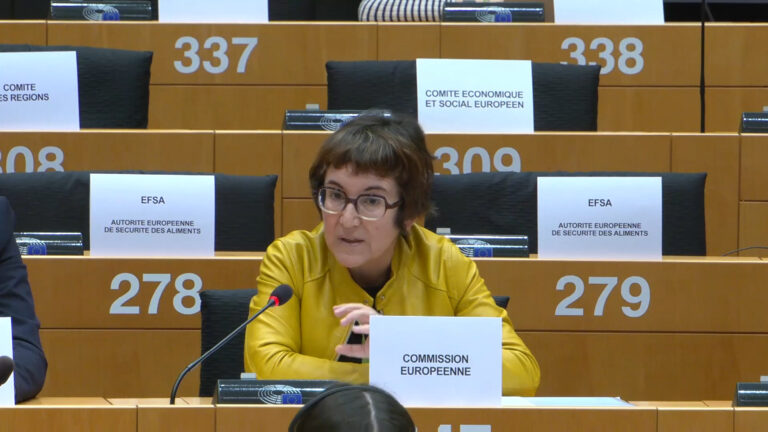
The Commission says it is acting as a matter of urgency to deregulate GMO micro-organisms…
The European Commission wants to deregulate genetically modified bacteria, yeasts and viruses in order to reduce the time it takes for them to be placed on the market, the risk assessments carried out on them, and the information provided to operators and the public… This is the package of measures proposed from December 2025! Under the guise of a so-called urgent need for action, the Commission has cut corners by failing to consult the public on this issue and by withholding certain documents, including a key “impact assessment”.
NGT and patents: the EU has chosen to ignore the US precedent
New genetic modification techniques (NGTs) are presented by their proponents as a mean of promoting innovation in seed production and broadening farmers’ choices. However, the US experience shows that deregulating GMOs is not enough to make them accessible to users. According to a 2023 report by the US Department of Agriculture, the significant increase in patent fees on GMOs is hindering access to seeds in general. Europe, which has just adopted its regulation on GMOs produced using NGTs, arguing that it is necessary to boost variety innovation, was nevertheless aware of this report on the situation in the US.
In France, a campaign against the deregulation of genetically modified micro-organisms
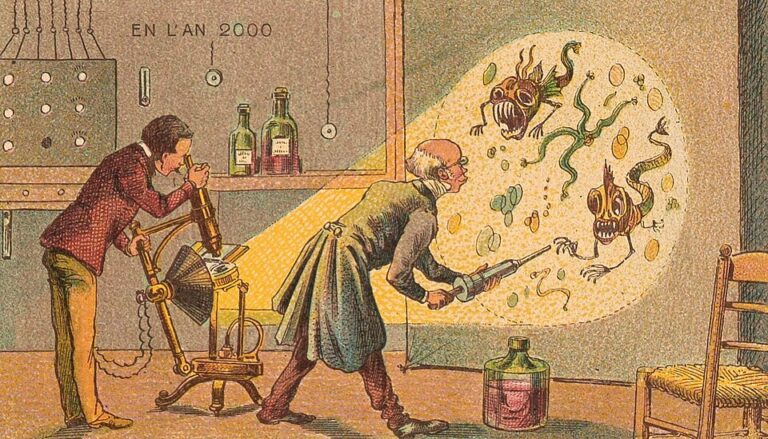
In an opinion piece published on 22 July 2026 on a French media’s website Mediapart, sixteen representatives of French organisations have expressed alarm at the potential deregulation of genetically modified micro-organisms. This deregulation, proposed by the European Commission in December 2025, has already received initial approval from the Council of the European Union, including that of the French government. In their opinion piece, the signatories specifically call on the French government “to make a genuine change in stance and to take a firm stand against this deregulation of GMOs”.

Organic farming and biocontrol: two concepts that do not overlap
According to the European Commission, biocontrol products are intended to be a sustainable alternative to chemical pesticides. However, as we saw in a previous article, the Commission plans to group products that are genuinely low-risk together with products derived from biotechnologies – whose risks have not been assessed – under the single term “biocontrol”. Yet, the term “biocontrol” creates confusion by fostering the illusion that it is a technique akin to organic farming. What is the reality?
KWS: patents to control “native traits”
Since 2022, the German seed company KWS has been developing a range of patent licences covering “native traits”. Presented as a means of “promoting innovation in plant breeding”, this strategy illustrates how patents can be used to control the use of these “native traits”, even though they are already present in biodiversity. This approach by the German seed company, which is also known for its aggressive policy of defending its intellectual property, also highlights the current limitations of European patent law.

The Council of the EU wants to speed up the release of GMM into the environment
On Tuesday 16 June 2026, the Council of the European Union achieved a qualified majority to enter into negotiations with the European Parliament on a draft directive that would allow the release of genetically modified micro-organisms into the environment under less stringent regulatory conditions. France has declared its support for this draft directive. This decision endorses the European Commission’s proposal of 16 December 2025 as part of the “Biotech Acts”. These latter aim to simplify regulations for the benefit of businesses.
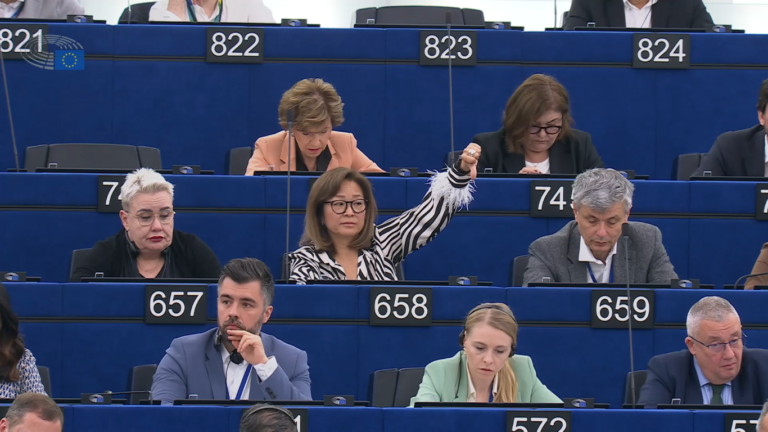
The deregulation of the GMO/NGT adopted in Strasbourg
On Wednesday 17 June 2026, MEPs adopted the compromise text deregulating GMOs produced using new genetic modification techniques (GMO/NGT). This text, which is identical to that adopted by the Council of the EU on 21 April 2026, means that GMO/NGT will be able to be placed on the market in the EU without authorisation, without risk assessment, without labelling (except on seed lots) and without the publication of methods for detecting and identifying them. It will come into force in 2028.
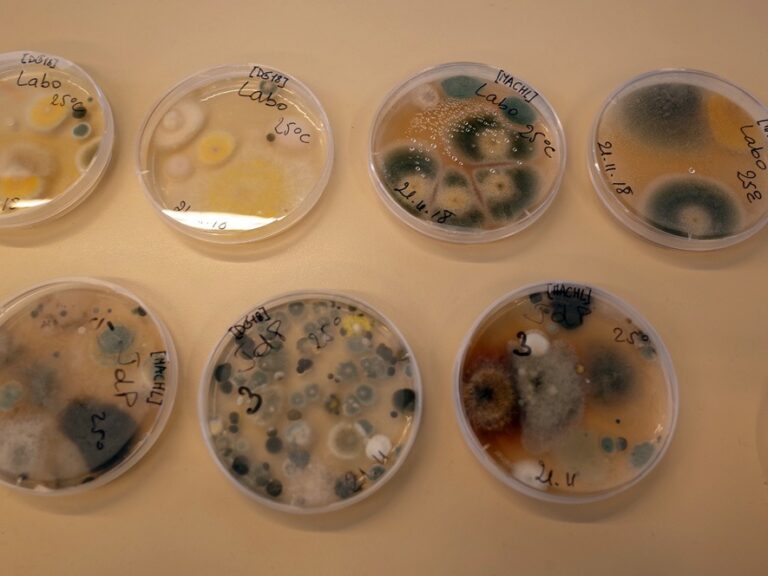
The European Commission is proposing legislation on biocontrol
In December 2025, the European Commission proposed a set of measures to amend the regulations governing food and animal consumption, compiled in a document entitled “Omnibus X”. This document notably proposed the creation of a new legal category: “biocontrol substances”, described as an alternative to chemical pesticides, whose development and marketing the European Commission aims to promote. However, on June 12, the Council of the EU noted the lack of a qualified majority for this text.

Patents on GMOs/NGTs raise issues that the EU may refuse to address
In July 2023, alongside its proposal to deregulate new genetic modification techniques (NGTs), the European Commission promised an assessment of the impact of patents on plant breeding. The report, produced by Technopolis and published in December 2025, highlights several problems related to patents. These problems will not be resolved by the non-binding measures adopted by the Council of the European Union in April 2026. Do the European authorities really only listen to the voice of industry, even if it means ignoring the reports they commission?
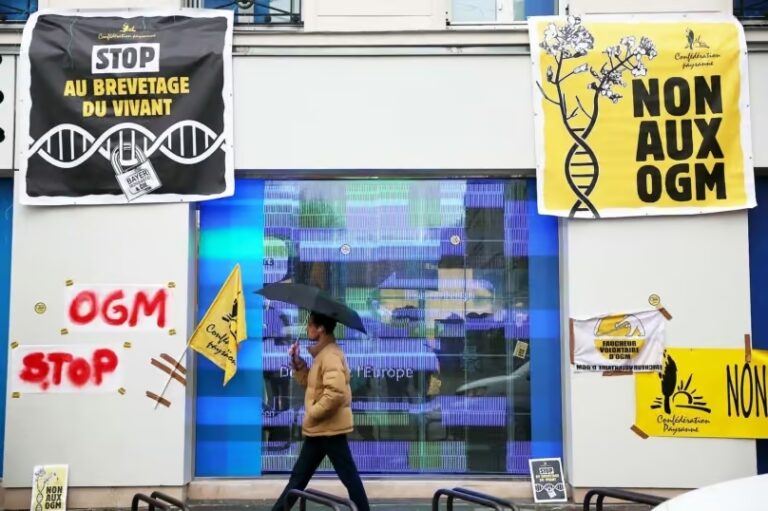
The deregulation of GMOs is drawing criticism from all corners of Europe
On 17 June, between 12.30 and 1.30 pm, MEPs, meeting in plenary session, will vote, without debate, on the proposal to deregulate GMOs derived from new genetic modification techniques (GMOs/NGTs). Inf’OGM summarises here some of the positions, campaigns and other calls for action by civil society organisations, elected representatives, businesses and trade unions regarding the risks that its adoption would entail.

Illegal GMO flax in Jacquet brand wraps
In April 2026, Jacquet, a subsidiary of Limagrain, withdrew wraps from the French market: they contained genetically modified flax not commercially authorized. While no genetically modified flax varieties are currently officially cultivated worldwide, Canada authorized the cultivation of one variety in 1996 before withdrawing the authorization in 2001. This country has also recently ended its mandatory flax export monitoring program.

Cornerstone of French and European law, the precautionary principle under attack by the FNSEA
The FNSEA (French National Federation of Farmers’ Unions) recently called for the “precautionary principle” to be replaced by an “innovation principle”. Behind this political and semantic offensive lies a challenge to the risk management framework enshrined in the French constitution. Whilst the European Commission says it intends to propose an “innovation regulation” before the end of the year, this demand from the FNSEA echoes the ongoing process of deregulating GMOs derived from new genetic modification techniques (NGTs). By seeking to abolish their assessment, traceability and mandatory labelling, Europe too is disregarding the precautionary principle, which it nevertheless enshrined in the Maastricht Treaty.