
News
MEPs approached by industry to deregulate GMOs/NGTs
By Christophe NOISETTE
Published on the 02/02/2026, modify the 09/03/2026


Since the European Commission submitted its proposal to deregulate almost all GMOs in 2023, multinational seed companies and lobbyists have been busy lobbying European institutions to support this proposal. Companies and civil society organizations can request meetings with MEPs. These meetings are listed, at least in part, on the Parliament’s website. In this article, Inf’OGM shows that supporters of GMO deregulation had 59 meetings, compared to 23 for opponents.
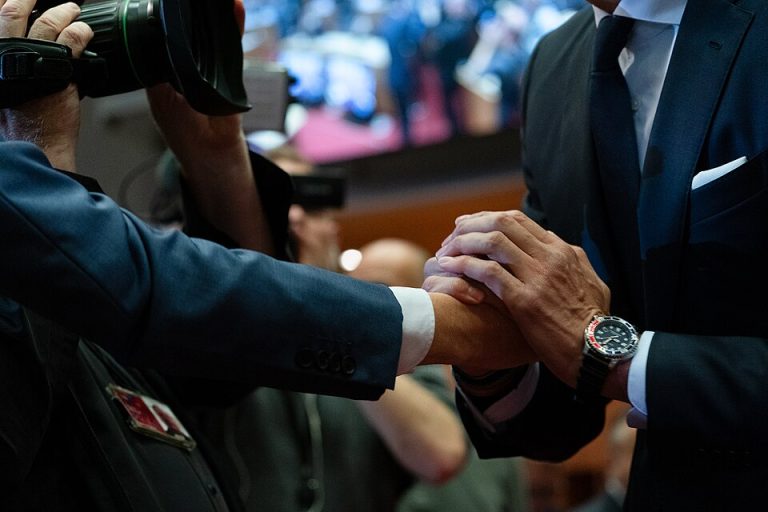
In 2024, Inf’OGM had already published an article on meetings between MEPs and stakeholders dedicated to the deregulation of GMOs modified by new genetic modification techniques (NGT)1. This artice was compiled during the 9th legislative term, between May 2023 and the end of June 2024. The conclusion was unambiguous: of the 135 meetings reported, 57.6% were with supporters of deregulation (80) and 33.1% with opponents (46). We wrote at the time that “the balance is therefore one meeting for the ‘opponents’ for every two meetings for the promoters”.
2024-2026 review of meetings between MEPs and lobbyists
Inf’OGM replicated this monitoring work and analyzed MEPs’ meetings between July 2024 and 6 January 2025 on GMOs covered by the deregulation project. The conclusion is the same as between May 2023 and June 2024. Of 82 meetings with non-institutional actors, 59 were with actors in favor of deregulation (68.6%), compared to 23 with actors opposed to it (26.7%). The ratio for this period was therefore 2.6 (1.7 for the previous period). The gap has widened.
Let us first return to the concept of “favorable” and “unfavorable” actors. We based our analysis on statements made by the entities we found. On the one hand, we find international seed companies, lobbying organizations, agricultural unions that are members of COPA-COGECA, and agricultural organizations involved in international trade. For example, the Deutscher Raiffeisenverband e.V. (DRV) is the association that represents German cooperative companies in the agricultural and agri-food sectors. This organisation has taken a position in favor of deregulation as early as 20232. On the other side of the spectrum, we find organizations that defend small-scale or organic farming, as well as environmental NGOs. In our count, we have removed four meetings with national delegations (Denmark, Spain, and the Netherlands). We have chosen not to count them among the actors with private interests, but it should be noted that these countries have positions favorable to deregulation. In addition, two meetings are difficult to verify.
We emphasize the same precautions as usual: these are meetings listed in the European Parliament’s “transparency” tool. We conducted our search using keywords (NGT, GMO, and their derivatives). It is entirely possible that a meeting labeled “fish”, for example, could also be an opportunity to discuss the proposed deregulation of GMOs.
In the end, we drew up a list of 86 meetings for this period, involving 35 MEPs. The vast majority of MEPs (26, or 74.2%) are members of the ENVI committee, which is the committee responsible for this text for the European Parliament, and eight MEPs are members of the AGRI committee. Only one MEP is not a member of either of these committees, Valérie Hayer, whom we will discuss later in this article.
In the previous article, we wrote that “the first lesson is that few MEPs were approached: 41 out of 705 MEPs”. This is even more true for the 10th legislature, where only 35 out of 720 MEPs (4.8%) were approached for a meeting on this issue.
| Tota number of MEPs | Number of sollicitred MEPs | Tota number of nationalities | Number of sollicited nationalities | |
| 2023-2024 | 705 | 41 (5,8%) | 27 | 143 |
| 2024-2025 | 720 | 35 (4,8%) | 27 | 11 |
Unlike in the previous parliamentary session, the most sought-after members of parliament are not the “rapporteurs”. The rapporteur and shadow rapporteurs4 together accounted for 21 of the meetings (24.4%) listed in this database.
| Committee ENVI | Name of the rapporteur5 | “Favorable” appointments | “Unfavorable” appointments | Personnal opinion |
| POLFJÄRD Jessica (PPE) | 9 | 1 | favorable | |
| Shadow rapporteurs : | ||||
| CLERGEAU Christophe (S&D) | 0 | 1 | unfavorable | |
| SARDONE Silvia (PfE) | 1 | 2 | favorable | |
| FIOCCHI Pietro (ECR) | 1 | 1 | favorable | |
| CANFIN Pascal (Renew) | 0 | 0 | favorable | |
| HÄUSLING Martin (Greens/EFA) | 2 | 3 | unfavorable | |
| HAZEKAMP Anja (The Left) | 0 | Meeting with Netherlands’s government | défavorable | |
| Total | 13 | 8 | 4 favorables / 3 unfavorables |
A decline in the number of meetings
Before detailing these meetings, it should be noted that between May 2023 and the end of June 2024, 135 meetings were reported, compared to 86 meetings, or nearly a third fewer between July 2024 and 6 January 2026: a sharp decline. This can be explained by the fact that the European Parliament adopted its position in plenary in April 2024.
However, there was an increase in these meetings at the end of 2025, when the Council of the EU, under the Danish Presidency, was under pressure to adopt a position that would mean the text would be returned to the European Parliament at the end of 2025.
More meetings for pro-deregulation advocates
Between July 2024 and 6 January 2026, the vast majority of MEPs’ meetings were with stakeholders in favor of GMO deregulation (59, or 68.6%). These stakeholders included multinational companies (Bayer (3), Corteva (13), Limagrain (4), Syngenta (3)), umbrella organizations (Crop Life (2), Euroseed (5), Phyteis (2), Union française des semenciers (3)), research institutes, and unions affiliated with COPA-COGECA.
On the side of those opposed to deregulation, 23 meetings were recorded (26.7%). These included NGOs (Friends of the Earth, Greenpeace, Testbiotch) and unions defending small-scale farming (ECVC) or organic farming (Ifoam, Fnab, Bio Austria, Synabio). Many meetings brought together several of these stakeholders at the same time6.
Finally, the German farmers’ union Deutscher Bauernverband is a somewhat special case: it advocates deregulation of GMOs/NGTs, but is clearly opposed to patents on plants derived from NGTs. This union requested meetings with two MEPs: Norbert Lins (CDU, member of the European People’s Party group, Germany) and Christine Singer (FPÖ/ID, Austria).
The right and far right in favor of deregulating GMOs/NTGs
We also studied the number of meetings according to the political groups of MEPs.
The result is clear: only the Greens and the parties of the European United Left were approached as a priority by those opposed to deregulation. All other groups met with more supporters, even those from the Socialism & Democracy group.
| Favorable | Unfavorable | Institutional actors | TOTAL | |||
| | Number of meeting | % of total appointments | Number of meeting | % of total appointments | ||
| GUE / NGL | 1 | 14,3 | 5 | 71,4 | 1 (Netherands’s gouvernment) | 7 |
| S&D | 5 | 50 | 3 | 30 | 2 (Danish ans Spanish government) | 10 |
| Green | 2 | 22,2 | 7 | 77,8 | 9 | |
| Renew | 12 | 92,3 | 0 | 0,0 | 1 (Danish government) | 13 |
| PPE | 18 | 81,8 | 4 | 18,2 | 22 | |
| ECR | 6 | 85,7 | 1 | 14,3 | 7 | |
| ID | 15 | 83,3 | 3 | 16,6 | 18 | |
| TOTAL | 59 | 68,6 | 23 | 26,7 | 4 | 86 |
The group that was most sollicited was the EPP, the European right wing: 22 meetings, or 27% of all meetings recorded. Most of these meetings were requested by pro-deregulation actors, who were clearly keen to talk to the group with the largest number of MEPs in the European Parliament.
However, it was the Renew group that was the most unbalanced in its meetings. It did not meet with any actors opposed to the GMO deregulation project. This was due to one French MEP in particular: Valérie Hayer. She had a total of 12 meetings: 11 with actors deliberately in favor of deregulation and one with the permanent delegation of the Danish government. She was the MEP that multinationals most wanted to meet. She had more meetings than the rapporteur for the text, Jessica Polfjärd. However, Valérie Hayer is not a member of the ENVI or AGRI committees, but she sits on the Conference of Presidents. This “committee” plays a key role in the organization of the European Parliament. It is responsible for organizing parliamentary work, setting the agenda for plenary sessions, assigning responsibilities to committees and delegations, and managing relations with other institutions.
Conversely, none of the multinationals met with Pascal Canfin, also from the Renew group, but shadow rapporteur.
One political group was particularly sollicited by pro-GMO/NTG companies and stakeholders: the far right, which made a sensational entry into the European Parliament in the last elections. For France, Rassemblement Nantional (RN) MEPs Valérie Deloge and Anne-Sophie Frigout had seven meetings with favorable stakeholders (Corteva, Limagrain, Phyteis (formerly Union de l’Industrie de la Protection des Plantes) and the French Seed Union), but none with unfavorable organizations.
It should also be noted that Christophe Clergeau (PS, France), who had been in high demand during the previous legislative term (10 meetings), has been little involved since July 2024 (only one meeting). However, he is still the shadow rapporteur on this text. His public statements against the deregulation project are clear, and stakeholders have undoubtedly decided that he will not change his mind.
It is currently essential to clarify who is meeting whom in the European Parliament. Since the representatives of the Council of the EU reached a majority in favor of deregulating almost all GMOs, the ball is now in the European Parliament’s court. The ENVI Committee will give its opinion in the coming days, and the Parliament could vote on the issue in plenary session by spring. MEPs will therefore all have their say, unless group voting instructions take precedence over individual positions.
- Christophe Noisette, « Déréglementation des OGM : qui rencontre qui ? », Inf’OGM, 17 December 2024. ↩︎
- Deutscher Raiffeisenverband e.V., « DRV unterstützt Vorschlag zu Neuen genomischen Techniken », 1st November 2023. ↩︎
- The three countries that were “more” were Finland, Hungary, and Lithuania. ↩︎
- Member of Parliament appointed by his or her political group to monitor and contribute to the search for compromise during the drafting of a report by the rapporteur. ↩︎
- European Parliament, « Procedure 2023/0226(COD) – Plants obtained by certain new genomic techniques and their food and feed ». ↩︎
- On 19 November 2025, Martin Häusling met with six organizations at once: Assoziation ökologischer Lebensmittelhersteller e.V. , Biodynamic Federation Demeter International e.V., Bund Ökologische Lebensmittelwirtschaft e.V., Bundesverband Naturkost Naturwaren e.V., International Federation of Organic Agriculture Movements EU Regional Group, Arbeitsgemeinschaft ökologisch engagierter Lebensmittelhändler und Drogeristen. ↩︎
We need your help!
For over 25 years, Inf’OGM has been producing information, made freely available to everyone, on the artificialisation and appropriation of life (GMOs, NTGs, biotech, patents, etc.).
The monopolisation of a large share of public press subsidies by a few media groups reinforces the concentration of media ownership in the hands of a handful of businessmen. This concentration undermines the quality of information and democratic debate, which require a plurality of viewpoints.
In this context, alternative media outlets such as Inf’OGM, which receive no advertising revenue and provide information free of charge, need you – our readers – to continue to exist! Because, even when freely accessible, information comes at a cost.
Supporting Inf’OGM means working towards reliable, independent information on GMOs, biotechnology and seeds that is accessible to everyone.