
News
Will satellites save agriculture?
By Christophe NOISETTE
Published on the 11/12/2025, modify the 09/03/2026


“How can we feed 10 billion people in 2050 with limited natural resources? To address this challenge, agritech start-ups are capitalising on the latest research findings to offer disruptive innovations and provide more efficient and environmentally friendly solutions” . This is how agritech is presented by BPI France, the French public investment bank. Once again, we see the famous promise to feed the world. To achieve this goal, we need to innovate, invest, digitise, robotise…
Behind agritech lies an alliance between companies specialising in seeds, agricultural machinery, geospatial technology (GPS), weather forecasting, nanosensors, satellites, digital data storage (data center) and algorithms, all of which are essential for analysing billions of pieces of data in record time. These links take many forms, ranging from partnerships to mergers and acquisitions. But the general idea is to collaborate to build the agriculture of tomorrow, agritech, which dreams of doing away with farmers altogether. In this article, we will describe examples that illustrate this alliance.
Robots to make agriculture greener, really?
The robotisation of agriculture is one of the European Union’s objectives. It has decided to inject €2.3 million into the AgRoboConnect project. The latter’s ‘objective is to support farmers in adopting robotic weeding systems for more efficient and sustainable agricultural practices’. The rhetoric of precision as a guarantee of sustainability is at the heart of this vision, which aims to transform global agriculture. This programme is just one example among many. The sums committed at various levels are considerable.
In this technophile project, the best-known example is the use of geolocation tools embedded in agricultural equipment (tractors, combine harvesters, etc.). Indeed, in the “utopia” of multinational agricultural companies, machines are supposed to become autonomous and, to do so, they need to “know” the exact contours of the fields, and even more importantly, the spacing between rows, etc. John Deere is a pioneer in this field. It was one of the first to offer tractors and combine harvesters equipped with sensors.
It continues to invest in this field, as evidenced by a “strategic partnership” with the Swiss company Leica Geosystems1, a subsidiary of the Swedish group Hexagon AB2, signed in 2024 to remain at the cutting edge of technology and hopefully distance itself from its competitors. Leica Geosystems is a company that designs, manufactures and markets GPS devices, total stations3 and 3D scanners45. John Deere also needs to analyse its data, which is not its core business. It has therefore partnered with Trimble6. But John Deere also needs to store its data in order to use it. To do this, it has partnered with Amazon through its subsidiary Amazon Web Services (AWS)7. In the field of robotics, KWS, an international seed company, is collaborating with the start-up EarthSense, which markets TerraSentia, an autonomous robot equipped with cameras and guided by GPS to analyse plants in the field and, according to them, “improve varietal selection through AI“.
In France, similar alliances also exist. RAGT, a seed company, has, for example, launched the KAFE Challenge project, in conjunction with Agreenculture8. This project focuses on demonstrating the feasibility of strip cropping. Marketed as an agroecological practice, it involves cultivating a 40-hectare plot by alternating different crops in strips, such as barley, maize, field beans and soya. The seeds are, of course, supplied by RAGT. To achieve this, the project combines a number of technologies. It is developing robots for use in agriculture. These robots are described as ‘intelligent’ and the company claims that they can be controlled remotely (up to 600 km away) and can analyse data collected in the field in real time (phenotyping, disease detection, yield estimation) using image recognition algorithms, among other technologies. For this company, it is a revolutionary and environmentally friendly solution thanks to ‘ultra-precision in field operations and optimised use of inputs’.
Firstly, it should be noted that this company has not yet provided any precise figures on the reduction of inputs on a plot of land in France. However, assuming that all these techniques make it possible to reduce the amount of herbicide sprayed, the question that needs to be asked is: how much energy and greenhouse gases have been saved compared to the amount needed to produce these machines and process the digital data? In 2025, data centres accounted for around 2% of global electricity consumption, or around 415 terawatt hours (TWh) per year, and generated nearly 171 million tonnes of CO2 per year worldwide, equivalent to the annual emissions of a country such as the Netherlands. Even more worrying is the fact that the electricity consumption of data centres is increasing by around 12% per year and could therefore double by 2030. Not to mention their considerable water consumption: by 2025, data centres are expected to use between 300 and 400 million cubic metres of water worldwide, which is equivalent to the annual drinking water consumption of a city with a population of 10 to 15 million9. So, are AI-controlled robots environmentally friendly?
Satellites and AI to monitor crops
AWS is omnipresent in today’s digital landscape. The company has formed partnerships with Bayer and many other companies in the agricultural sector. For Bayer, AWS supports its ability to use artificial intelligence (AI): “Bayer Crop Science sees generative AI as a catalyst enabling thousands of its scientists and data engineers to build innovative agricultural solutions for farmers around the world“. To realise its ambitions, the agricultural division of the multinational life sciences company Bayer, which accounts for around a third of the German group’s turnover (€5 billion), is developing a new data science platform based on Amazon SageMaker Studio (AWS), explains Will McQueen, Head of Data Assets for Crop Science at Bayer. Equipped with the AI capabilities of Amazon Bedrock and Amazon Q, the platform has been designed to facilitate and accelerate the creation of “unprecedented” agricultural products, according to the manager10. In 2015, Bayer had already acquired the Zoner geo-information system from Canada’s Calgary IntelMax, which is designed to provide farmers with recommendations based on analyses of data from their plots.
Let’s continue to examine the Bayer case. Still in the field of artificial intelligence, the multinational also has a strategic partnership with the start-up Iktos. The latter specialises in AI-assisted molecule design11. Bayer has also acquired proPlant, a software company specialising in health diagnosis and crop pest alert applications12. This company has since been renamed Bayer Digital Farming GmbH.
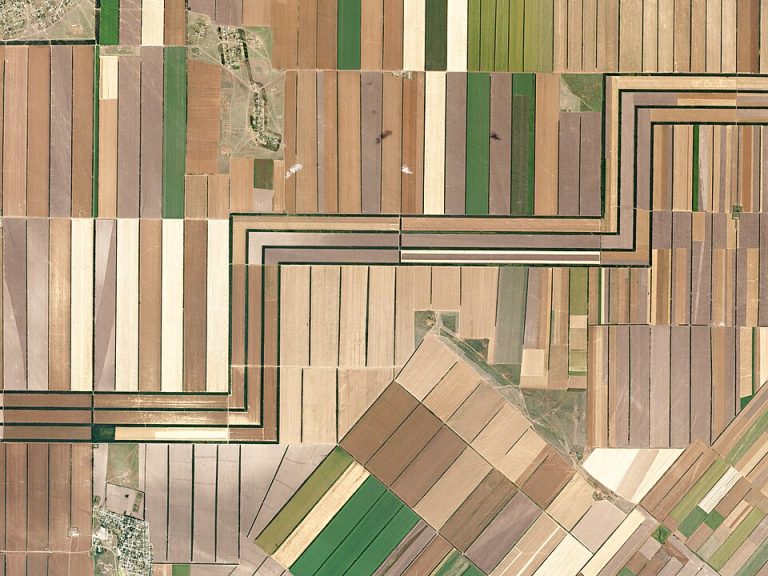
We can also cite a few alliances and partnerships formed by Syngenta in the field of agritech, to show that this is a general trend among multinational seed companies. In 2025, it renewed and expanded its partnership with Planet Labs, a provider of daily satellite images which, according to the company’s advertising, are accurate to within three metres. These images are integrated into Syngenta’s Cropwise digital platform. The aim is to enable farmers to monitor the condition of their fields remotely and, in theory, detect infestations or diseases at an early stage. Syngenta is also collaborating with xFarm Technologies on the same type of application. Finally, there is Heritable Agriculture, a spin-off of Google X (Alphabet) specialising in the use of AI in agriculture. In 2025, Syngenta signed a partnership with this company to apply “artificial intelligence” to vegetable variety selection. The idea is to collect large amounts of data, store it and analyse it. This data comes from field trials, weather and environmental data. When signing this alliance, Syngenta emphasised that it would enable it to ‘predict’ the performance of vegetable varieties based on geographical and climatic conditions. Nothing less. Syngenta has created a venture capital fund, Syngenta Group Venture, which allows it to invest in numerous start-ups in the agritech constellation.
This non-exhaustive list of interconnected companies paints a picture of soil-less agriculture that is part of a rapid artificialisation of living things. Listening to living things, feeling them, sensing them cannot be done through data and computer screens. These tools and this digitisation distance farmers from reality and gradually transform them into mere tools themselves. They are merely the arm that operates a joystick, waiting for algorithms to dictate the treatments to be carried out. This dynamic is part of a larger movement of uprooting, enlargement of farms and the gradual disappearance of farmers.
- John Deere, “John Deere and Leica Geosystems Partner to Bring New Solutions to the Construction Industry“, 15 February 2024. ↩︎
- Wikipedia contributors. “Hexagon AB”, Wikipedia, The Free Encyclopedia, 24 Oct. 2025. ↩︎
- A total station is a surveying instrument that provides accurate measurements of horizontal and vertical angles as well as distances. ↩︎
- A 3D scanner is a device that analyses objects or their immediate environment to gather precise information about their shape and appearance, such as colour and texture. ↩︎
- Wikipedia contributors, “Leica Geosystems”, Wikipedia, The Free Encyclopedia, 22 Sep. 2025. ↩︎
- Trimble, « John Deere, Trimble Partner to Deliver Advanced Technology Solutions to More Construction Customers Worldwide », 22 October 2024.
John Deere, « John Deere and Trimble Partner to Expand Integrated Grade Control Versatility within Construction Portfolio », 22 October 2024. ↩︎ - Amazon Web Services (AWS), « Harshal Joglekar, product owner of Cloud Adoption & Migration at John Deere », 2024. ↩︎
- Agreenculture is a company based in Toulouse and founded in 2016. In 2021, Agreenculture achieved a turnover of €1.3 million. ↩︎
- The Green Shot, « Découvrez comment les data centers, responsables de 46% de l’empreinte carbone numérique, consomment 2% de l’électricité mondiale et quelles solutions existent pour réduire leur pollution », 22 October 2025. ↩︎
- Paula Rooney, « Chez Bayer Crop Science, l’innovation grandit grâce à l’IA et la Data Science », CIO, 26 August 2024. ↩︎
- « Agriculture : Iktos et Bayer veulent révolutionner la protection des cultures grâce à l’IA », Agro Media, 28 December 2023. ↩︎
- « Agrochimie : BAYER se renforce dans le numérique avec l’acquisition de PROPLANT », Fusacq. ↩︎