
News
The EU’s “life sciences” strategy: a pro-industry strategy
By Denis MESHAKA
Published on the 01/08/2025, modify the 09/03/2026


Under the guise of making the continent a world leader in “life sciences“, the European Commission has confirmed its clearly pro-industry vision in its strategy published in early July. With a resolutely competitiveness-focused approach, it minimises the potential consequences for other social actors.
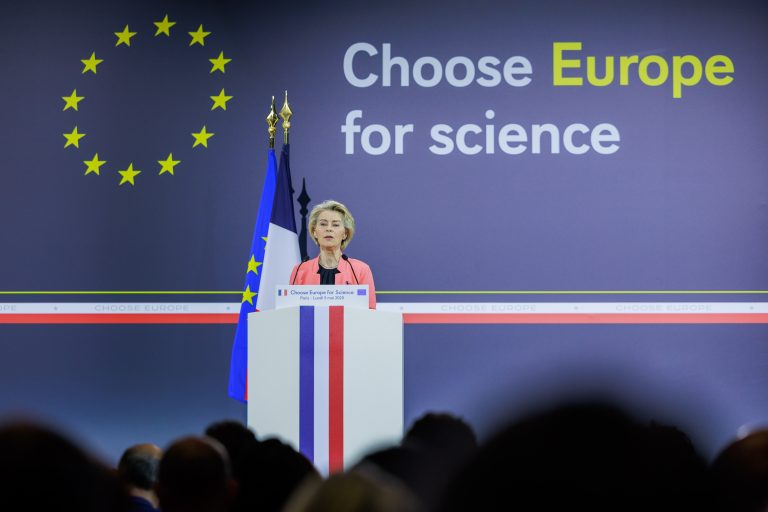
On 2 July, following several announcements in 2025 concerning the biotech sectori, the Commission unveiled its “Choose Europe for Life Sciences” strategyii. Its ambition is to build on “Europe’s excellence in health, biotech, agriculture, food and environmental science […] to position the EU as the world’s most attractive place for life sciences by 2030“. This is a project that pays little attention to the concerns of civil society.
“Unlocking the potential of life sciences“
The Commission proposes to “stimulate innovation in the life sciences” through three pillars of action:
- “optimising the research and innovation ecosystem“,
- “enabling rapid market access for life sciences innovations“,
- “Boosting trust, uptake and use of innovation“.
These three pillars, considered strategic, aim to “unlock the potential of life sciences” to promote market access and competitiveness in the European economy in the health, agriculture and food sectors.
The R&D ecosystem envisaged by the Commission is based on the creation of “new knowledge“, in particular by facilitating research partnerships (€100 million for the microbiome, for exampleiii), financing “innovative” therapies, supporting clinical trials and simplifying the rules for medicines and medical devices. The Commission also encourages a cross-sectoral approach (health, food, agriculture, forestry, aquaculture, etc.) and the use of “artificial intelligence“ and digital (health) data.
With regard to market access, the Commission is committed to promoting lighter regulation by proposing “a European law [the “Biotech Law“, actually a regulation scheduled for 2026] on biotechnology that will create a more innovation-friendly regulatory framework across biotech sectors“. The health sector is not the only one concerned, as the agriculture and food sectors are cited by the Commission as examples of “hubs for innovation“.
Finally, the Commission intends to “stimulate public procurement for innovation in life sciences such as climate change adaptation, next-generation vaccines and affordable cancer solutions“.
The Commission specifies that the progress achieved through this strategy will be measured in terms of tangible growth in sectoral indicators: employment, value added, business expenditure on research and development, and the number of multinational clinical trials. The Commission adds that its strategy is based on a public consultation and data from the Joint Research Centre (JRC), showing that the EU remains a major player in life sciences, accounting for 17% of global patentsiv. However, no specific policy is outlined in the event that this “progress” is not deemed sufficient, if indeed it ever is.
Easier access to the ‘market‘ and competitiveness
This Commission initiative is part of its overall strategy for EU competitiveness. The institution believes that, in the current life sciences landscape, Europe “would lose ground to other global players” (North American and Asian) and would have to respond to three challenges:
- the fragmentation of innovation ecosystems,
- the under-use of data and “artificial intelligence“,
- the slow adoption of “innovations” by the market.
The objectives that the Commission seems to want to achieve at a rapid pace are clear: easier access to the “market” and competitiveness. Since early 2025, the Brussels-based institution has been developing a heavy and complex pro-biotech package, which, however, poses many challenges and requires a great deal of caution – particularly in terms of semantics – on ethical, environmental and democratic groundsv.
Civil society takes a back seat
The core of the plan, the future “Biotech Law” expected by 2026, remains vague and far from adoptionvi. Nevertheless, the Commission sets the tone in its strategic document on life sciences: “Regulatory systems need to be responsive to emerging technologies and keep pace with scientific progress. Future legislation should integrate experimentation clauses, derogations and the use of test environments such as regulatory sandboxes… This provides the flexibility needed to test new solutions, gather evidence and ensure that regulatory frameworks remain responsive and supportive of innovation“.
It is striking to note that these desired regulatory systems, which one might think would be implemented after the Commission announced its current general policy, have in fact been under negotiation since 2023. That year, the European Commission put forward proposals to deregulate most GMOs in order to “harmonise and streamline authorisation procedures for gene therapy medicinal products“, facilitate access to human genetic, genomic and proteomic data, and extend the duration of patents granted for plant protection productsvii…
By focusing solely on the industrial sector, the Commission fails, among other things, to provide the transparency or independent assessment mechanism it plans to put in place to address the potential legal problems arising from such regulatory flexibility, particularly with regard to civil society.
In a short and general provision entitled “Building public trust and outreach“, the Commission proposes “better means to engage with citizens to beat disinformation and build trust, and to work closer with end-users to ensure adequate solutions for their specific needs“. To this end, it will mobilise financial assistance – which appears to be purely symbolic – of €2 million under the Horizon Europe 2026-2027 programme to “support life science stakeholders and policy makers in public outreach by setting up a repository of tools and best practices in responsible R&I, risk and science communication, and pilot public outreach measures“. This public awareness will obviously focus less on the issues or problems raised by such a pro-industry policy than on its supposed benefits, of which the Commission already seems convinced.
In a context of heated controversy over GMOs, gene therapies, health data and cell-based meat, the Commission’s distancing itself from civil society is significant: the text seems to view science and innovation as neutral, when in fact they are eminently political. This distance is all the greater given that regulatory negotiations to facilitate the development of these controversial areas have already been underway since 2023.
i Denis Meshaka, “The European Commission wants its ‘biotech revolution’ “, Inf’OGM, 11 February 2025.
Denis Meshaka, “The European Commission postpones its ‘biotech law’ once again” ,Inf’OGM, 3 June 2025.
ii European Commission, “Choose Europe for Life Sciences: A Strategy to Position the EU as the World’s Most Attractive Place for Life Sciences by 2030”, 2 July 2025.
iii In its strategy document, the Commission defines microbiomes as follows:
“Microbiomes are communities of microorganisms such as bacteria or fungi living together in a specific environment, with deep interconnections. A thorough understanding of microbiomes and their interactions will improve and create new products for health, food, sustainable agriculture and forestry, aquaculture and ecological restoration“.
iv LASARTE LOPEZ, J., GONZALEZ HERMOSO, H. and M`BAREK, R., “The Life Sciences sectors in the EU: drivers of economic growth and innovation”, European Commission, Seville, 2025, JRC142396.
v Denis Meshaka, “The European Commission postpones its ‘biotech law’ once again”, Inf’OGM, 3 June 2025.
vi Ibid.
vii Eric Meunier, “The European Commission’s legal initiatives on the Living”, Inf’OGM, 7 November 2024.