
News
NGT regulations: trilogue of the deaf under pressure from Denmark
By Denis MESHAKA
Published on the 02/12/2025, modify the 09/03/2026


Negotiations on the future European regulation on new genetic modification techniques have been focusing on two sensitive issues for several months: patentability and sustainability. Keen to conclude the dossier before the end of the year, the Danish Presidency is stepping up efforts to find a compromise, at the risk of neglecting issues that are of particular concern to small and medium-sized breeders and farmers. Denmark will seek an agreement this week, having already threatened to freeze discussions and refer the text back to the European Parliament for a second reading.
In July 2023, the European Commission proposed deregulating many GMOs derived from new genetic modification techniques (NGT). Since then, the Commission, the European Parliament and the Council of the European Union have been engaged in negotiations known as “trilogue“. These negotiations are currently stalled on two points where there is still no consensus – patentability and sustainability – as revealed in an informal document (“non-paper“) from the Danish Presidency of the Council, dated 24 October and obtained by Inf’OGM. The positions of the Parliament on the one hand, and the Council and the Commission on the other, remain far apart despite concessions made by MEPs. However, Denmark wants an agreement on these two points to be reached before the end of the year. To this end, it is threatening to halt the trilogue and send the text directly back to Parliament for a second reading if MEPs do not give in on patents, labelling and traceability. Denmark believes that a majority, with the support of the far right, would then back the Council’s positioni .
The positions of the players on ‘sustainability‘
Initially, the negotiations were to focus on the two key points voted on by Parliament: traceability and a ban on patents on NGT1. In addition to criteria related to the genetic nature of the modifications themselves, the Renew group in Parliament wants deregulated status (NGT1) to be granted only if the “sustainability” of GM plants that can be deregulated is demonstrated using measurable criteria, which are still very broad at this stageii . This introduces a third front which, if the Council accepts a compromise on this point, risks forcing the Renew group to vote in favour and thus abandon the issues related to labelling and patents. A company would therefore have to officially declare that its plant meets these criteria, provide data to prove it, and agree to random checks by the authorities to verify that these declarations are accurate. The Danish Presidency and the Council are asking that the NGT1 deregulated status not include this “sustainability” criterion but be based solely on the presumed equivalence of the GMO/NGT1 plant with a plant obtained through conventional breeding, as they fear that additional checks would complicate the procedure.
Three approaches remain under consideration for these sustainability criteria:
- a list of positive traits (NGT1 status granted if at least one trait is sustainable),
- a list of negative traits (NGT1 status granted to the exclusion of certain traits, such as herbicide resistance),
- or an incentive-based system (NGT1 status not conditional on sustainability, but positive traits would give rise to incentives).
We can assume that “incentives” refers to a system in which sustainability is not a mandatory condition for NGT1 status, but where advantages (faster procedures, reduced costs or easier market access, etc.) would be granted to actors who develop plants with characteristics deemed sustainable.
In short, Parliament wants to make NGT1 status conditional on measurable sustainability criteria, verified by data and controls. The Commission prefers an incentive system where sustainability is not mandatory but “rewarded“, while the Council wants to base NGT1 status on equivalence with conventional breeding.
For its part, the European Coordination Via Campesina (ECVC) points out that “Sustainability can never be reduced to a single genetic trait : on the contrary, it is always polygenic and, of course, depends on the agricultural model and the territories in which the plant is cultivated”. It sets out its position in a note in which it establishes a list of non-sustainable traits that prevent plants containing them from accessing the NGT1 category (see box)iii .
The position of stakeholders on patentability
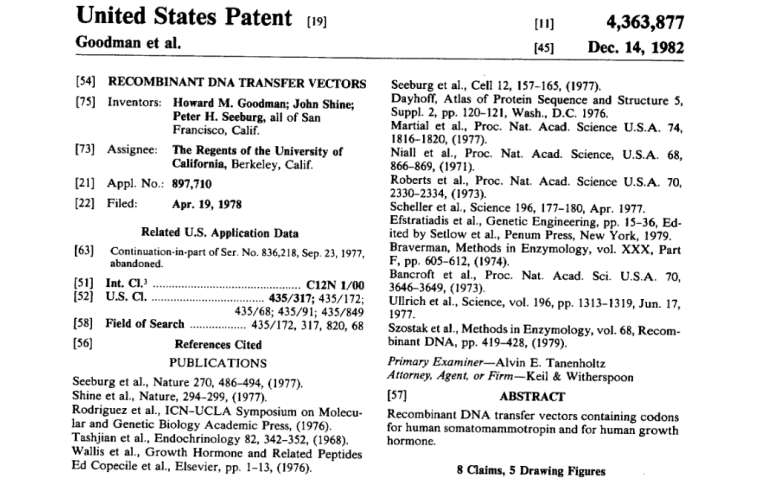
Introduced into the debate in February 2024 during the parliamentary vote on the exclusion of NGT-derived material from patentabilityiv, the issue of patents remains the main sticking point in the trilogue. According to the non-paper, the Parliament, which initially proposed banning patents on NGT1 plants, is now willing to compromise, provided that “safeguard mechanisms” are included in the regulation to ensure fair access to plant material – including patented material – for breeders.
The proposed safeguard mechanisms would include:
- a clear definition of the characteristics that can be protected,
- the exclusion of natural or conventionally bred traits from patentability,
- guarantees to prevent market concentration and preserve access for SMEs,
- the right for farmers to save their seeds,
- fair, reasonable and non-discriminatory (FRAND) licences,
- a research exception for breeders.
This proposal is surprising in that it plans to exclude natural or conventionally bred traits, even though the Commission bases its entire approach on the alleged impossibility of distinguishing NGT1 from conventional plants.
Even if, under pressure from Denmark, the Parliament’s position could change, no clear and protective consensus seems to be emerging at this stage for small and medium-sized seed producers and farmers. Indeed, even if the patent guarantees newly demanded by the Parliament can be seen as safeguards, they are not enough to reassure seed producers and farmers. Two examples among the proposed safeguards illustrate this: “fair” licences and the exclusion of native traits.
Fair licences
The issue of fair licences – allowing a third party to use a plant or NGT1 product covered by a patent with the patent holder’s authorisation – illustrates the uncertainty that still reigns in Europe on the subject of patents. The FRAND licence, for example, proposed by the Parliament, is usually used for inventions that are essential to a particular technical standard, such as Wi-Fiv. Its purpose is to ensure that these patents are not misused to restrict competition. However, it is not clear that genomic technologies can accommodate technical standards, at least not in the short term. Furthermore, the concept of “fair licensing” is not precisely defined by European law, even though Article 12 (“Compulsory cross-licensing“) of Directive 98/44 on biotechnological inventions refers to “reasonable terms” vi. In practice, reference is made to national law on the subject, in this case Article L 613-15-1 CPI for France vii. A clarification by the Council adds to the uncertainty: the patent holder is not required to indicate whether they would agree to grant a licence, which does nothing to promote transparency.
The Danish Presidency states that “tools already exist to address some of these concerns [Editor’s note: the use by a third party of a plant or NGT1 product covered by a patent] and proposes to strengthen transparency, including monitoring of licensing platforms, through a code-of-conduct like mechanism“. However, these platforms are not accessible to everyoneviii, and it seems difficult to reconcile such divergent interests as those of industry and “small players” within a code of conduct. This is particularly true given that the pro-NGT European Commission will play a central role in drafting the code.
Exclusion of natural traits
Patents covering native traits have already been granted in Europe, and the deregulation of plants derived from NGTs would amplify this phenomenon. However, the exclusion of native traits from the scope of a patent – the disclaimer according to the EPO (European Patent Office) – proposed by the Parliament remains a false solution for protecting small and medium-sized seed producers and farmers. The EPO explains that in order to prevent a patent on plants obtained by a technical process from extending to plants obtained by biological processes, a disclaimer explicitly excluding the latter must be included in the patent claims. This applies to applications filed since 1 July 2017, without retroactive effect.
In its decision G 1/03ix, the EPO’s Enlarged Board of Appeal specifies that a disclaimer must exclude only what is necessary, while remaining clear and concise. However, excluding specific biological elements, such as plant material, is very complex, if not impossible. This is particularly true if the European Commission asserts that all GMO/NGT1 are equivalent to natural plants. Thus, writing in a claim that “the patent does not cover plants obtained by biological processes” may be concise, but not necessarily clear, as it is not easily applicable. And even with such a disclaimer, the alleged infringer would still have to prove that their product is obtained by a non-patented process, according to the principle of reversal of the burden of proofx.
ECVC considers that this exclusion obligation is “illusory because it can unfortunately only concern products known to the breeder claiming a patent. No breeder can know all the biological material and genetic information contained in all the plants cultivated globally“. ECVC adds that an exclusion “only apply to plant and seeds are “notoriously well known”, registered in the common catalogue of varieties, deposited in official public collections or which are the subject of official scientific publications describing in detail their characteristics and the biological materials or genetic information they contain. It does not concern most peasant seeds and many traditional varieties, which will therefore always be threatened with appropriation by patents covering the ‘native’ characteristics they contain”.
Furthermore, even without mentioning the disclaimer, the “non-retroactivity” rule allows many patents on products obtained by essentially biological processes (EBP) to remain valid until 2037. To protect small and medium-sized seed producers and farmers, the EPO would have to decide to apply retroactivity to these patents, which seems unlikely, if not impossible. Alternatively, national courts must invalidate European patent claims filed before July 2017 relating to such products. However, it should be noted that the Commission bases its entire approach on the alleged impossibility of distinguishing NGT1 from conventional plants.
Protection still insufficient
Even if all the guarantees demanded by Parliament – including the “total breeder’s exemption“xi – were clear, the fact that it has dropped its demand for a total ban on patents on plant material derived from NGTs would open the door to abuses. The power of industrial groups, which hold numerous patents, leaves little room for small and medium-sized seed producers, for whom patent law remains a foreign and complex discipline that could be used as a tool to buy them out.
A total ban on plant material derived from NGTs, as originally proposed by Parliament, would therefore be the most effective solution. However, it would not provide complete protection given the maintenance of process patents and the associated legal consequencesxii. It would also require an amendment to Directive 98/44 on biotechnological inventions in patents, which both Member States and the Commission are totally opposed to.
The Danish Presidency pushes ahead
Denmark is leading a political offensive to deregulate GMOs/NGTs during its presidency of the Council of the EU. It wants to move quickly, as the countries that will subsequently hold the EU presidency (Cyprus, Ireland, Lithuania and Greece) are not seen as active Member States on this issue. The Danish Presidency is also under strong pressure from its own population, 82% of whom oppose the deregulation of GMOs/NGTs, according to a YouGov pollxiii. The same poll also shows that 84% of Danes are unaware that their government supports the deregulation proposed by the European Commission.
The European institutions are entering into final negotiations to decide whether GMOs/NGTs will be exempt from labelling and traceability requirements, and to develop real solutions for patents. To justify the Danish position, Food Minister Jacob Jensen, who believes that NGTs do not produce GMOs, argues that deregulating GMOs/NGTs would accelerate the ecological transition, provide sustainable solutions for food production and make it possible to ban certain PFAS pesticides (per- and polyfluoroalkyl substances). However, these arguments merely repeat the misleading narratives developed over many years by industry and scientists in favour of GMOs/NGTs, and ignore the consequences of patent rights on small and medium-sized seed producers and farmers.
Proven characteristics of unsustainability according to the European Coordination Via Campesina (ECVC):
• Herbicide tolerance traits, which lead in the long term to increased use of herbicides, soil depletion, the creation of resistant weeds, and are linked to health problems among farmers;
• Insecticide production traits, which pose a high risk of harmful interaction with the environment, including pollinators;
• Traits linked to production of antifungal substances, which pose a high risk of harmful interaction with the environment, in particular with fungi essential for plant survival, productivity and/or seed fertility.
i Bartosz Brzeziński, “Far right to the rescue on Europe’s gene-editing revolution”, Politico, 20 November 2025.
ii European Commission, “ANNEXES to the Proposal for a REGULATION OF THE EUROPEAN PARLIAMENT AND OF THE COUNCIL on plants obtained by certain new genomic techniques and their food and feed, and amending Regulation (EU) 2017/625″, 7 July 2023.
iii ECVC, “Trilogue on the draft regulation on new genomic techniques (NGTs): ECVC’s proposals on patents and sustainability”, November 2025.
iv Eric Meunier and Denis Meshaka, “Is 2024 the year when patents on life are politically challenged?”, Inf’OGM, le journal, No. 176, July/September 2024.
v World Intellectual Property Organisation, “Standard essential patents”.
vi European Parliament and Council of the European Union, “DIRECTIVE 98/44/EC OF THE EUROPEAN PARLIAMENT AND OF THE COUNCIL of 6 July 1998 on the legal protection of biotechnological inventions”, Official Journal of the European Union, L213/13, 30 July 1998.
vii République française, Code de la Propriété Intellectuelle, Article L613-15-1, JORF, 9 December 2004.
viii Denis Meshaka, “Brevets et COV : des semenciers au milieu du gué ?”, Inf’OGM, 23 January 2024.
ix European Patent Office, “G 0001/03 (Disclaimer/PPG) 08-04-2004”.
x Denis Meshaka, “Excluding GMOs/NGTs from patentability would be an illusion”, Inf’OGM, 4 March 2024.
xi Denis Meshaka, “GMO/NGT Regulation: civil society organisations concerned about the outcome of the trilogue”, Inf’OGM, 5 November 2025.
xii Denis Meshaka, “GMO patents: is it possible to break the deadlock?”, Inf’OGM, 10 February 2025.
xiii “Poll: 82% of Danes oppose GMO deregulation, at odds with government position“, GMWatch, 5 November 2025.