
News
Despite pitfalls and dangers, gene drive is still on the table
By Annick BOSSU
Published on the 25/12/2025, modify the 09/03/2026


In September 2025, the French Academy of Sciences published a summary of the risks it identified as being associated with gene drive. This technique, which emerged around ten years ago, presents a variety of potential dangers and is uncontrollable. As a result, it has not yet been deployed in the wild. However, the current context is very conducive to its development and the precautionary principle is under threat.
Inf’OGM devoted a comprehensive report to gene drive in 2020i. Five years on, a report by the French Academy of Sciencesii provides an opportunity to take stock of new emerging issues and lay the foundations for ethical and philosophical reflection.
Furthermore, in August of the same year, 2025, the project to genetically engineer malaria-carrying mosquitoes was halted in Burkina Faso. What were the reasons for this?
A hegemonic project based on transgenesis
It should be remembered that the technology of gene drive is based on transgenesis in sexual species. The DNA fragments (or transgenic cassette) used encode the CRISPR/Cas complex, a tool that will cut the DNA and copy the transgenic cassette identically into the cell resulting from fertilisation. This cassette can contain one or more genes of interest, if necessaryiii.
The aim is for all descendants to carry the trait desired by the technicians. These traits will be forced by the technique. This will occur in each generation and therefore, step by step, in theory, all descendants would be genetically modified with the forcing cassette. This transmission is hegemonic and will be all the more effective as the species concerned has a short lifespan.
However, the implementation of gene drive is very difficult and presents many risks. As the report of the Academy of Sciences states, “undertaking a benefit-risk assessment of CRISPR homing gene driveiv is inherently difficult. It is impossible to fully anticipate all possible impacts. Furthermore, there is no standard method to weigh up the various pros and cons in a way that would satisfy everyone, according to their various perspectives“. This explains why, despite the many promises made by biotechnicians and industry, gene drive has not yet been deployed in nature.
The promises of gene drive
The promises of gene drive relate to public health, agriculture and species conservation.
In medicine, gene drive is being considered in the hope of controlling or eliminating vector-borne diseases by targeting disease-carrying organisms, particularly mosquitoes, for example against malaria (see box).
In agriculture, the promise lies in combating insects considered pests (fruit flies, locusts, etc.) that damage crops or affect livestock. Gene drive is being studied to reintroduce sensitivity genes into weeds that have become tolerant to herbicides so that they become sensitive to these herbicides once again !
Finally, in the field of species conservation, the promise of gene drive lies in protecting endangered species by controlling invasive plant or animal species or by introducing beneficial traits into populations at risk of extinction.
Two approaches are being considered for gene drive: modification and suppression.
In the first case, the objective is to obtain a population in which 100% of the members carry the transgenic gene drive element. In the second, the objective is to reduce or eliminate a target population, for example by introducing genetic modifications that cause sex-specific sterility or reduce reproductive success, leading to the collapse of the population.
Complicated implementation
There are two types of implementation difficulties. On the one hand, there are biological limitations that would make gene drive technology ineffective or only marginally effective, and on the other hand, there are cases where gene drive technology could not be stopped.
Risks of ineffectiveness
In the laboratory, gene drive systems have been developed in yeasts and various sexually reproducing animals, including flies, mosquitoes and mice. In the case of plants, the application of gene drive is difficult for several reasons. Many plants reproduce vegetatively, which limits the spread of a forced transgenev. They have long life cycles, and many species are polyploidvi, making the technique much more difficult to apply. Finally, chromosome repair following breaks generated by CRISPR/Cas is less effective than in animals.
In insects, there are closely related species that are capable of reproducing with each other but do not do so for biological or ecological reasons, leading to reproductive isolation. These are called cryptic species. In the case of campaigns to eliminate mosquitoes that carry pathogens, the successful elimination of a target population by a forced transgene could leave an ecological niche that could be filled by cryptic mosquito species. This could lead to the expansion of these cryptic species, which are also carriers of the pathogen. In such a scenario, the initial forced transgene would fail.
Another potential reason for failure is the resistance of certain target populations to gene drive, either through already present resistance alleles or through new mutations. Strategies are currently being studied in the laboratory to counter this resistance, but it is impossible to predict how they will perform under natural ecological conditions.
The risks of not being able to stop gene drive
In the event of undesirable effects following the implementation of a forced transgene, one might want to stop it. However, stopping a forced transgene is not simple since transmission is hegemonic. A forced transgene could continue to spread within the target population, even if its implementation has been stopped.
Therefore, in laboratories, some researchers are attempting to implement complex strategies, still based on transgenesis, to inactivate the genes encoding the CRISPR/Cas system. However, these theoretical models depend on many factors, and some forced transgenes are proving unstoppable. One strategy being considered by technicians would be to have forced organisms synthesise anti-CRISPR proteins discovered in bacteriophagesvii. However, applying this technique in nature would require the continuous, uninterrupted release of forced, anti-CRISPR individuals!
Despite these limitations, the French Academy of Sciences does not rule out the implementation of gene drive. Its report states: “Further experimental validation and mathematical modeling, particularly in spatially heterogeneous environments, will be necessary to assess the range of conditions allowing this anti-drive strategy to successfully mitigate gene drive propagation“. However, the author of the report adds that “close monitoring of the target population and ecosystem” will be necessary, which implies that “if an initial gene drive release proves problematic, local communities are condemned to pursue remediation actions with the research team“… Local populations and local researchers do not all agree with the release of modified insects (see box).
The dangers of forced transgenes in nature
Gene drive belongs to a particular category of techniques with a high ecological impact, alongside with nuclear energy and virus manipulationviii.
Genetically forced organisms are designed to act in natural ecosystems, where multiple species have been interacting with each other and their physical environment for millions of years, building a dynamic balance, a form of stabilityix.
What a forced transgene will do in an ecosystem where it is entirely foreign, unknown and, moreover, artificial is unpredictable. Many types of mutations can occur in the genetic forcing element and transform an original forcing into a new one (see box), with new potential adverse effects on the phenotype of the organisms carrying the forcing and on ecosystems (e.g. insecticide resistance). In addition, mutations in the transgene sequence of one of the elements of the CRISPR/Cas complex (the guide RNA) can alter the target site of cleavage in the DNA, and the cassette may insert itself elsewhere in the genome.
These ecological impacts are highlighted in the report by the Academy of Sciences, which states that “the goal of eliminating an invasive species might be to return to an ancestral equilibrium similar to the one prior to the invasion. But local eradication of an invasive species leaves an empty ecological niche that can trigger diverse cascading trophic effects on the distribution and abundance of multiple other species in direct and indirect interaction with the eliminated species“. The ancestral balance cannot be restored, the evolution of life does not know how to reverse course, but constantly creates something new in response to contingencies. This is precisely why the implementation of gene drive is so difficult and needs to be re-examined.
Another major concern is that transgenes of gene drive designed to target a specific population may contaminate other populations of the same species or another species. The longer these transgenes are present in nature, the greater the risk. This can occur through sexual reproduction between closely related populations or species, or through horizontal transfer, mainly via viruses and micro-organisms capable of transporting DNA fragments. This is very worrying, as distant species can thus be affected by gene drive. This risk has been taken into account by the Academy of Sciences, which considers that “the risk of transmitting the gene drive to another species exists“.
The Academy of Sciences is asking ecosystem scientists “to thoroughly assess the ecological role of the target species within its ecosystem“. This is a daunting task, and perhaps impossible given the known history of life on Earth. Indeed, the ecological “roles” of species are intertwined, there is not just one per species, and they change over time: an ecosystem is complex and evolving… and our understanding of ecosystems is also evolving!
Other risks of gene editing
Sociological risks are addressed in the Academy of Sciences report. They get our attention : “These risks stem from public perception and governance issues. As previously seen with COVID-19 vaccines during the pandemic, negative public perception can rapidly spread via social media. One of the greatest risks is an unauthorized release of gene drive organisms into the wild, whether accidental or deliberate, because this could severely damage public trust in scientists, institutions or regulators“. The Academy of Sciences therefore fears that the consequences of gene drive in nature could damage the reputation of other biotechnologies, which it tells us are very useful. We would argue that, given the major risks to the environment posed by gene drive, this “sociological” risk is minimal.
As for the human populations that would be affected by gene drive, “scientists and policymakers must prioritize transparency, inclusivity, and active engagement with local populations“. This is wishful thinking when we know that it is large multinational companies from rich countries that want to introduce genetically modified mosquitoes to combat malaria in countries in the “South” and that meetings with local populations mainly consist of persuading them to accept this technology (see box).
The accidental release of genetically modified individuals into the wild during trials is mentioned in the report, and the author reassures us that biologists have put in place a series of very strict safety rules and protocols. However, she adds that “international discussions around gene drive research have not yet converged on a set of rules and guidelines to be respected worldwide“.
The malicious use of gene drive is also addressed by the Academy of Sciencesx. Gene drive could be used to build two types of biological weapons: “suppression drives that would target insect species necessary for agriculture (e.g. pollination) and modification drives that would render pest or disease-carrying insects resistant to insecticides or able to deliver toxins to humans“. However, the report concludes that an effective preventive measure would be to “exclude from scientific papers the methodological details for applying gene drive to non-model species“. This seems rather weak in view of the widespread surveillance on the Internet. Wouldn’t this be yet another reason to stop research into gene drive?
The gene drive project has not been abandoned despite the major risks of destroying ecological balances. Extremely sophisticated methods are still being used to implement it in laboratories and adjust it to make it more effective, even though there is a risk that it will be impossible to stop.
What right do researchers and industrialists have to persist, when ecological solutions exist to address the problems that genetic engineering seeks to solve? When society in all countries has not been consulted? When we know that living organisms are unpredictable and that it is impossible to control artificial elements introduced into nature?
The answer is undoubtedly that the industry’s criteria in the risk-benefit balance are not the same as those of the general public.
Genetic engineering project halted in Burkina Faso
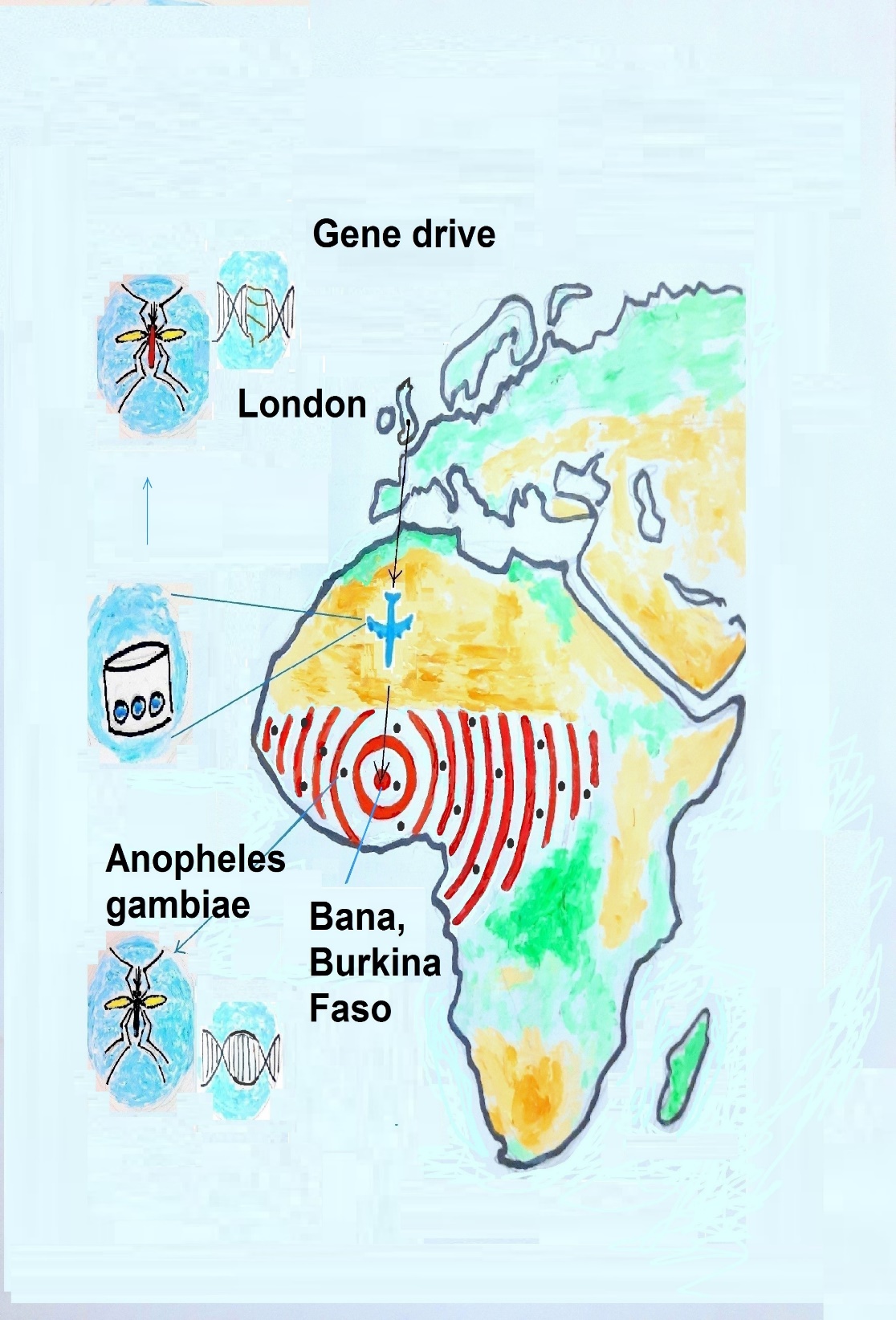
In August 2025, the government of Burkina Faso ended the Target Malaria project, which aimed to eradicate malaria by using gene drive technology to eliminate Anopheles gambiae mosquitoes, the vectors of the diseasexi.
This project was designed in a laboratory at Imperial College London. The project’s experimental protocol consisted of three phases, each focusing on a particular strain of genetically modified mosquitoes. Only the third phase involved the use of gene drive. All strains produced by Imperial College were sent to the local Target Malaria team in Burkina Faso for field trials, and each phase was normally to be concluded with a release of mosquitoes. This gene drive project was the most advanced in the world, thanks to huge funding, mainly from the Bill and Melinda Gates Foundation, but also from DARPA (US Agency for Advanced Defence Research Projects).
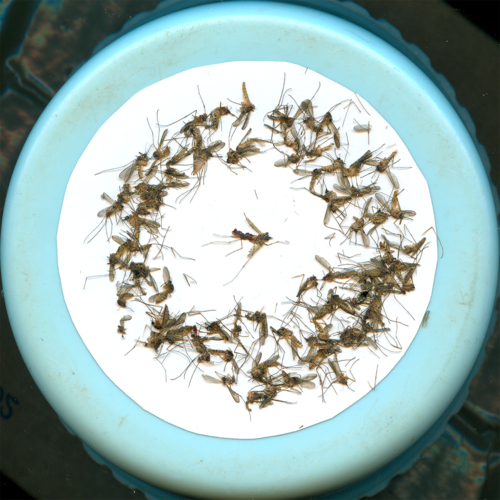
In July 2019, during the first phase of the project in the village of Bana, Target Malaria researchers released 6,400 male mosquitoes that had been genetically modified to be sterile (but not forced!) to see how they would adaptxii. Notable irregularities concerning the information provided to the population of Bana had been notedxiii.
It is at the second phase, which began in March 2022, that the project has just been halted. A release of 16,000 genetically modified male mosquitoes had been carried out on 11 August 2025. The mosquitoes released were of a different genetically modified strain. In fact, the strains of GM mosquitoes sent to Burkina Faso, although tested in the London laboratory, caused numerous problems. Andrea Crisanti, who heads the London laboratory, explained that the proposed strain had significant flaws that could have “multiple implications for disease transmission and ecological adaptation“. In preparation for the release, repeated crossbreeding of the genetically modified strain with local mosquitoes, which was necessary to ensure its adaptation, apparently did not work properly. Andrea Crisanti identifies the cause as the omission of complex genetic phenomena, such as chromosomal inversions, and a lack of knowledge about genes linked to malaria transmission or those linked to adaptation to humidity or drought. Another problem stems from the fact that mosquito breeding conditions were not controlled in the field, particularly with regard to humidity levels. The researchers and civil society organisations that identified these flaws thus enabled the project to be withdrawnxiv. They advocate other methods of combating malaria.
Other researchers at Imperial College disagree: “Several independent assessments, including a review by Burkina Faso’s biosafety regulatory authority and a separate environmental study, concluded the risks of the release were “negligible””xv.
The third phase of the project, gene drive, currently being prepared in London, has also been criticised. The WHO expert report (2022) identified problems: the transgenic cassette has become unstable due to a mutation and the project fails to clearly identify all the mosquito species to be targetedxvi.
i “Forçage génétique : vers une désorganisation du vivant ?”, Inf’OGM, le journal, no. 160, July/September 2020.
“Mini-guide | Forçage génétique : vers un contrôle du vivant ?”, Inf’OGM, December 2022.
“Gene drive: the new technique that could eradicate entire species”, Inf’OGM, 18 October 2021.
ii Courtier-Orgogozo V., “Risks associated with CRISPR homing gene drive”, C R Biol., volume 348, pp. 211-227, 8 September 2025.
iii Eric Meunier, “Forçage génétique : une transmission hégémonique de transgène”, Inf’OGM, le journal, no. 160, July/September 2020..
iv This is the new name given by biotechnicians to the transgenic cassette containing the CRISPR/Cas complex.
v The use of this expression is of semantic convenience: it actually refers to the genes in the transgenic cassette.
vi A cell or organism is polyploid when it has more than one copy of the same chromosome (e.g. soft wheat has 7 different chromosomes with 6 copies each, i.e. 42 chromosomes)
vii Annick Bossu, “Médecine : les technologies Crispr/Cas se cherchent encore”, Inf’OGM, 20 February 2024.
viii This is the new name given by biotechnicians to the transgenic cassette containing the CRISPR/Cas complex.
ix Frédéric Jacquemart, “Biodiversity and stability of natural systems: what are the impacts of GMOs?”, Inf’OGM, 18 November 2025.
x “Forçage génétique : vers une désorganisation du vivant ?”, Inf’OGM, le journal, no. 160, July/September 2020.
xi Abdou Razak OUEDRAOGO, “Santé : Fin des moustiques génétiquement modifiés au Burkina Faso”, aconews.net, 22 August 2025.
xii Christophe Noisette, “BURKINA FASO – Les moustiques transgéniques disséminés”, Inf’OGM, 3 July 2019.
xiii Irina Vekcha, « Burkina Faso – Le projet Target Malaria continue malgré les irrégularités », Inf’OGM, 1st February 2022.
xiv Irina Vekcha, « Expérimentation du forçage génétique, au Burkina Faso : « Lâcher des moustiques génétiquement modifiés au Burkina Faso est dangereux » estime Mme Irina Vekcha Professeur de génétique à l’ENSA (Université d’Agriculture du Sénégal) », Agropasteur, 4 août 2025.
xv Kai Kupferschmidt, “After ‘humiliating’ raid, Burkina Faso halts ‘gene drive’ project to fight malaria”, Science, 3 September 2025.
xvi Irina Vekcha, « Expérimentation du forçage génétique, au Burkina Faso : « Lâcher des moustiques génétiquement modifiés au Burkina Faso est dangereux » estime Mme Irina Vekcha Professeur de génétique à l’ENSA (Université d’Agriculture du Sénégal) », Agropasteur, 4 août 2025.