

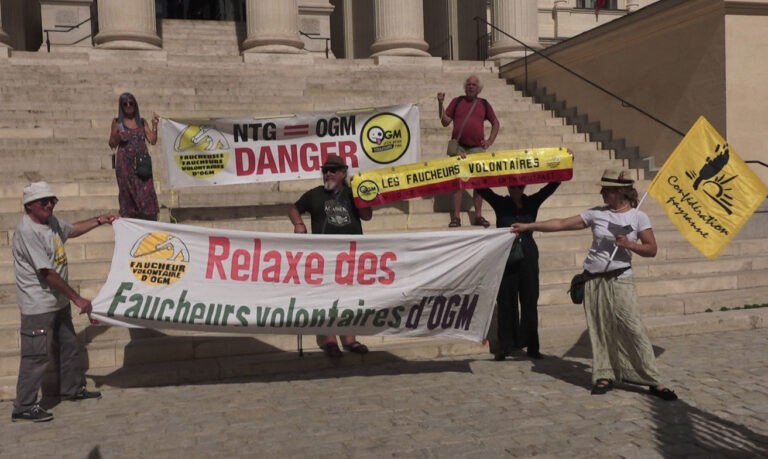
Syngenta drops its appeal against the Faucheurs Volontaires
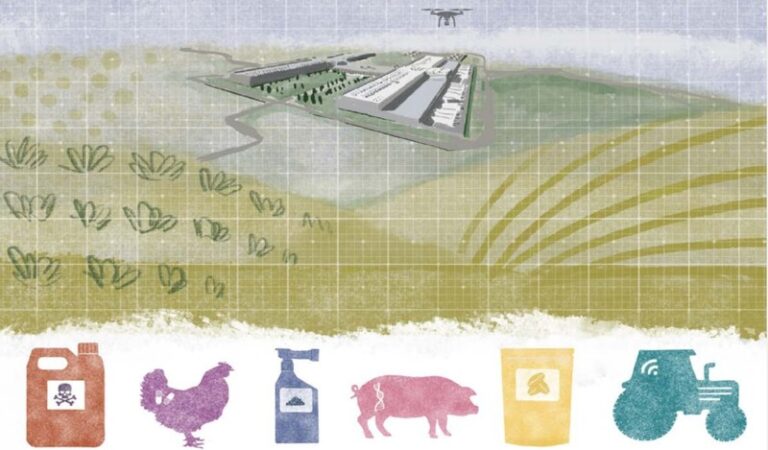
Top 10 agribusiness giants: Corporate concentration in food & farming
In times of war, market concentration allows companies to reap even greater profits, while farmers and consumers around the world suffer from rising fertilizer and food prices. This report provides a snapshot of the state of concentration in the agri-food sector. It follows up on the 2025 edition and assesses the state of market concentration in six key agricultural sectors: commercial seeds, pesticides, synthetic fertilizers, agricultural machinery, veterinary pharmaceuticals, and livestock genetics.

Plantibodies claims to be revolutionizing molecular culture
Molecular agriculture is an idea as old as transgenesis. Attempts to have tobacco, rice, or corn produce therapeutic molecules have been made many times, but the results have been few and inconclusive. A French startup, Plantibodies, is proposing a new approach: instead of extracting the target molecule from the plant, the idea is to grind the spinach leaves that contain it into a powder.
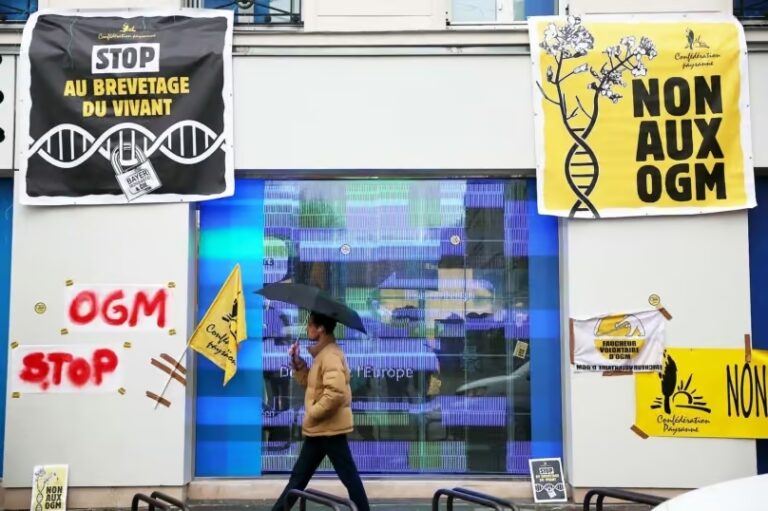
The deregulation of GMOs is drawing criticism from all corners of Europe
On 17 June, between 12.30 and 1.30 pm, MEPs, meeting in plenary session, will vote, without debate, on the proposal to deregulate GMOs derived from new genetic modification techniques (GMOs/NGTs). Inf’OGM summarises here some of the positions, campaigns and other calls for action by civil society organisations, elected representatives, businesses and trade unions regarding the risks that its adoption would entail.
Deregulation of GMOs: 93 organisations call to “protect farmers’, breeders’ and citizens’rights”
Following the European Council’s approval on 21 April of the text aimed at deregulating GMOs produced using new genetic modification techniques (GMOs/NGTs), it is now up to the European Parliament to vote on this text. Ahead of this vote, scheduled for mid-June, 93 European organisations have sent a joint letter to the members of the Parliament’s Environment Committee asking them to “protect farmers’, breeders’ and citizens’ rights”.

GMO/NGT: A memo from the French Embassy in the United States ignored by the government
In late April 2026, the French government supported the deregulation of GMOs produced using new techniques of genetic modification (GMO/NGT). A month earlier, however, the French Embassy in the United States had sent the government a memo detailing the situation in that country. Despite more than 140 marketing authorisations, only a few GMO/NGT are actually on the market there… but with significant patent-related issues. The situation described bears no resemblance to the promises made by multinational corporations or the European Commission.

Multinational companies want the DSI and the money from DSI
This autumn, governments, businesses, Indigenous communities and other representatives of civil society are to meet in Yerevan (Armenia) to discuss the protection of terrestrial and marine biodiversity. As more and more genetic components of this biodiversity are being digitised, multinational corporations want to seize the opportunity to exploit the benefit-sharing fund for the use of DSI, known as the “Cali Fund”. Their demands? To reduce the amount of the contributions and the ability of states to decide on national measures, and to widen the loopholes allowing them to bypass prior consent for the use of living organisms that make up biodiversity.

The Cali Fund: one year on, the promise is fading
Adopted at the COP16 on biodiversity in November 2024, the Cali Fund was officially launched on 25 February 2025. Its aim is to collect a share of the revenue generated by the use of digital sequence information (DSI), which is predominantly exploited by industries in the Global North and identified in biological resources that very often originate from the Global South. The fund’s promise is to ensure the sharing of benefits arising from the use of this DSI, which in particular fuels numerous patent applications. But one year after its launch, the fund remains largely ignored by the main users of DSI.
Pairwise shapes the food of the future with NGT
While the European Commission is attempting to deregulate new genome modification techniques (NGT), the US company Pairwise is multiplying its “partnerships” combining the Crispr/Cas tool and its Fulcrum platform. Concluded with both private and public players, these agreements anticipate the landscape following the potential deregulation of NGT. They will also influence the conditions for the dissemination of NGT and the arrival of “Pairwise-type” products on our plates.
Will satellites save agriculture?
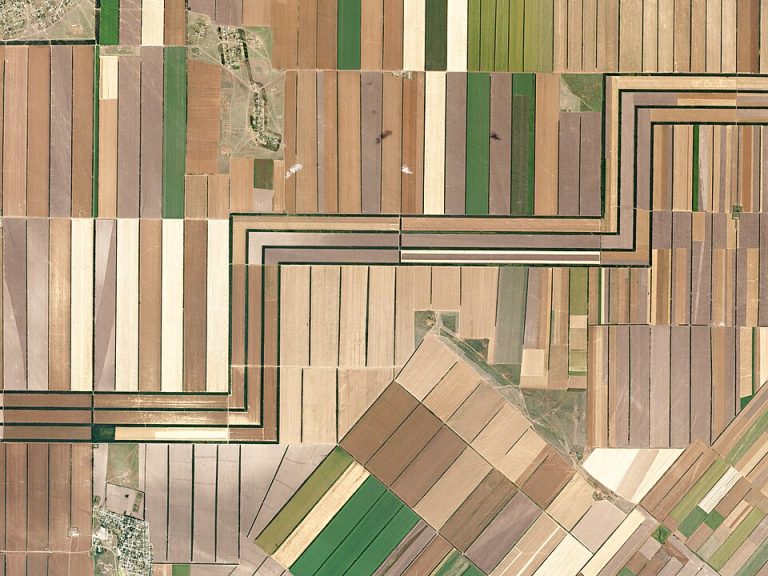
“How can we feed 10 billion people in 2050 with limited natural resources? To address this challenge, agritech start-ups are capitalising on the latest research findings to offer disruptive innovations and provide more efficient and environmentally friendly solutions” . This is how agritech is presented by BPI France, the French public investment bank. Once again, we see the famous promise to feed the world. To achieve this goal, we need to innovate, invest, digitise, robotise…
GMOs on the agenda at COP 30
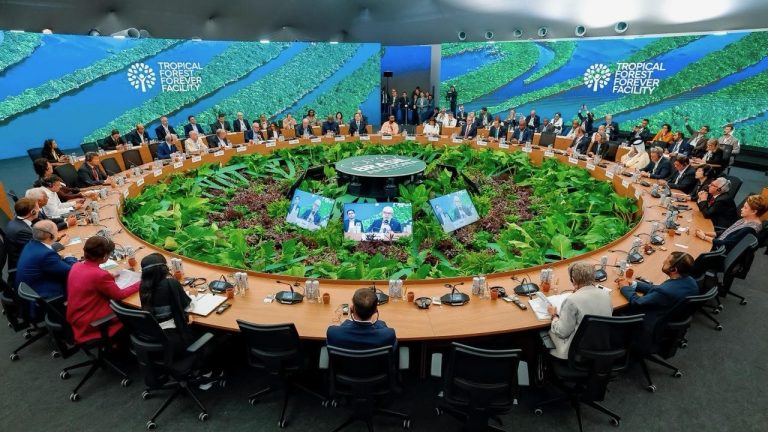
At a time when countries are meeting in Belém, Brazil, to discuss the tools needed to combat climate change, Inf’OGM wishes to shed light on the role of biotechnology in these negotiations. Biotechnology companies are making several promises: GMOs will help combat world hunger and climate change.

A biotech “Alliance”: when lobbying becomes institutionalised
At the end of July 2025, the EU Biotech and Life Sciences Alliance was quietly launched in the European Parliament. Supported by the lobby group Europabio, its aim is to bring together MEPs to “ensure that the [European] Union takes bold and coordinated action” to strengthen its biotechnology sector. While this initiative reflects a desire to maintain Europe’s competitiveness, it raises a major political question: where does democratic representation end and institutionalised lobbying begin?