


Multinational companies want the DSI and the money from DSI
This autumn, governments, businesses, Indigenous communities and other representatives of civil society are to meet in Yerevan (Armenia) to discuss the protection of terrestrial and marine biodiversity. As more and more genetic components of this biodiversity are being digitised, multinational corporations want to seize the opportunity to exploit the benefit-sharing fund for the use of DSI, known as the “Cali Fund”. Their demands? To reduce the amount of the contributions and the ability of states to decide on national measures, and to widen the loopholes allowing them to bypass prior consent for the use of living organisms that make up biodiversity.

The Cali Fund: one year on, the promise is fading
Adopted at the COP16 on biodiversity in November 2024, the Cali Fund was officially launched on 25 February 2025. Its aim is to collect a share of the revenue generated by the use of digital sequence information (DSI), which is predominantly exploited by industries in the Global North and identified in biological resources that very often originate from the Global South. The fund’s promise is to ensure the sharing of benefits arising from the use of this DSI, which in particular fuels numerous patent applications. But one year after its launch, the fund remains largely ignored by the main users of DSI.
Seed Treaty’s MLS enhancement package risks legitimizing biopiracy and inequity
For some times now, the International Treaty on Plant Genetic Resources for Food and Agriculture is discussing an expansion of its scope to all plant genetic resources for food and agriculture. Many stakeholders and observers are fearing this would end up in legitimizing biopiracy. As the next meeting will occur in Lima (Peru) starting in November, the 24th, Inf’OGM publishes the analysis of Nithin Ramakrishnan, from Third World Network, one of the stakeholders of this meeting.

Despite negotiations in 2024, disagreements over DSI persist
In 2024, digital sequence information (DSI) derived from genetic resources was at the heart of international negotiations. Discussions focused mainly on the sharing of the benefits generated by the industrial and commercial use of this DSI, and the mechanisms required to implement it. These developments could redefine governance and influence the future regulation of DSI, but persistent differences between countries are holding back progress.
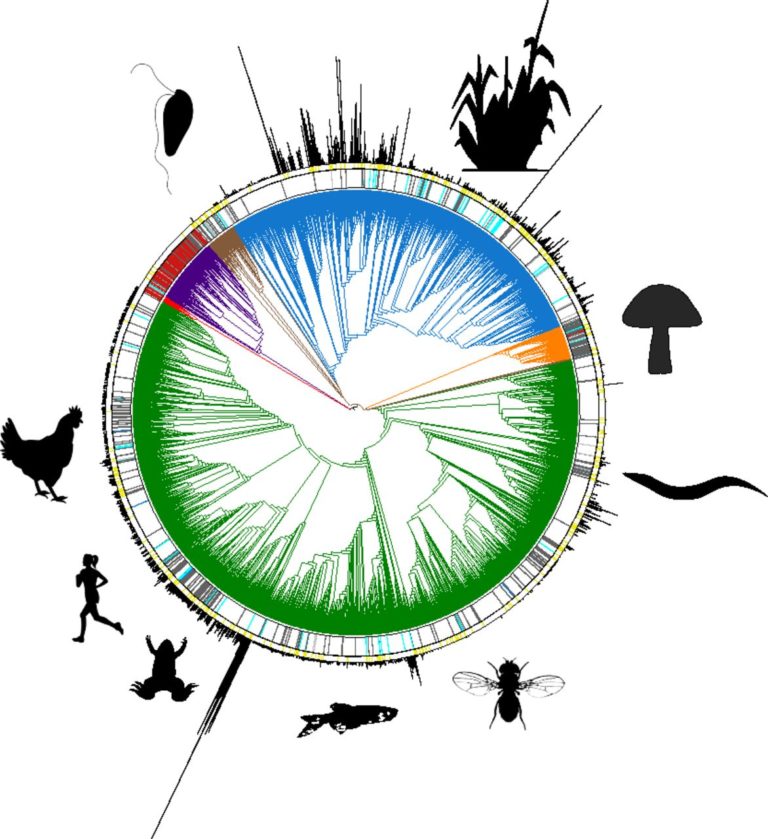
The genome of 1.8 million species is being sequenced
Can biological diversity escape any risk of biopiracy when part of it is digitised in computers? The answer depends on ongoing negotiations within international bodies. In the meantime, an international project to sequence the genome of all known eukaryotic species is making progress. Financed indirectly by players in the IT and artificial intelligence fields, this project even hopes to be able to bypass certain rules thanks to more powerful working tools.
WIPO opens more widely the door to biopiracy
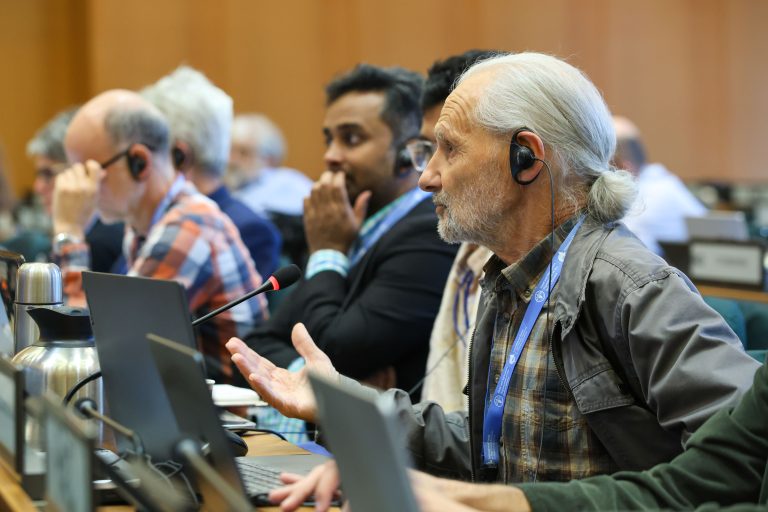
Interconnections between new biotechnologies and DSI or GSD
What are the links between new techniques of genetic modification, digitization of genetic sequences information and patents? Inf’OGM publishes here an analysis presented in June 2024 at a regional workshop organized by the African Center for Biodiversity, in Durban (South Africa). It was written by Guy Kastler, representative of the international farmers’ organization La Via Campesina at various ITPGRFA and CBD meetings.
Synthetic Biology, talks are involving GMOs
For the past fifteen years, governments have been discussing “synthetic biology” on an international level. If to date, an “operational” definition exists, the outlines of this field remain hard to draw. Are talks of “synthetic biology” simply a change of semantics, or a genuinely new frontier of the biotechnology field? For the moment, examples of organisms or molecules obtained by synthetic biology are accumulating: unnatural proteins, GMO plants, GMO bacteria, recreated viruses, modification of living organisms directly in the environment, GMO insects, xenobacteria…

Journal
Patents on living organisms: a growing appropriation
Journal
DSI: dematerialised biopiracy
