
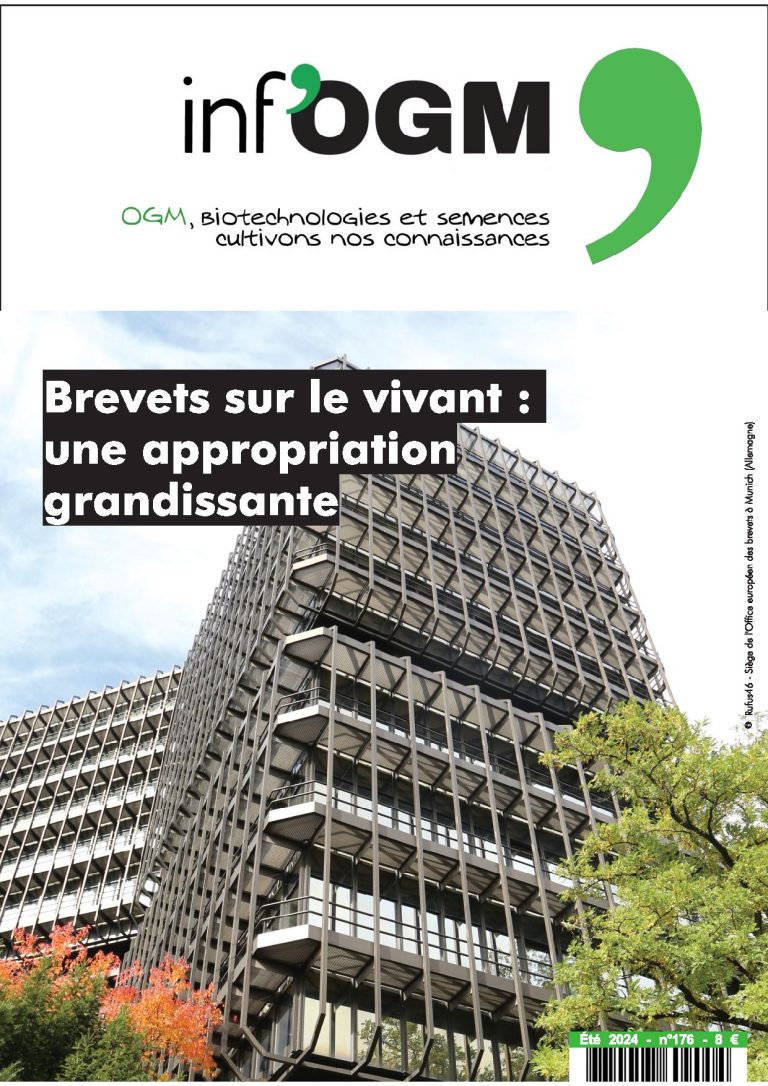
Patents on living organisms: a growing appropriation
By Denis MESHAKA et Hélène TORDJMAN
Published on the 16/09/2023, modify the 09/10/2024


This issue on intellectual property rights (IPR) in the field of living organisms raises a crucial question: how far can living organisms – particularly plants – be privatised without compromising fundamental ethical principles and certain social balances, in particular the rights of farmers?
In a world where biotechnologies are developing at lightning speed, it is essential to think on about the way they are regulated by law and how the legislator anticipates their impact on the ground. This dossier explores the various aspects of this issue, from the battle over patents in the agro-industry, particularly around the Crispr-Cas system, to the potentially devastating effects of monopolies on biodiversity and food sovereignty.
On the one hand, this dossier looks at IPRs on living organisms and the economic issues raised by their most powerful representative: patents. It looks in particular at the role of patents in the ‘new genomic technologies’ (NGT) industry applied to the plant sector, and their predominant tool: Crispr-Cas. While Crispr-Cas is still the subject of a legal battle between its main inventors, it is also attracting new investment and the filing of numerous patent applications. This dossier looks at these latter aspects and the legal uncertainty they create in the seed industry, particularly among breeders, highlighting the asymmetry of access to genetic resources, which threatens the very foundations of autonomous and sustainable agricultural practices.
The dossier also sheds light on the way in which, at the end of 2023, the issue of patents took the European legislative scene by surprise, to the point of preventing the adoption of the NTG regulation during the Spanish term of office. In the wake of this legal event, this dossier also looks at the seed industry’s new areas of interest: DSI (Digital Sequence Information) and genotypic PVCs. Finally, it offers a broad perspective on what intellectual property rights on all forms of living organisms could cover in the longer term.
The aim of this dossier is to invite our readers to reflect on these issues, both as witnesses and as players in these changes, so as to consider a future in which technological innovation does not brutalise living organisms and the ethics of living organisms. We hope that this issue will also shed light on certain grey areas and stimulate a debate that is vital for the future of our societies.
We need your help!
For over 25 years, Inf’OGM has been producing information, made freely available to everyone, on the artificialisation and appropriation of life (GMOs, NTGs, biotech, patents, etc.).
The monopolisation of a large share of public press subsidies by a few media groups reinforces the concentration of media ownership in the hands of a handful of businessmen. This concentration undermines the quality of information and democratic debate, which require a plurality of viewpoints.
In this context, alternative media outlets such as Inf’OGM, which receive no advertising revenue and provide information free of charge, need you – our readers – to continue to exist! Because, even when freely accessible, information comes at a cost.
Supporting Inf’OGM means working towards reliable, independent information on GMOs, biotechnology and seeds that is accessible to everyone.