


In Europe, legislative developments concerning living organisms are progressing slowly
Since 3 May 2022, the European Commission has launched numerous legislative initiatives relating to living organisms. The deregulation of plants and certain GMO micro-organisms, the digitisation of living organisms and patents are all topics being discussed by Member States and the European Parliament. If adopted, these projects would make it easier for companies with the means to appropriate living organisms. What is the current status of these projects? Inf’OGM takes stock.

A biotech “Alliance”: when lobbying becomes institutionalised
At the end of July 2025, the EU Biotech and Life Sciences Alliance was quietly launched in the European Parliament. Supported by the lobby group Europabio, its aim is to bring together MEPs to “ensure that the [European] Union takes bold and coordinated action” to strengthen its biotechnology sector. While this initiative reflects a desire to maintain Europe’s competitiveness, it raises a major political question: where does democratic representation end and institutionalised lobbying begin?

The scientific lobby joins the trilogue on the deregulation of GMOs/NGTs
As the European Union attempts to move forward with its trilogue on the deregulation of plant GMOs derived from new techniques (NGT), the French Association for Plant Biotechnology (AFBV) and its German counterpart (WGG) are stepping up to the plate. In a joint statement, they highlight the disagreements between the European Parliament and the Council, while arguing, on the basis of what they claim to be “scientific” arguments, for the deregulation of these GMOs, to the benefit of the biotech sector.

The EU’s “life sciences” strategy: a pro-industry strategy
Under the guise of making the continent a world leader in “life sciences”, the European Commission has confirmed its clearly pro-industry vision in its strategy published in early July. With a resolutely competitiveness-focused approach, it minimises the potential consequences for other social actors.
2024, another year contaminated by illegal GMOs
In 2024, the European Union once again recorded alerts of GMO contamination. Of the 24 alerts, the vast majority concerned unauthorised GM rice, but also papaya, soybean, flax and corn. Two cases of contamination by genetically modified microorganisms were also reported, one of which even forced the Belgian authorities to issue a public statement recalling a product. In three cases, the nature of the illegal GMO was not specified.
Some European laboratories call for traceability of GMOs/NGTs
The need to be able to detect and identify GMOs obtained through new genetic modification techniques is a request that is being made more and more frequently. Following in the footsteps of associations, farmers’ unions, organic and non-GMO producers and processors, as well as supermarkets, it is now the turn of some laboratories specializing in analyses to make such a demand. At a time when European legislators are discussing the possible complete deregulation of such GMOs, these positions could carry more and more weight.
A showcase for “new genomic techniques” in Europe
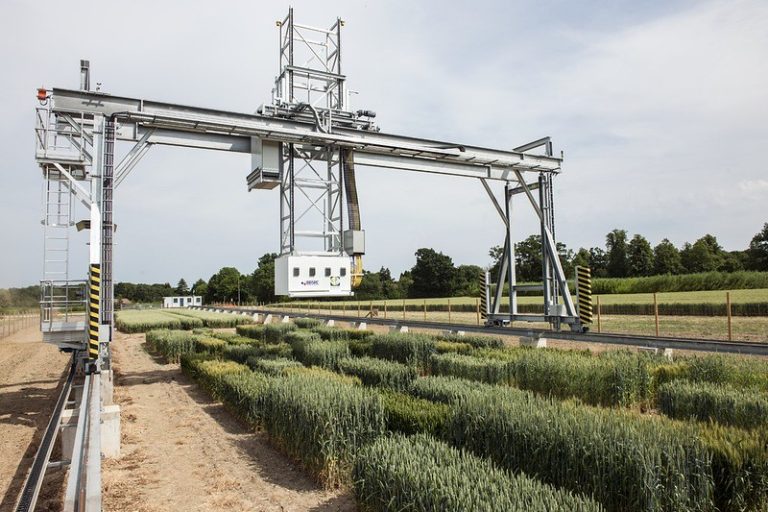
In an article published in April 2025, Euronews highlights “new genomic techniques” using the example of a wheat genetically modified by Crispr/Cas9 in the UK. This wheat, developed by a team of biologists from Rothamsted Research at the University of Bristol, has been tested in a field north of London since October 2021. Although this trial is being carried out without any environmental, agricultural or health precautions, it does provide a good showcase for potential investors.
Detection and identification of GMOs still demanded
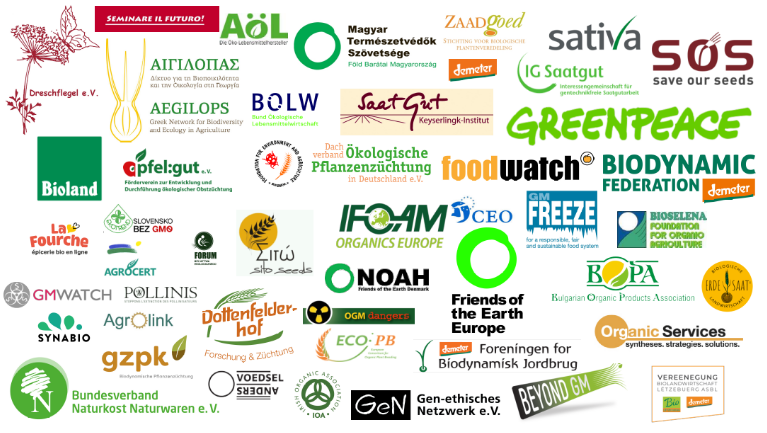
Three groups of French and European organizations have publicly called on political leaders not to abolish labelling and traceability requirements for GMOs produced using new techniques. In their view, maintaining these obligations is the only way to guarantee freedom of choice for farmers and consumers, and to protect the seed and peasant sectors from contamination and attempts by multinationals to take control of living organisms.

The European Commission postpones its “biotech law” again
The European Commission’s postponement of its “biotech law” until the end of 2026 is raising questions. Presented as a future “regulation”, this law must be coordinated with other legal acts still under discussion, in particular the one on new genomic techniques (NGT). But the regulation on health data (known as “EHDS”), adopted in February 2025, could also be a reason for this postponement.
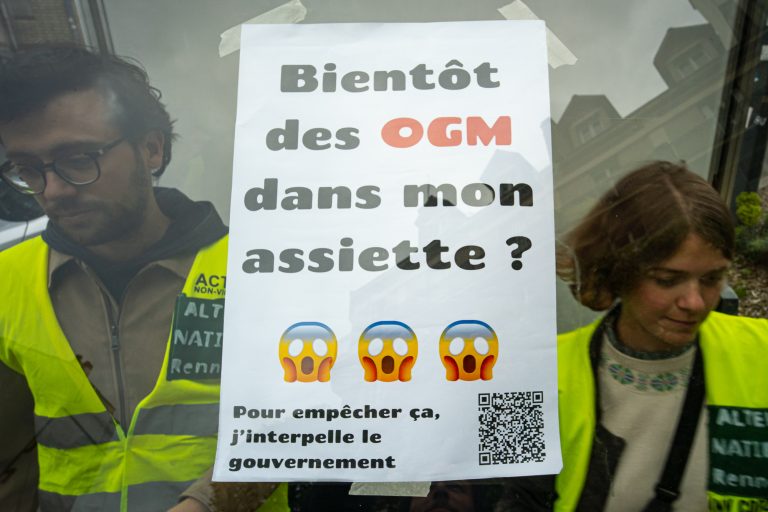
French organisations concerned about GMO deregulation
As the trialogue on the proposed deregulation of GMOs got underway on 6 May between the European Commission, the European Parliament and the Council of Member States of the European Union, French organisations are once again warning of the potential “serious and irreversible consequences of this text”.
Alternatiba Rennes, one of the signatories of this letter, has also taken action in the public arena.
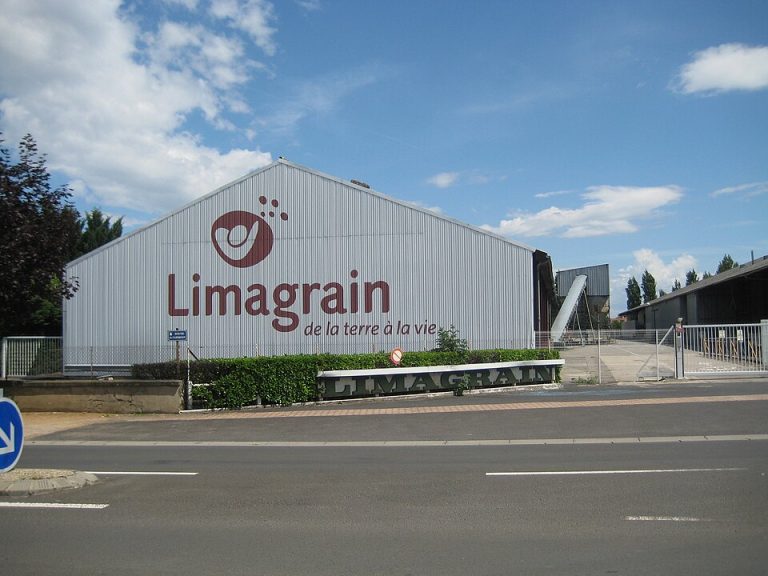
Limagrain, a “cooperative” that has always bet on GMOs
Behind its label as an agricultural cooperative from Auvergne (France), Limagrain is now a global player in GMOs. The Group has been promoting GMOs for many years. Last March, its CEO, Sébastien Chauffaut, was optimistic about the forthcoming deregulation of GMOs/NGTs, which he hopes to market from 2029. Here’s a look at Limagrain’s GMO strategy, combining state privilege and lobbying.

“Biotech Act” 2025: high-tech against farmers?
In 2025, the European Union is expected to adopt a “biotech act” aimed, among other things, at modernising agriculture through new technologies. At the same time, public policies, in particular the Common Agricultural Policy (CAP), are guiding farmers towards ever more expensive and sophisticated mechanisation. As a result, a “high-tech” and soil-less agricultural model is taking shape in Europe, with the risk of increasing farmers’ indebtedness and marginalising small-scale farming.