

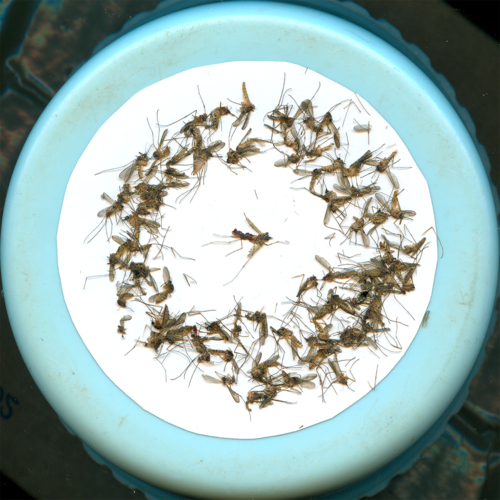
Despite pitfalls and dangers, gene drive is still on the table
In September 2025, the French Academy of Sciences published a summary of the risks it identified as being associated with gene drive. This technique, which emerged around ten years ago, presents a variety of potential dangers and is uncontrollable. As a result, it has not yet been deployed in the wild. However, the current context is very conducive to its development and the precautionary principle is under threat.
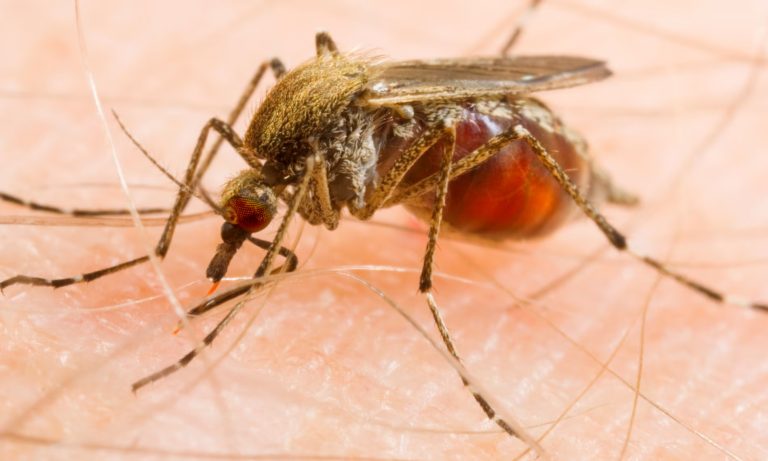
Male mosquitoes genetically modified to produce poison
Mosquitoes carry pathogens that cause diseases such as malaria and dengue fever, and are therefore known as vector-borne diseases. As part of the fight against these mosquitoes, researchers at Macquarie University (Australia) are considering a new genetic strategy. The idea is to genetically modify male mosquitoes so that their sperm produce molecules that will poison female mosquitoes.
Journal
GMO and sterile insects : not very efficient
