
News
A new ethic in the face of biotechnology’s dangers
By Christophe NOISETTE
Published on the 18/09/2026


In an article published in Philosophies in July 2026, Grégori de Souza and Jelson Roberto de Oliveira argue that, from a philosophical standpoint, the genetic manipulation of plants raises new ethical questions. Biotechnology transforms living things into objects. In doing so, they assert, it alters the ontological foundations of life and calls for an ethic of responsibility that extends to the entire biosphere.
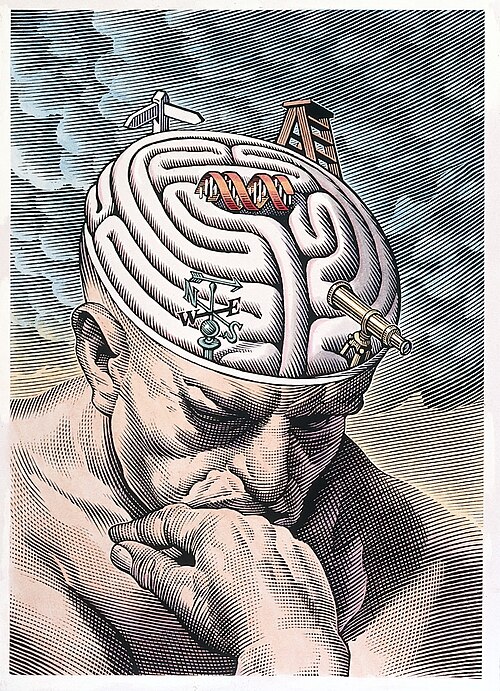
The article by Grégori de Souza and Jelson Roberto de Oliveira, published in Philosophiesi in July 2026, offers a philosophical reflection on the power human beings arrogate to themselves to modify living organisms. The very notion of “humans” warrants scrutiny, as the article lumps all humans together. Yet, this power should be attributed specifically to “Western” culture – and, more precisely, to certain individuals working in public or private laboratories – even though those who remain silent or benefit from the results are, in a sense, implicated in the deployment of the technology. With that clarification made, let us return to the authors’ thesis.
They aim to demonstrate that plant biotechnology cannot be evaluated solely on the basis of criteria such as disease resistance, loss reduction, and the like – or, to put it another way, through the lens of an apparently immediate human self-interest. Instead, they propose examining the impact these interventions have on the plants themselves and, by extension, on all life on Earth. Their reflections draw upon the thought of Hans Jonas, the philosopher who conceptualized the “responsibility principle” as applied to the living world. Jonas reformulates Kantian ethics in the following terms: “Act so that the effects of your action are compatible with the permanence of genuine human life on Earth”. Jonas proposes a principle that might be phrased as follows: before acting or employing a powerful technology, verify that its consequences do not risk destroying the conditions that allow future generations to live a truly human life on Earth.
Biotechnology changes the nature of technology
The authors distinguish biotechnology from older technologies. Until recently, technology primarily worked with inert materials: it shaped stone, metal, or other substances to create useful objects. The distinction was relatively clear: human beings were the transforming subjects, while nature – in this case, the mineral world -was the object of that transformation. One might raise the question of chemistry – which works with inert matter yet impacts living things – but that falls outside the scope of this article. With genetic modification techniques, this separation becomes far less distinct, as the entity being transformed is now a living organism – a being possessing its own activity, capacity for reproduction and evolution, and relationship with the world. The authors note that Hans Jonas lists eight aspects distinguishing biotechnology from traditional mechanical technology; we will examine some of these later in the article.
The authors do not deny that humans intervened in the living world prior to the advent of biotechnology. They outline a brief history of plant domestication. This historical sequence allows the authors to trace a growing capacity for intervention: “domestication and artificial selection already constituted, in a sense, a pre-modern form of genetic intervention, albeit one practiced indirectly and empirically. In the modern era, molecular biology subsequently enabled direct intervention in genetic material”. Intervention shifted from farmers selecting observable traits in the fields to the direct modification of genetic material in the laboratory, working on isolated cells. Thus, they argue that each stage enhances the human capacity to shape the living world according to human needs or desires.
For Hans Jonas – cited by the authors – this shift is fundamental: modifying a plant is not the same as manufacturing a machine. A machine is assembled from inert components and can be fully designed in advance; a plant, by contrast, is already a complex living system, embedded in a network of relationships involving the soil, water, climate, microorganisms, insects, other plants, animals, and agricultural practices. Genetic engineering, therefore, does not act upon neutral matter but upon a living entity that possesses its own dynamics. To borrow from Jonas, the intervention is not a matter of total construction, but rather of “determination through intervention alone”: one steers an existing system whose interactions cannot all be fully controlled.
Among the other aspects distinguishing machine manufacturing from genetic intervention, Jonas cites uncertainty, irreversibility, and heredity. On one hand, the effects are less predictable than in mechanical engineering because “the number of unknowns in the design is immense”. On the other hand, when a genetic intervention produces unexpected effects, these can be difficult to reverse. Finally, genetic modifications can be inherited and thus affect future generations or populations; they may also be transferred to microorganisms through horizontal gene transfer, with possible effects on microbial communities as a whole. For Jonas and the authors, this notion of heredity “leads to another (the seventh aspect), concerning the power to influence the future: the power of living beings over those yet to be born, whether human or non-human”. Paradoxically, this critique can take on an almost Promethean quality. While human action can certainly threaten our own existence and that of many other species, can it destroy life on Earth altogether?
The authors do not claim that every genetic modification would necessarily cause harm. Their point is to emphasize that the capacity of researchers and technicians – whether in multinationals or public research centers – to intervene in living systems is such that it must be accompanied by a responsibility commensurate with that capacity and its consequences. The more profound, enduring, and diffuse the technical power, the less justifiable it is to think in the short term or to rely solely on immediate benefits.
Plants: technological platforms or living beings?
According to the authors, biotechnology has focused primarily on plants. We might qualify this statement, however, as microorganisms were modified earlier and are widely used to serve our own ends.
For the authors, plant life has often been viewed as an object, a raw material, or a biological “factory” intended to supply food, fiber, energy, industrial molecules, or pharmaceuticals – all while disregarding what matters to plants in their own right as living beings. Grégori de Souza and Jelson Roberto de Oliveira describe plants as the “great forgotten beings of the history of philosophy”. It is necessary, however, to nuance this perspective by focusing on the relationship with plants within recent Western culture. In other civilizations, plants are integral to the life of the community. The idea developed in this article stems from the worldview that emerged during the European Renaissance or the Enlightenment, a period that created a divide between nature and humanity. In other cultures, Jonas’s reminder would make little sense – though, notably, those cultures did not develop genetic modification technologies either.
It is specifically the reduction of plants to their industrial utility that concerns the authors: “In many cases, the goal is also to increase nutritional value or modify specific food properties – such as color, texture, or ripening time. However, these criteria are invariably defined based on the needs of the agro-industrial system and the market, rather than from an ecological perspective or with regard to the flourishing of the plant itself as a living organism”. The authors challenge this industrial reductionism: while a plant is indeed a resource for humans, it is not merely a resource. In this regard, they extend the Kantian categorical imperative – “Act in such a way that you treat humanity, whether in your own person or in the person of any other, never merely as a means to an end, but always at the same time as an end”ii – to the terrestrial ecosystem.
The “good” of plants
The authors briefly point out that relying primarily on standardized or genetically uniform varieties contributes to the erosion of cultivated biodiversity, thereby making agricultural systems more vulnerable. They also address the issue of patents and the monopolistic concentration of seed companies, noting that this “leads to increased technological dependence among farmers and a reduction in the autonomy of local agricultural systems”. However, these ecological and political impacts are not the article’s central focus.
While the authors are certainly aware of these issues, the article is structured around the concept of the “good” of plants. Here, too, the article draws on the work of Hans Jonas, who distinguishes between “good” and “value”. They write: “The good possesses an objective status; that is, it is characterized as a ‘good in itself’ – an intrinsic good belonging to the very being that possesses it by virtue of being alive – whereas value is something relational, established in connection with human beings”. In other words, value is assigned by someone: a variety has industrial value because it yields more, sells better, and so on. The “good”, by contrast, refers to what is good for the living being itself: the conditions of its persistence, development, and renewal, independently of the uses human beings may make of it. They conclude with this concise formulation by Hans Jonas: “being itself can justify duty”. We will return to this point later, but it is worth noting here that the expression “good in itself” has been criticized by philosophers such as Paul-Antoine Miquel. Miquel argues that this way of speaking about living beings risks essentializing them. Miquel’s approach differs: rather than speaking of “the good” as something established – something that in itself justifies the ethical imperative – he conceptualizes living things as open physical and chemical systems operating far from equilibrium, organized by constraints, cycles, and exchanges of energy and information. While this approach could complement the one proposed by Jonas, that is a topic for another article.
Returning to the authors of the article: they do not claim that plants are conscious or sentient in the way animals are. They explicitly reject any such equivalence – a stance that, in our view, places them within “Western” culture, as previously noted. They argue only that a plant manifests an elementary form of interiority: “in plants, this interiority is expressed through their autonomous organization and their teleological orientation toward self-preservation, growth, reproduction, and ecological interaction, rather than through perception or consciousness in the phenomenological sense. This expression thus refers to plant life’s intrinsic relationship with itself and should not be understood as implying subjective consciousness”.
Within this framework, the “good” of a plant does not imply that every individual plant must be respected in the same way one would respect a person. Instead, it refers to the conditions that allow plant life to sustain and renew itself: species integrity, genetic diversity, regenerative capacity, ecological relationships, and evolutionary continuity. The authors state this clearly: moral consideration for plants does not entail an absolute ban on cultivating or using them. As previously mentioned, the challenge lies in avoiding their reduction to mere technical objects and ensuring that the conditions for their existence are not permanently compromised.
Towards a new form of responsibility and ethics
For Jonas, modern humanity possesses such power that its actions can affect the very conditions of future life. Morality must therefore encompass generations yet unborn, as well as the living world upon which they will depend. The biosphere, “with all its wealth of species”, thus claims “its share of the respect due to anything that is an end in itself”.
The authors apply this principle to biotechnology: the question should not merely be “can we modify a given plant?” but rather “do we have the right to make decisions whose consequences could permanently affect the living world and future possibilities for existence?”. Once again, the authors generalize this will to power to humanity as a whole; yet, while it tends to spread alongside the hegemonic expansion of Western culture, it remains the province of a specific category of individuals. In their defense, however, ethics seeks to formulate universalizable principles. They thus invoke Jonas’s “heuristic of fear”: when a serious and irreversible risk is plausible, it must be taken seriously, even if not all consequences have been scientifically established with certainty. This amounts to an “ethic of radical precaution” and calls for a “strengthening of solidarity among human beings”. At a time when certain organizations – such as the FNSEAiii and political figures such as Bruno Retailleauiv – seek to abolish the precautionary principle, the words of Hans Jonas take on profound significance.
Citing Hans Jonas, the authors remind us that human responsibility must encompass the protection of the most vulnerable – specifically, in this instance, plants. “To the extent that [genetic engineering] represents an expansion of power to the point where it becomes demonstrably dangerous to the entire order of things [Editor’s note: the authors even use the term ‘crime’], it extends human responsibility to the future of life on Earth – life now left defenseless against the misuse of such power”. Restraint is therefore urgently needed. The authors write: “By speaking of ‘voluntary restraints’, Jonas appeals to the responsibility of biotechnology stakeholders themselves; they must resist the intoxication of utopias rooted in the illusion of progress, in favor of a mature freedom capable of stepping back to consider the gravity of the stakes involved”.
In their conclusion, Grégori de Souza and Jelson Roberto de Oliveira note an impending acceleration in the power to design and modify living organisms through new genomic techniques (unfortunately described here as) “gene editing” and algorithms (unfortunaly labelled) “artificial intelligence”. They write: “The ability to design plants with unprecedented characteristics, reorganize metabolic systems, or introduce new genetic pathways means that human intervention could come to act directly upon the very biological architecture of ecosystems. In this context, ecological, evolutionary, and social risks become even more significant and harder to predict”.
Ultimately, they argue that “plants can no longer be treated merely as technological platforms or simple productive resources. As life forms possessing intrinsic value and participating in the evolutionary continuity of the biosphere, they demand an ethical reflection that transcends instrumental logic”. And why limit this to plants? Could we not also extend this reflection to the living world as a whole, starting with microorganisms, which are widely used as technological platforms?
i De Souza, G. et de Oliveira, J. R., « Genetic Manipulation of Plants: A More-than-Human Ethical Challenge », Philosophies, Vol. 11, Issue 4, 8 July 2026.
ii Emmanuel Kant, « Groundwork of the Metaphysics of Morals », section II, 1785.
iii Denis Meshaka, « Cornerstone of French and European law, the precautionary principle under attack by the FNSEA », Inf’OGM, 5 June 2026.
iv Ulysse Legavre-Jérôme, « Présidentielle 2027 : Bruno Retailleau muscle ses propositions économiques », Les Echos, 19 February 2026.
We need your help!
For over 25 years, Inf’OGM has been producing information, made freely available to everyone, on the artificialisation and appropriation of life (GMOs, NTGs, biotech, patents, etc.).
The monopolisation of a large share of public press subsidies by a few media groups reinforces the concentration of media ownership in the hands of a handful of businessmen. This concentration undermines the quality of information and democratic debate, which require a plurality of viewpoints.
In this context, alternative media outlets such as Inf’OGM, which receive no advertising revenue and provide information free of charge, need you – our readers – to continue to exist! Because, even when freely accessible, information comes at a cost.
Supporting Inf’OGM means working towards reliable, independent information on GMOs, biotechnology and seeds that is accessible to everyone.