
News
Palmer amaranth, an extremely invasive weed, arrives in France
By Christophe NOISETTE
Published on the 19/02/2026, modify the 09/03/2026


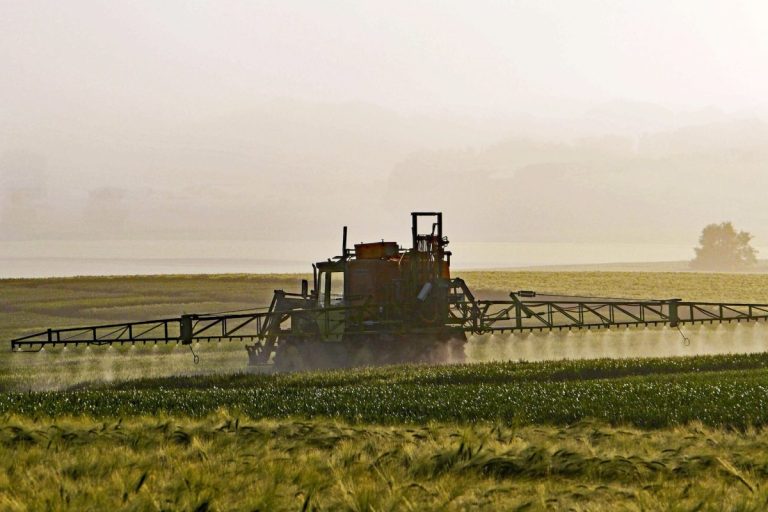
As soon as farmers began using herbicides on a large scale, weeds tolerant to these substances appeared. This is a simple biological phenomenon: living organisms are constantly adapting. The cultivation of genetically modified plants has accelerated this development of tolerance, which has significant agricultural and economic consequences. In France, a highly invasive weed known as Palmer amaranth, which is resistant to several types of herbicides, could soon take hold. This is the fear expressed by ANSES in a report published in December 2025.
Genetically modified plants, whether through transgenesis or mutagenesis, are almost all tolerant to one or more herbicides. Initially sold as a tool to reduce herbicide spraying or to replace certain herbicides with others, they have ultimately contributed to their increase1. This is mainly due to the emergence of weeds that have developed resistance to these herbicides.
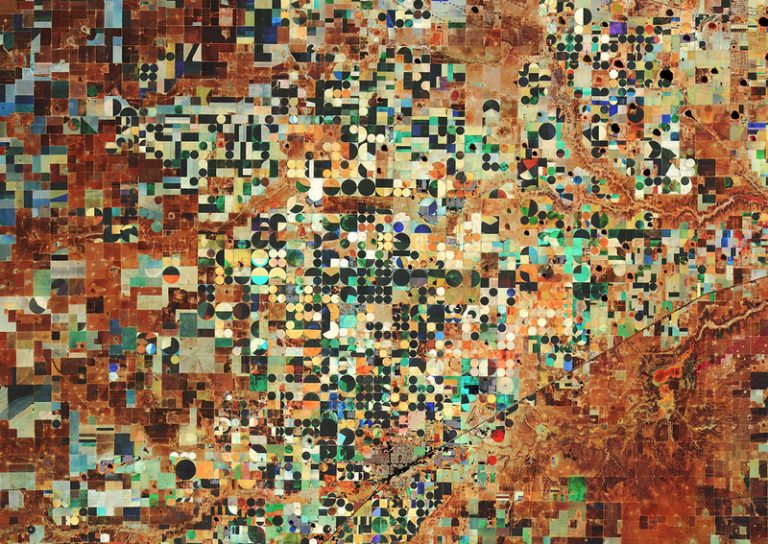
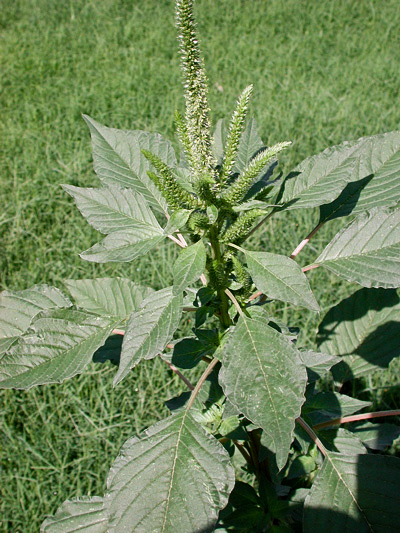
The most emblematic case is Palmer amaranth, which has become resistant to several active ingredients in herbicides, including glyphosate (the active ingredient in Roundup) and ALS inhibitors. It is present in 28 states in the United States, covering several hundred thousand hectares. The first herbicide-resistant amaranth were discovered in 1989 in Texas. In 2013, researchers reported that amaranths resistant to five modes of herbicide action had been identified2, and then, in 2020, to eight modes of herbicide action3. The cultivation of corn, soybeans, and cotton genetically modified to resist herbicides has accelerated the spread of this “super weed”. The French Agency for Food, Environmental and Occupational Health & Safety (ANSES) notes in a recent report that “since the 2000s, A. palmeri has become the main weed in GMO corn and soybean crops in the United States“4. These weeds have therefore become difficult to destroy. To get rid of them, it is necessary to either increase the spray doses or use other, sometimes more harmful, herbicides. In the United States, yield losses of up to 91% in corn, 79% in soybeans, and 77% in cotton have been documented5.
Palmer amaranth soon to be present in France
This plant is considered invasive, mainly because it adapts very well. “Since the early 20th century, A. palmeri has demonstrated a strong ability to adapt to new climatic conditions during its spectacular expansion beyond its native range across North America (Briscoe Runquist et al., 2019). It cannot therefore be ruled out that this species may adapt to climates that we consider unfavorable to its establishment in light of this work or for which our analyses reveal a high level of uncertainty“, according to the ANSES report published in December 2025.
ANSES took up this issue on its own initiative because “the probability of A. palmeri establishing itself in mainland France is considered high with low uncertainty”. There are several reasons for this: “the difference in agricultural practices in mainland France (no GMOs and few direct seeding) compared to the United States and Brazil (heavy use of GMO varieties combined with no-till farming and non-selective herbicides that favor resistant populations)”. In the United States, there are sometimes rotations between two crops, such as soybeans and corn, that are tolerant to the same herbicide for several years in a row. This increases selective pressure.
The second reason for this self-referral is the presence of this plant in neighboring countries. The report specifies, for example, that Spain “is currently facing a severe infestation of A. palmeri populations that are resistant to various herbicides and are having a significant impact on summer crops and certain perennial crops such as orchards, vineyards, and alfalfa”. The report also mentions the presence of amaranths resistant to glyphosate or ALS inhibitors in Piedmont and Emilia-Romagna (Italy). It is also present in other European countries, such as Belgium and Germany, but on a more occasional basis. ANSES therefore concludes that the probability of A. palmeri entering the country is “considered very high with moderate uncertainty”.
However, according to ANSES, “commercial exchange (animal feed) and agricultural equipment between Spain and France exist”. This would be the primary entry point for this weed. Imports, particularly of soybeans and corn, from the United States or Brazil are another entry point. ANSES specifies in its report that “imported products such as soybeans and corn for the manufacture of livestock feed are not subject to any specific regulations or controls, and are the proven and regular source of introductions of A. palmeri”.
As a result, ANSES believes it is highly likely that Palmer’s amaranth will soon arrive in France. This plant could then cause “significant” economic damage. The report states that “based on all available data, [ANSES] considers that the impact of A. palmeri in its current distribution area is very high in agricultural environments on summer crops, with low uncertainty. On the other hand, the impact of A. palmeri on natural environments is low, with low uncertainty”.
In Europe, no herbicide-tolerant transgenic varieties are authorized for cultivation. However, other types of GMOs tolerant to ALS inhibitor herbicides, such as Clearfield or Conviso varieties, are grown, particularly in France and Spain. Known as Herbicide Tolerant Varieties (HTVs), these include rapeseed, sunflower, and beet. The use of these herbicides on these crops will have two consequences: they will be ineffective in “combating” resistant amaranth, and there will be a potential increase in the number of weeds that have become resistant to these herbicides. As a result, farmers will be tempted to use other, more toxic herbicides, or even to request that banned herbicides be authorized. This is what happened in the United States.
ANSES overlooks Clearfield and other HTVs crops in Europe
The report does not mention Clearfield or Conviso varieties grown in Europe, the HTVs crops we have just mentioned. This omission raises questions. Before 2010, NGOs and the Confédération Paysanne farmers’ union denounced the cultivation of HTVs rapeseed and sunflowers. In 2015, these organizations filed an initial appeal. This long battle culminated in the July 2018 ruling by the Court of Justice of the European Union (CJEU), which reiterated that these varieties were GMOs. In another report, ANSES also recognized that Clearfield rapeseed and sunflowers were GMOs. In 2020, a draft decree by the Ministry of Agriculture prohibiting the marketing of Clearfield rapeseed varieties was drafted, but it was never published in the Official Journal.
Finally, it is also worth remembering that Clearfield varieties were promoted in France by highlighting the fight against ragweed, another invasive weed that is highly allergenic. However, as Inf’OGM pointed out in 2022, “in addition to the proven ineffectiveness of HTVs, repeated use of the same herbicide leads to a known phenomenon of herbicide resistance in the target plant. As a result, in just a few years (HTVs have only been listed in the French catalog since 2010 for sunflowers and 2012 for rapeseed), ragweed has become resistant to ALS inhibitors, frequently in the Rhône-Alpes region and to a lesser extent in Aquitaine and Occitanie“6.
Recommendation: classify amaranth as a harmful organism
In its December 2025 report, ANSES recommends classifying Palmer amaranth as a harmful organism. This would involve a number of measures: inspection of imported soybean and corn shipments, territorial surveillance, particularly in regions favorable to its establishment, early detection, and implementation of an eradication program in the event of confirmed observation.
The case of Palmer amaranth is not an isolated one. Teosinte, a wild plant closely related to corn, is another example. Researchers at INRAE, IRD, and CNRS have found that DUO corn, which is resistant to herbicides, has, through genetic exchange, enabled “teosinte to acquire […] resistance to herbicides”7. The problem of herbicide-tolerant weeds – which are therefore difficult to eradicate – is directly linked to the use of herbicides. The European Union is currently discussing the possible deregulation of plants derived from new genomic techniques (NGT1). The text under discussion would, in theory, exclude herbicide-resistant GMOs from this deregulation. This confirms what environmental associations and certain farmers’ unions have been saying for more than 20 years: HTVs are harmful to agriculture and contribute to an increase in the doses of herbicides sprayed.
- Eric Meunier, « Non, les OGM n’ont pas réduit les applications d’herbicides », Inf’OGM, le journal, n°150, mai/juin 2018.
U.S. Department of the Interior, U.S. Geological Survey, « National Water-Quality Assessment (NAWQA) Project – Pesticide National Synthesis Project – Estimated Annual Agricultural Pesticide Use – Pesticide Use Maps – Glyphosate », 2019. ↩︎ - Ward S.M., Webster T.M., Steckel L.E., « Palmer amaranth (Amaranthus palmeri): a review », Weed Technology, 27(1):12-27, 2013. ↩︎
- Database Pest Risk Analysis managed by the European and Mediterranean Plant Protection Organization (EPPO) :
EPPO Platform on PRAs, « EPPO PRA for Amaranthus palmeri », 12 October 2020. ↩︎ - Anses, « AVIS de l’Agence nationale de sécurité sanitaire de l’alimentation, de l’environnement et du travail relatif à l’« Évaluation du risque simplifiée relative à Amaranthus palmeri S.Watson pour la France métropolitaine » », novembre 2025. ↩︎
- Several articles cited in the ANSES report:
– Gazziero D.L.P., Ferreira da Silva A. (2017). « Caracterizaçao e manejo de Amaranthus palmeri », Documentos 384. Embrapa, Brazil. 40p., 2017.
– Massinga R.A., Currie R.S., Horak M.J. Boyer J.R., « Interference of palmer amaranth in corn », Weed Science, v. 49, p. 202-208, 2001.
– Bensch C.N., Horak M.J., Peterson D., « Interference of redroot pigweed (Amaranthus retroflexus), palmer amaranth (A. palmeri), and common waterhemp (A. rudis) in soybean », Weed Science, v. 51, p.73-43, 2003.
– Fast B.J., Murdock S.W., Farris R.L., Willis J.B., Murray D.S., « Critical timing of Palmer amaranth (Amaranthus palmeri) removal in second generation glyphosate-resistant cotton », Journal of Cotton Science, v. 13, p. 32-36, 2009. ↩︎ - Frédéric Prat, « OGM et herbicides : la lutte contre l’ambroisie a bon dos », Inf’OGM, 27 April 2022. ↩︎
- Eric Meunier, « Problems ahead due to cultivation of GMO maize in Europe? », Inf’OGM, 6 February 2024. ↩︎