
News
When lexical confusion serves political purposes
By Eric MEUNIER
Published on the 12/11/2025, modify the 09/03/2026


Plants and fungi genetically modified using CRISPR or other “targeted mutagenesis” techniques, genetically modified organisms (GMOs) designated by the acronym “NGT” for “new genomic techniques”… These various expressions are used in speech and writing by many legislators and scientists, even though they are inappropriate. But they are used for an explicit purpose: to obtain the deregulation of a very large number of GMOs by systematically removing the words “genetically modified”, which cause public mistrust.

Directive 2001/18 is currently the European legal text defining GMOs and regulating their release into the environment. According to this directive, a GMO is “an organism, with the exception of human beings, in which the genetic material has been altered in a way that does not occur naturally by mating and/or natural recombination”. With this definition, the legislator has taken into account both the method used to genetically modify an organism and the genetically modified organism itself. In other words, the legislator defines these organisms by reference to the method used to genetically modify them. The terms used are deliberately those of everyday language, as this is a legal text and not a scientific publication opened to controversy like any scientific publication thereby enabling science to progress. Above all, this definition is much broader than that of “transgenesis”, a term that, it is to be noted, never appears in this directive. However, in order to further its plans to deregulate plant GMOs, the Commission has used, if not abused, biased semantics, as we shall see.
“Tools” give their names to complex protocols
Since the debate on the new techniques of genetic modification of plants began, the vocabulary used has been ambiguous, even misleading. Initially, the term “New Breeding Techniques” was commonly used in communications by proponents of GMO deregulation…. The term “breeding techniques” is more marketable than “techniques of genetic modification” as it is now understood by the public. But this expression was eventually replaced by “new genomic techniques”. This latter is confusing on several levels. The first is the acronym NGT itself, used to refer to “NGT plants” instead of “GM plants”, which is what these organisms actually are. The second confusion is the expression “NGT plants” which means nothing. In fact, once the acronym has been developed, talking about NGT plants as the Commission does means talking about “new genomic techniques plants”. This is like naming an organism after a technique, as if a child were named natural birth or cesarean section. It is clear that placing organisms and techniques on the same level is a deliberate manipulation of the meaning of words. Some are more rigorous and refer to “plants derived from NGT”.
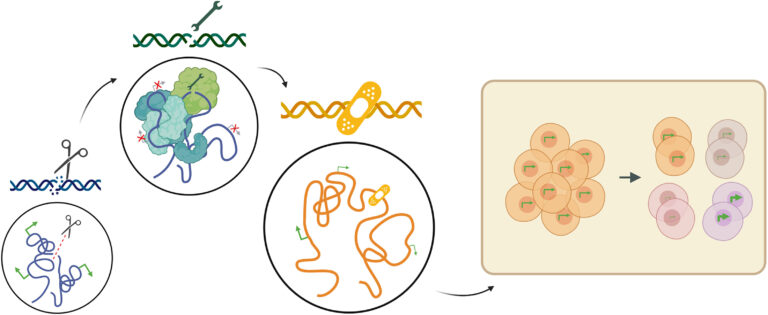
Another semantic abuse is to talk about “organisms modified by Crispr”. In this case, the complex technical and experimental protocol is reduced to the mere designation of one of the many tools used in such a protocol. The consequence? Many members of the European Commission, Parliament, or Council of the European Union ignore, forget, neglect, or fail to mention that modifying an organism, for example using the CRISPR tool, involves other tools and methods depending on the protocols chosen. For example, it is common to use isolated plant cells grown on artificial media loaded with chemicals, most of which are mutagenic, and to use transgenes so that the cells can synthesize the “Cas” molecules that are essential for any use of Crispr/Cas techniques, artificial genetic sequences to bring about the desired genetic modification in the nucleus of the target cells, hormones to generate a plant from isolated cells while inducing new “unintended” genetic or epigenetic modifications that are known but never sought afteri…
Names of methods designed to create confusion
The regulatory debate currently underway is based on a proposal made by the European Commission in July 2023ii. This proposal, which requires an amendment to Regulation (EU) 2017/625 (which applies only to products intended for human and animal consumption), changes the very definition of a GMO to which it applies. It thus excludes from the definition GMOs obtained by mutagenesis and cell fusion techniques developed mainly before 2001 and whose safety has therefore been proven for a long timeiii. Under current legislation, these GMOs are exempt from the application of this directive, but they are still GMOs according to Directive 2001/18 concerning – like the proposed new regulation – the release into the environment. This exclusion therefore nullifies an objective and verifiable time criterion (the date of 2001). It also justifies the deregulation of “new GMOs”, declared “equivalent” to the old exempted GMOs, to which are discreetly added those derived from “advanced techniques such as embryo rescue, induced polyploidy, and bridge crosses”… Especially since “such as” means that there may be others that will inevitably appear in the regulations themselves, as both technology and social acceptance of those new genetic manipuations evolve.
While terms such as CRISPR, NGT, cisgenesis, “targeted mutagenesis” and “directed mutagenesis” are regularly mentioned, it seems beneficial to return to the text itself. In its proposal, the European Commission focuses on “plants obtained through certain new genomic techniques” and their commercialization (in food, in the environment, etc.). Not all new techniques, but certain ones! It specifies that one of the two “new genomic techniques” in question is “targeted mutagenesis”, defined as “mutagenesis techniques resulting in modification(s) of the DNA sequence at precise locations in the genome of an organism”. However, many so-called “random” mutagenesis techniques are targeted when they can be reproduced by a skilled person who wants to obtain the desired mutation and the associated patented trait.
If we add the proposed definition of “cisgenesis”, which would be a technique “of genetic modification resulting in the insertion, in the genome of an organism, of genetic material already present in the breeders’ gene pool”, the reader is left with legal definitions proposed by the European Commission in language that is intended to be “scientific” but is surprisingly imprecise, even false, since cisgenesis is traditionally (in most cases) a specific technique of transgenesis, but rarely a NGT. This imprecision also allows the European Commission’s annex to ultimately propose nucleotide substitutions as well as deletions and insertions of sequences without size limits. The full range of possible modifications, with the exception of the definitive insertion of transgenes…
The vagueness and confusion surrounding the terms used have been the basis for arguments in favor of deregulating GMOs. As a result, the vocabulary used by the European Commission in its proposal is not free from ambiguity. This is a paradoxical situation, since the simplicity of the definition provided by Directive 2001/18, the legislation governing GMOs since 2001, makes it all the clearer: a GMO is “an organism, with the exception of human beings, in which the genetic material has been altered in a way that does not occur naturally by mating and/or natural recombination”.
i See the example of waxy maize of Dupont/Pioneer (now Corteva), in :
Annick Bossu and Eric Meunier, « Les mots à la base de la stratégie des multinationales », Inf’OGM, le journal, n°173, October/December 2023.
ii European Commission, « Proposal for a Regulation of the European Parliament and of the Council on plants obtained by certain new genomic techniques and their food and feed, and amending Regulation (EU) 2017/625 », 5 July 2023.
iii See note 2, article 3.
We need your help!
For over 25 years, Inf’OGM has been producing information, made freely available to everyone, on the artificialisation and appropriation of life (GMOs, NTGs, biotech, patents, etc.).
The monopolisation of a large share of public press subsidies by a few media groups reinforces the concentration of media ownership in the hands of a handful of businessmen. This concentration undermines the quality of information and democratic debate, which require a plurality of viewpoints.
In this context, alternative media outlets such as Inf’OGM, which receive no advertising revenue and provide information free of charge, need you – our readers – to continue to exist! Because, even when freely accessible, information comes at a cost.
Supporting Inf’OGM means working towards reliable, independent information on GMOs, biotechnology and seeds that is accessible to everyone.