
News
Soon genetically modified cocoa?
By Antoine VEPIERRE
Published on the 17/10/2025, modify the 09/03/2026


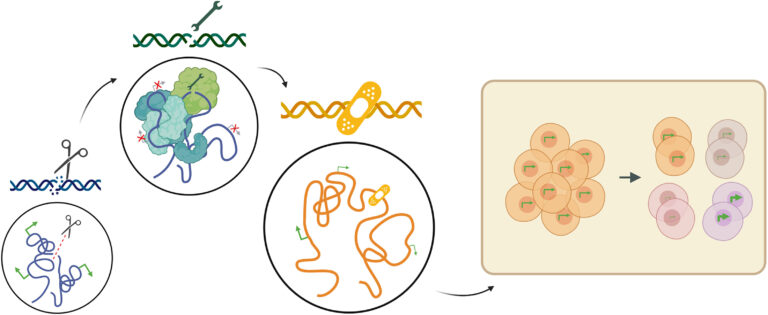
On August 6, 2025, the agri-food group Mars acquired a license to use CRISPR tools from the biotech company Pairwise with the aim of developing genetically modified cocoa trees. If this partnership between the biotech and agri-food worlds is worth looking into, it is because it concerns the world leader in chocolate products, which has been interested in the issue for several years now.
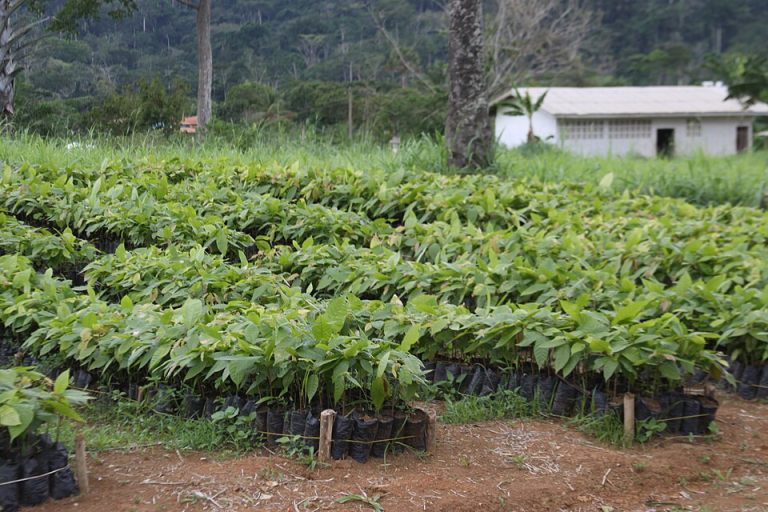
On August 6th, Mars and Pairwise announced having signed a partnership. This allows the agrifood giant Mars to obtain a license for the use of CRISPR tools from the biotech company Pairwise “in order to conduct research and development activities on cocoa“. More specifically, Mars “aims to develop this advanced plant breeding technology in order to improve cocoa production“. Carl Jones, director of plant science at Mars, aims to “help crops better adapt to climate challenges, disease pressures and resource constraints”1.
Mars, a world leader in chocolate
Beyond the chocolate bar of the same name, the Mars group also holds the brands M&M’s, Snickers, Twix, Balisto, Bounty, Milky Way, Skittles, Snickers,… which makes it the world leader in chocolate (more than 50 billion dollars in turnover in 2023)2. However, as mentioned by Claire Sergent on France Info, “cocoa comes mainly from Côte d’Ivoire and Ghana, but in recent years, production has dropped sharply. […] The price of cocoa beans has quadrupled in three years‘3. Mars thus suffers from these hazards. This partnership is therefore important for the company, which wishes to secure its supply through the development of GM cocoa trees.
A project that dates
This investment by the company Mars had been announced for a long time. In 2010, the company, in partnership with the US Department of Agriculture (USDA) and the IT group IBM, already indicated having participated in the sequencing of the genome of the cocoa tree Matina 1-64. Then, in 2018, Inf’OGMreported the company’s promise to “invest one billion dollars to modify the cocoa tree genome with Crispr/Cas9, to allow these plants to survive modified climatic conditions“5.
However, if in 2015 some scientists were promising to “ultimately contribute to the production of disease-resistant and high-yield cocoa trees”, others stressed that “creating an ideal GMO chocolate will not be easy”6. Indeed, “finding the right blend of flavours, while ensuring disease resistance, rapid growth and high productivity” seems to be complex. And, in fact, 10 after these declarations of intentions and promises, there has still been no mention of GMO cocoa trees for commercial crops.
We can see that, beyond the multinational seed companies, new genetic modification techniques are also of interest to the giants of the agri-food industry. With their investment and lobbying capabilities, these companies can quickly evolve research and legislation. If the proposal for the deregulation of GMOs derived from new techniques initiated by the European Commission were to be adopted, consumers could therefore find themselves eating GMO chocolate without their knowledge in the coming years.
March already confronted with GMOs recently
Mars has also already had to deal with GMOs, but this time involuntarily. In 2021, for example, a contamination by GMO rice from India was reported in Europe. This rice had been used as an ingredient in processed products, such as sweets sold by Mars (M&M’s Crispy).0.
- Pairwise, « Mars and Pairwise Collaborate to Accelerate Cacao Research and Development », 6 August 2025. ↩︎
- Wikipedia contributors, « Mars Inc. », Wikipedia, The Free Encyclopedia, 12 October 2025. ↩︎
- Claire Sergent, « Bientôt du cacao génétiquement modifié dans les barres chocolatées ? », Le décryptage éco, France Info, 12 August 2025. ↩︎
- At the same time, in France, CIRAD, in partnership with the American chocolate manufacturer Hershey and the University of Pennsylvania, also announced that it had decoded the DNA sequence of Criollo, a variety of cocoa tree collected in Belize.
Ministère de l’agriculture et de la souveraineté alimentaire, Centre d’études et de prospective, Blog de veille, « Le génome du cacao décrypté », 1st October 2010.
USDA, Dennis O’Brien, « Sequencing of Cacao Genome Will Help U.S. Chocolate Industry, Subsistence Farmers in Tropical Regions », 15 September 2010. ↩︎ - Christophe Noisette, « Les manipulations génétiques, la solution à tous les problèmes ? », Inf’OGM, le journal, n°149, March/April 2018. ↩︎
- Rebecca Rupp, « Can GMOs Save Chocolate? », National Geographic, 18 March 2015. ↩︎
We need your help!
For over 25 years, Inf’OGM has been producing information, made freely available to everyone, on the artificialisation and appropriation of life (GMOs, NTGs, biotech, patents, etc.).
The monopolisation of a large share of public press subsidies by a few media groups reinforces the concentration of media ownership in the hands of a handful of businessmen. This concentration undermines the quality of information and democratic debate, which require a plurality of viewpoints.
In this context, alternative media outlets such as Inf’OGM, which receive no advertising revenue and provide information free of charge, need you – our readers – to continue to exist! Because, even when freely accessible, information comes at a cost.
Supporting Inf’OGM means working towards reliable, independent information on GMOs, biotechnology and seeds that is accessible to everyone.