

Seed Treaty’s MLS enhancement package risks legitimizing biopiracy and inequity
For some times now, the International Treaty on Plant Genetic Resources for Food and Agriculture is discussing an expansion of its scope to all plant genetic resources for food and agriculture. Many stakeholders and observers are fearing this would end up in legitimizing biopiracy. As the next meeting will occur in Lima (Peru) starting in November, the 24th, Inf’OGM publishes the analysis of Nithin Ramakrishnan, from Third World Network, one of the stakeholders of this meeting.
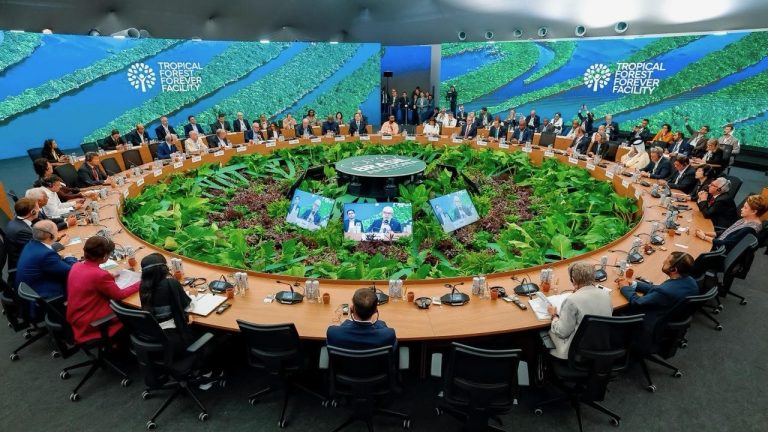
GMOs on the agenda at COP 30
At a time when countries are meeting in Belém, Brazil, to discuss the tools needed to combat climate change, Inf’OGM wishes to shed light on the role of biotechnology in these negotiations. Biotechnology companies are making several promises: GMOs will help combat world hunger and climate change.

The Asilomar 2025 conference, a pipe dream
The Asilomar Conference (California, United States) on ‘recombinant DNA’ was organised in 1975 by molecular biology researchers. Its aim was to define the safety conditions necessary for handling genetically modified bacteria shortly after the first attempts at transgenesis.
Today, despite their medical, agricultural and environmental promises, biotechnological advances, combined with other technologies such as ‘artificial intelligence’, are above all a sword of Damocles hanging over all living things. In 2025, a new Asilomar conference failed to produce a joint statement by the participants.

Deadlock on digital sequencing information within the ITPGRFA
New negotiations on digital sequencing information within the framework of the ITPGRFA are reigniting tensions between “developing” and “developed” countries. The latter are imposing guidelines that weaken the claims of the other side and strengthen their control over plant genetic resources. Their weapon? Maintaining “free access” to digital sequencing information and parallel and optional benefit sharing, as agreed by the Convention on Biological Diversity.

Origin of Covid 19: the laboratory leak is the most likely (part 3)
Having described the complexity of the question of the origin of Sars-Cov2, the main players and their research (GOF, etc.), then the history of the pandemic (part 1 and part 2), we can give the opinions of the various parties, without any of them being totally convincing.
Origin of Covid-19: laboratory leak is the most likely scenario (part 2)
After describing the main issues and key players (part 1)i, we will now trace the prehistory of Covid-19, followed by its history, which has received more media coverage.
Origin of Covid-19: laboratory leak is the most likely scenario
A Covid-19 epidemic (acronym for ‘coronavirus disease 2019’) was officially declared in January 2020 in the city of Wuhan, then quickly turned into a pandemic spreading throughout the world. The rapid spread of the SARS-CoV-2 virus (for ‘Severe Acute Respiratory Syndrome’), responsible for this pandemic, led to lockdowns being imposed on everyone, regardless of age group or susceptibility to the disease. It has disrupted the lives of billions of people. But where did the virus come from? This three-part article aims to describe what is known about the origin of this virus and why it should matter to us, here and now. All those involved in this pandemic story are undoubtedly hiding part of the truth.
In the first part, we explain the issue and why it may be of interest to us, even after the pandemic is over, and describe its main players. In the second part, we will review the history of this pandemic. In the third part, we will give the opinions of various institutions on its origin.
The ITPGR is working on a controversial reform
At the beginning of April, the Tirpaa again discussed the expansion of the list of crops covered by the multilateral system and the revision of the contract governing their use. While some Member States of the Treaty are invoking the need to guarantee global food security, fears are being voiced that there will be a drift in widespread access to peasant and traditional seeds. This would facilitate their patenting, without any real sharing of the benefits, to the detriment of the countries of the “South” and the rights of the peasants.
“Artificial intelligence” to digitize genomes
The digitization of living organisms is the subject of a growing number of projects. Computer data, generated and stored in ever-larger “data centers”, are used by “artificial intelligence” matrices. These data are of all kinds: genetic sequences, proteins, etc. In these fields, which require increasing natural resources, investments are multiplying.
Reproducibility of biotechnological inventions
At the European Patent Office (EPO), one of the key principles for patentability of inventions is that the invention must be described in sufficient detail for any “person skilled in the art” to be able to reproduce it. In biotechnology, where living systems are manipulated, this requirement poses a particular challenge. The notion of “reproducibility” of the invention thus becomes an essential criterion, which can take on different meanings depending on the context. This article explores the subject of the reproducibility of biotechnological inventions according to the practice of the EPO, in particular the case law of its Boards of Appeal.

Despite negotiations in 2024, disagreements over DSI persist
In 2024, digital sequence information (DSI) derived from genetic resources was at the heart of international negotiations. Discussions focused mainly on the sharing of the benefits generated by the industrial and commercial use of this DSI, and the mechanisms required to implement it. These developments could redefine governance and influence the future regulation of DSI, but persistent differences between countries are holding back progress.
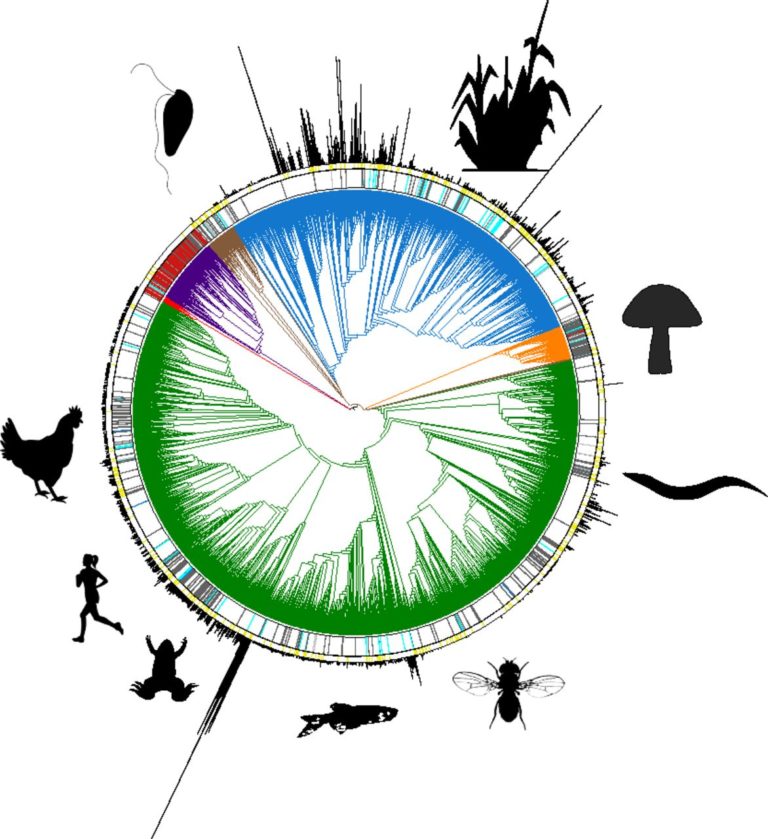
The genome of 1.8 million species is being sequenced
Can biological diversity escape any risk of biopiracy when part of it is digitised in computers? The answer depends on ongoing negotiations within international bodies. In the meantime, an international project to sequence the genome of all known eukaryotic species is making progress. Financed indirectly by players in the IT and artificial intelligence fields, this project even hopes to be able to bypass certain rules thanks to more powerful working tools.